
€ 145


Still questions? Contact us
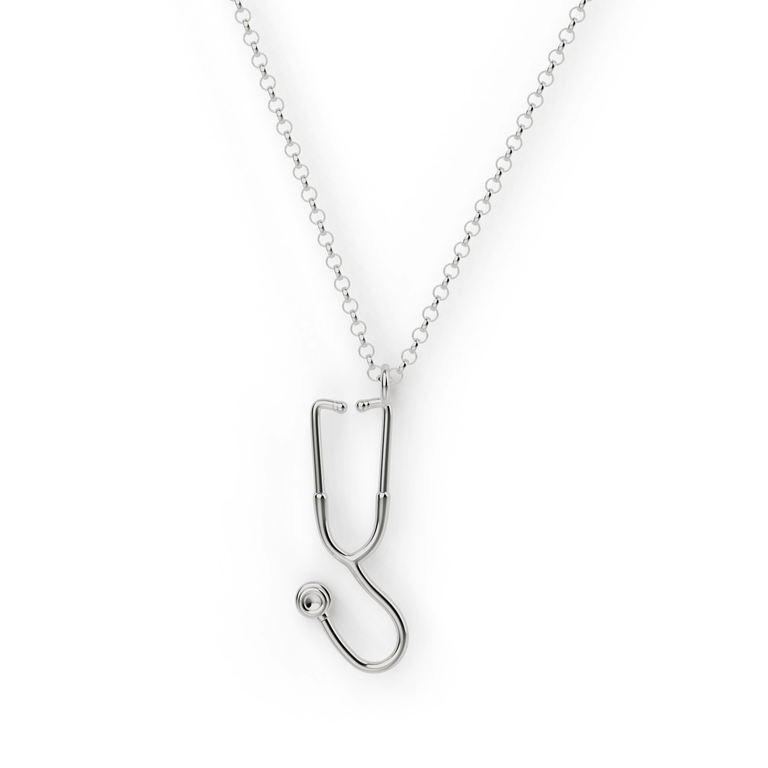
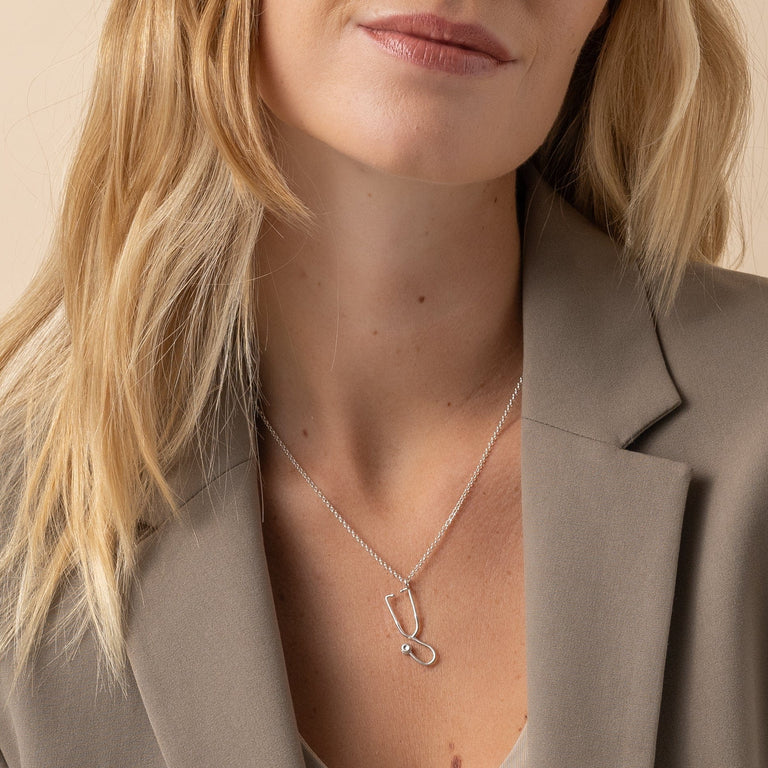
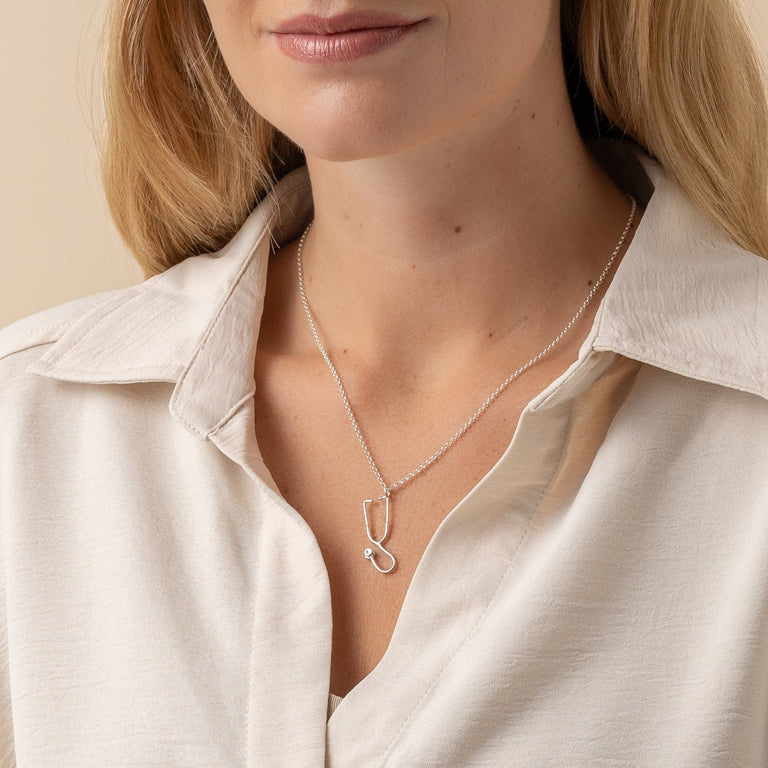
Stethoscope necklace | sterling silver
A stethoscope around the neck is how most of us picture the person looking after us. This stethoscope necklace lets her wear one every day, whether she has just graduated, started a new job on the ward, or simply loves the work she does.
Who It's For
- a daughter graduating from medical school
- a sister who is a doctor and loves her job
- your wife or partner who works as a nurse, for Valentine's Day or any day
- a daughter-in-law who has just qualified as a doctor
- yourself, as a graduation present or a reminder during medical school that you will make it
Cara E. bought it for her daughter: “Gorgeous, my daughter loves it! Very pretty and well made.” Lindsey B. bought her own: “I got the longer necklace so I can layer it with my ecg one. It was a graduation present to myself!”
How a Stethoscope Works
The chestpiece of a classic stethoscope has two sides. The flat diaphragm is for high-pitched sounds and the open bell for low-pitched ones. Many modern stethoscopes do both on one side: light pressure brings out the low sounds, firmer pressure the high ones. The tubing carries what the chestpiece picks up to both ears, and the ear tips help shut out the noise of the room. Doctors and nurses use it to listen to the heart, the lungs and the abdomen, and to take blood pressure.
Explore Related Medical Jewelry
- stethoscope necklace | gold vermeil
- stethoscope studs | silver
- heartbeat necklace | silver
- rod of Asclepius necklace | silver
FAQ
How big is it, and how does it sit?
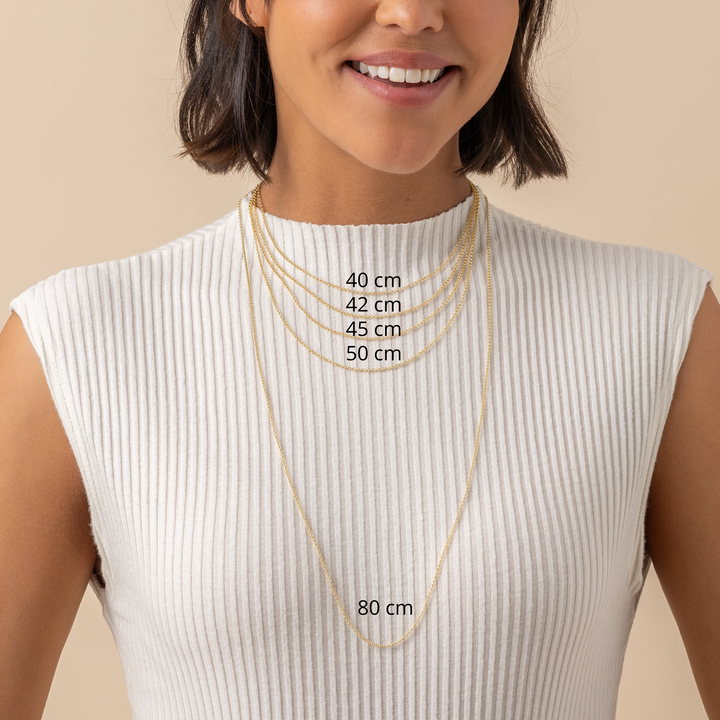
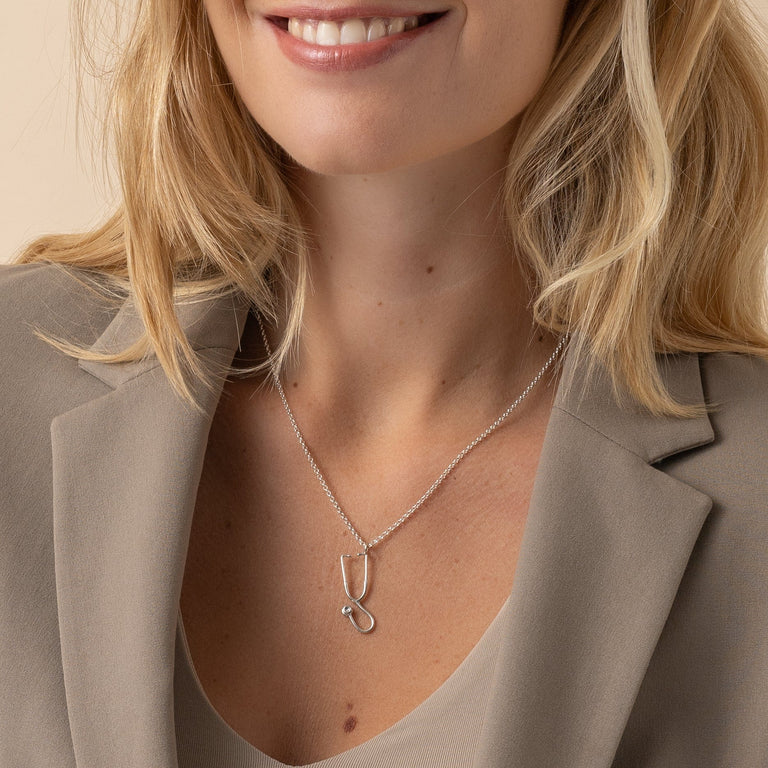
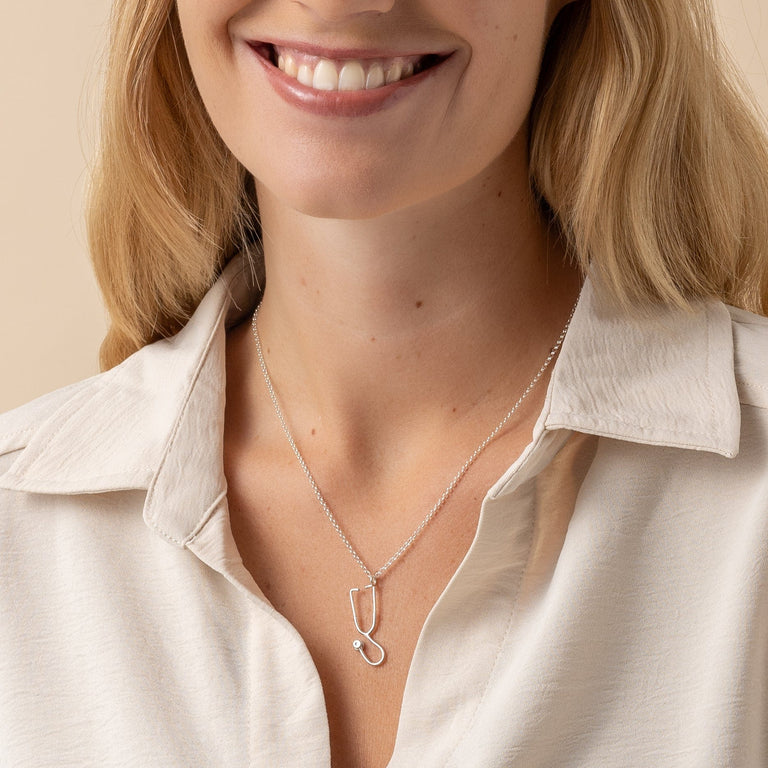
The pendant measures 33 mm (about 1.3 inches) from top to bottom, a little over a quarter longer than a 2-euro coin is wide. It hangs from a small loop at the top on a 45 cm (17.7 inch) sterling silver chain with a 5 cm (2 inch) extender, and sits on the upper chest. Extra chains in 40, 42, 45, 50 and 80 cm can be added on this page, for wearing it lower or layering it. Our 925 sterling silver is nickel-free and hypoallergenic.
Does it come in gold, or as earrings?
Yes. The same stethoscope comes in 18K gold vermeil, also 33 mm, on a gold vermeil chain. Choose the finish the recipient already wears: the design is the same in both. For a matching set, the stethoscope studs (13 mm) come in sterling silver and pair with this silver necklace.
Will it arrive in time, and what if it isn't right?
DHL Express delivers free in 1-5 business days worldwide, and we pay the import duties and taxes, so nothing is due at the door. It arrives in a ready-to-gift jewelry box and festive envelope. If it isn't right, our 30-day “Love It or Return It” policy applies.
Who invented the stethoscope?
René Laennec, a doctor at the Necker Hospital in Paris, in 1816. A young woman came to him with heart trouble, and tapping her chest told him little. Putting his ear to it was out of the question. Remembering how the scratch of a pin carries through a wooden beam, he rolled up a sheaf of paper and listened. Her heart came through more clearly than with his ear alone. He called it the stethoscope, from the Greek for chest and examining, and published his book on it in 1819.

Medical & Lab tools
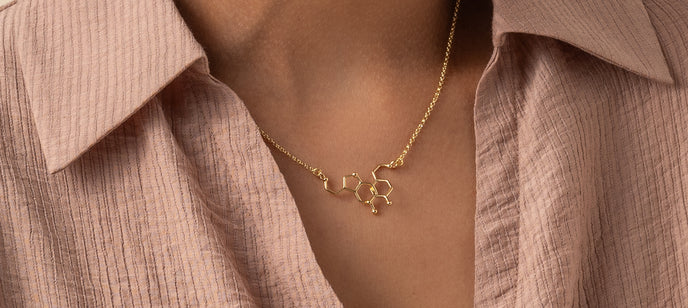
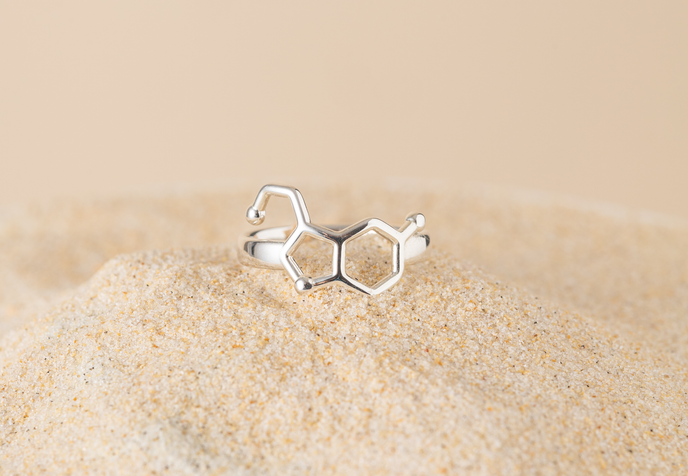
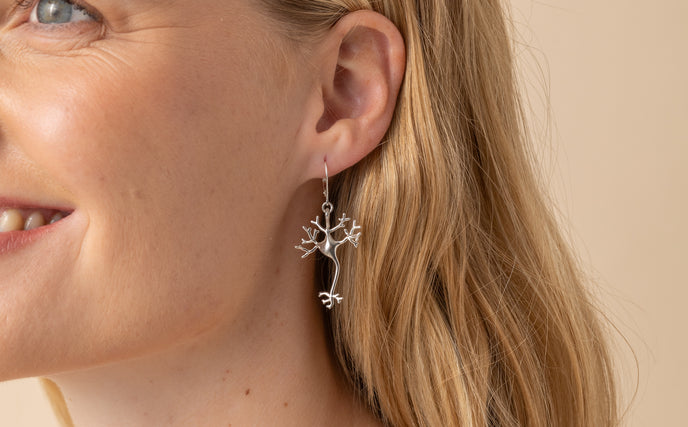
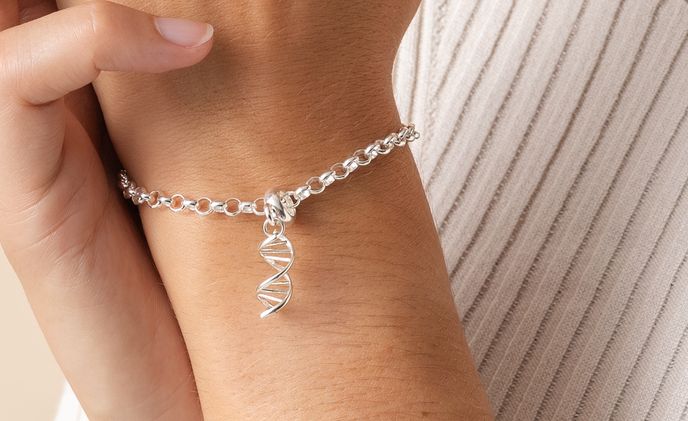
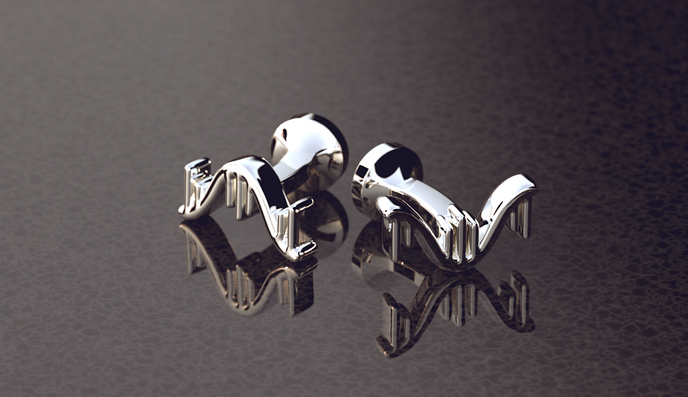
Dive into the captivating world of science-inspired jewelry, where intricate designs meet the essence of medical and laboratory tools. These masterfully crafted pieces act as subtle yet striking tributes to the instruments that have paved the way for scientific discovery. From DNA helices to microscope charms, each piece serves as a conversation starter, a talisman, and a small monument to human ingenuity. They're not just accessories; they're wearable artifacts that tell a story of scientific exploration and advancement.
Find your perfect fit: measure an Existing Ring
Finding out your ring size at home is a simple process and can help you shop for jewelry online with confidence.
Necklace length guide