€ 210


Still questions? Contact us
Scarab beetle necklace | sterling silver
Three thousand years before anyone in entomology heard of orientation by celestial cues, the ancient Egyptians watched the dung beetle roll its ball of dung in a perfectly straight line and decided the sun god looked like a beetle. The beetles were doing the science the whole time. Worn here as a 23 mm sterling silver pendant.
The Science Behind the Scarab Beetle
In 2013, Marie Dacke and colleagues at Lund University published a study in Current Biology showing that dung beetles, specifically Scarabaeus satyrus, are the only known animals documented to use the Milky Way as a directional cue. Cardboard caps placed on the beetles blocked their view of the sky and caused them to wander in circles instead of rolling in a straight line. Restoring the sky restored directional accuracy. In ancient Egypt, Khepri, the god of the rising sun, was depicted with a scarab head: the Egyptians read the beetle rolling its ball of dung as a metaphor for the sun crossing the sky. The actual celestial cue took three millennia to confirm.
Who Reaches For This
- entomologists and insect biologists
- egyptologists and ancient history enthusiasts
- astronomers and anyone drawn to celestial navigation
- those who appreciate when mythology and science accidentally agree
Explore Related Animal Skull and Skeleton Jewelry
- Scarab beetle necklace | gold vermeil
- Wishbone necklace | silver
- Seahorse skeleton necklace | silver
- Raven skull necklace | silver
- Platypus skull necklace | silver
FAQ
Is this a science gift or a symbolic gift?
The piece carries both. Egyptologists and ancient-history enthusiasts pick it up for the Khepri association and the resurrection symbolism. Entomologists and behavioural biologists pick it up for the Milky Way navigation. The two audiences rarely overlap, but the pendant works for both because the symbolism and the science point at the same beetle.
How does an insect orient by the Milky Way?
The dung beetle does not follow a star. It uses the broad band of light from the galaxy as a directional cue, in roughly the same way humans use the sun's position to estimate compass direction. The beetles climb on top of their dung ball to take a celestial snapshot before rolling, then roll in a straight line away from competitors. Cover the sky and the strategy fails immediately.
What size is the pendant and what is the return policy?
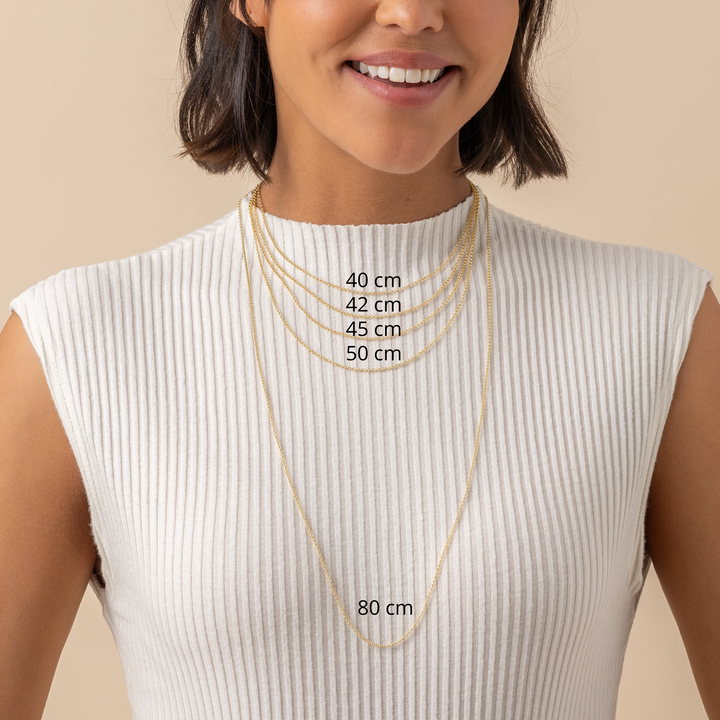
925 sterling silver, 23 mm pendant on a 45 cm sterling silver chain with a 5 cm extender. Nickel-free and hypoallergenic. Free worldwide DHL Express in 1-5 business days, with all import duties and taxes covered. 30-day “Love It or Return It” returns.
Is there a gold version?
Yes. The same 23 mm scarab pendant launched in 18K gold vermeil in late 2025. Same chain length, same beetle, different metal.
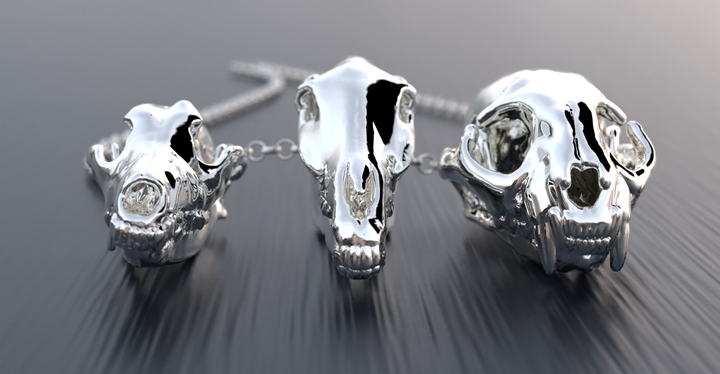
Animal skulls & bones
Drawing upon the intricate architecture of animal anatomy, our collection captures the haunting beauty of skulls and bones. Each piece serves as a tactile memento mori, reminding us of the delicate balance between life and death. Crafted with scientific accuracy, these masterpieces evoke a sense of awe and curiosity, offering a tribute to the intricacies of the natural world. Far more than mere adornments, they are conversation-starters that provoke intellectual dialogue.
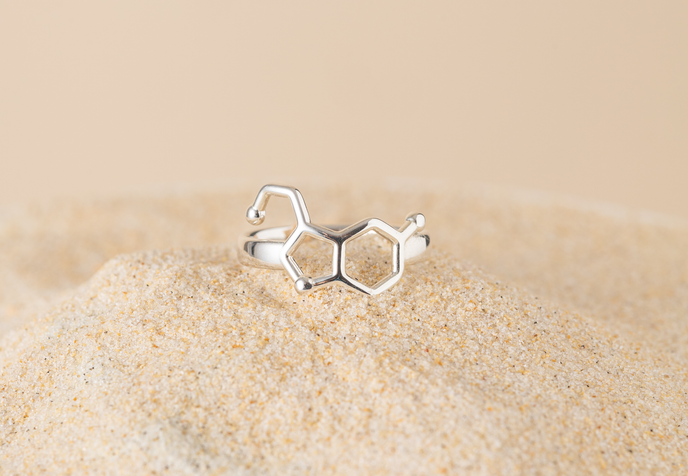
Find your perfect fit: measure an Existing Ring
Finding out your ring size at home is a simple process and can help you shop for jewelry online with confidence.
Necklace length guide