$396


Still questions? Contact us
Inner ear anatomy necklace | sterling silver
After a few fast turns on the spot, the room seems to keep spinning once you stop. An audiologist with an inner ear anatomy necklace in sterling silver knows why: fluid in the semicircular canals keeps moving after the head stops, and the brain reads that as the head turning the other way.
Who It's For
- a mum who works as a speech therapist
- a sister
- a girlfriend
- a physiotherapist
- an ENT doctor
- yourself, if hearing is your field
Heather T.: “Absolutely adore this incredible piece of jewelry! Beautiful quality! All of my dizzy patients comment on it!” Catherine T., buying for her mother: “My mom who is a speech therapist is going to love having this inner ear anatomy necklace.”
Why Ancient-DNA Labs Drill Into the Inner Ear
The inner ear does two jobs. The cochlea turns sound into nerve signals, and the semicircular canals and two small sacs beside them track how the head moves. All of it sits in the otic capsule, inside the temporal bone of the skull. The otic capsule is the densest bone in the body, barely remodels once it has formed before birth, and keeps DNA unusually well. In a 2014 study of prehistoric skeletons from Hungary, Cristina Gamba and colleagues found that human DNA yields from the petrous bone, which holds the inner ear, were up to 183 times those from other bones.
Explore Related Anatomy Jewelry
- inner ear anatomy necklace | gold vermeil
- larynx necklace | silver
- anatomical heart necklace | silver
- brain necklace | silver
FAQ
How big is the pendant, and how does it sit?
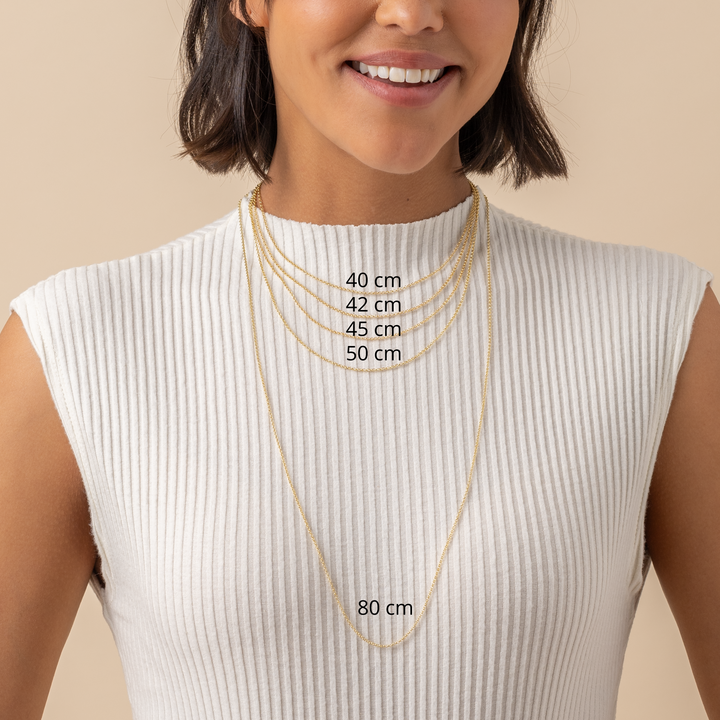
The pendant measures 20 mm (about 0.8 inch), about 2 mm more than a US dime (17.91 mm). It hangs from a small loop at its top and sits below the collarbone on a 45 cm (17.7 inch) sterling silver chain with a 5 cm (2 inch) extender. Our 925 sterling silver is nickel-free and hypoallergenic. An extra chain from 40 to 80 cm, in silver or gold vermeil, can be added on this page for layering or another pendant.
Is there a gold vermeil version?
Yes. The inner ear anatomy necklace comes in sterling silver and in 18K gold vermeil, both with a 20 mm pendant on a 45 cm chain with a 5 cm extender. Choose the finish the recipient already wears. The design is the same in both finishes. There are no inner ear earrings.
Will it arrive in time, and what if it isn't right?
DHL Express delivers it free worldwide in 1-5 business days, and we pay the import duties and taxes, so nothing is due at the door. It arrives in a ready-to-gift jewelry box and festive envelope. If it isn't right, our 30-day “Love It or Return It” policy applies.
Why did Alfonso Corti stop his work on the cochlea?
His biographers have never fully explained it, but family duties played a large part. Corti examined 200 mammal cochleae in a few weeks, and his paper was printed on 30 June 1851, marked part one. Around then, pressing business called him to Turin to divide his father's inheritance. On 30 July he wrote to his teacher Gabriel Valentin that he would resume the work that winter. Part two never appeared, and in 1854 he gave up science. Anatomists confirmed his observations, and the organ of Corti carries his name.

Human Anatomy
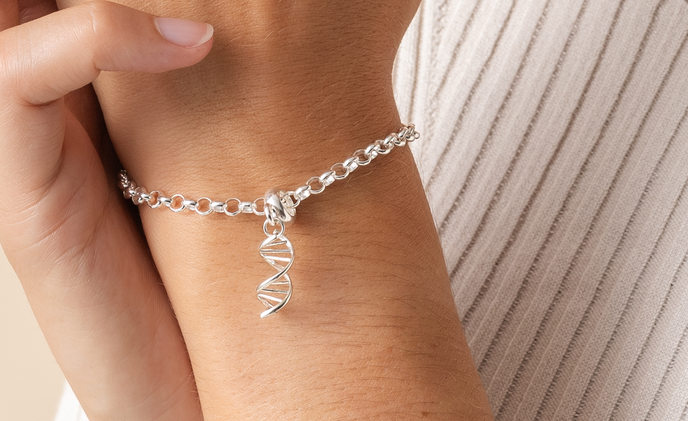
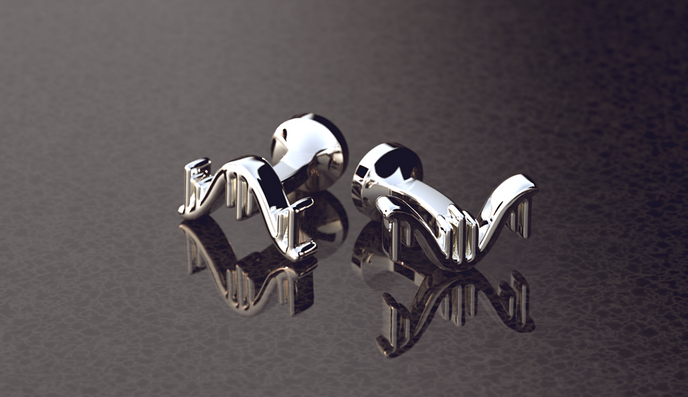
Anatomical wonders have never been so elegantly articulated. Our anatomical collection embodies the intricate and awe-inspiring structures that make us who we are. From DNA double helices to neuronal networks, our pieces don't merely imitate—they interpret. The collection serves as a tangible tribute to the hidden beauty within us all, elevating the realms of biology and medicine into wearable art. With exquisite attention to detail, each piece is a dialogue between form and function, revealing the enigmatic eloquence of the human body.
Find your perfect fit: measure an Existing Ring
Finding out your ring size at home is a simple process and can help you shop for jewelry online with confidence.
Necklace length guide