€ 265


Still questions? Contact us
Spine necklace | 18k gold vermeil
The spine is the part of the body you only notice when something has gone wrong with it. Thirty-three vertebrae stacked into an S-curve, holding up the skull and the central nervous system at the same time, doing all the work of a structural column and a neural cable simultaneously. Worn here as a full vertebral column in 18k gold vermeil.
The Anatomy of the Spine
The vertebral column has 33 vertebrae: 7 cervical, 12 thoracic, 5 lumbar, 5 sacral fused into the sacrum, and 3 to 4 coccygeal fused into the coccyx. Four curves run in the sagittal plane: cervical lordosis, thoracic kyphosis, lumbar lordosis, sacral kyphosis. Together they form a spring system that absorbs axial load during walking and running. The thoracic and sacral curves are present at birth. The cervical and lumbar curves develop in infancy as the child first lifts the head and then begins to walk. The vertebral foramina align to form the spinal canal, and the spinal cord runs through that canal until roughly the L1 to L2 level, where it ends and the cauda equina continues to the sacrum as a bundle of nerve roots. Damage at any level produces predictable neurological deficits below that level, which is why spinal level determination is one of the most consequential clinical skills in neurology and emergency medicine.
Who Tends to Wear This
- spine surgeons, neurosurgeons, and orthopaedic surgeons
- physiotherapists, chiropractors, and manual therapists
- anatomists, kinesiologists, and pain medicine specialists
- medical students through their first full back anatomy
- people who have come through major spinal surgery or a long rehabilitation
Most often picked as a milestone gift after a fellowship, a difficult surgery, or a hard-won recovery.
Explore Related Anatomy Jewelry
- Spine necklace | silver
- Atlas vertebra necklace | gold vermeil
- Cervical vertebra necklace | gold vermeil
- Lumbar vertebra necklace | gold vermeil
- Thoracic vertebra necklace | gold vermeil
FAQ
Why the full spine instead of a single vertebra?
Specific vertebrae make sense when the work or the story is about one level, an atlas for the craniocervical junction, a lumbar vertebra for low-back specialists. The full column makes sense when the story is about the whole structure: the way the curves balance each other, the way the spinal cord runs through it, the way scoliosis or a long fusion shows up across multiple levels at once. Both versions are valid pieces. This is the comprehensive one.
Why is the S-curve important?
The S-curve is what lets the spine carry vertical loads without breaking. A perfectly straight column would transmit every footstep up to the skull as a shock. The alternating cervical, thoracic, lumbar, and sacral curves act as a leaf-spring system that absorbs and redistributes the impact. Loss of the lumbar curve (flat-back syndrome) or excessive curvature (hyperkyphosis, hyperlordosis) is biomechanically expensive: it forces compensation elsewhere in the chain. Seen from behind, as on the pendant, the column reads mostly straight. The sagittal curves show best in lateral view.
What size is the pendant and what does it ship with?
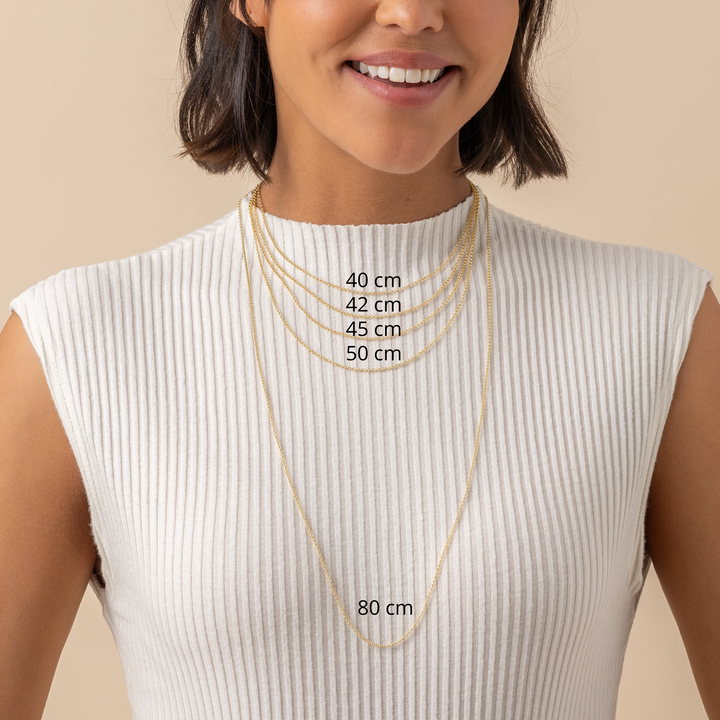
The pendant is 60 mm tall, sized to make the full vertebral column readable as a single piece. It comes in 18k gold vermeil, a 2.5 micron gold layer over a sterling silver core, nickel-free and hypoallergenic, on a 45 cm gold vermeil chain (1.8 mm width, lobster clasp) with a 5 cm extender, so the pendant sits at the centre of the chest where the spine itself runs. Free worldwide DHL Express shipping in 1-5 business days, all import duties covered, in a ready-to-gift jewelry box.
What's the difference between the silver and gold spine?
The anatomy is identical: same 33 vertebrae, same S-curve, same 60 mm scale. Material is the only difference. Both ship on a 45 cm chain in matching material.

Human Anatomy
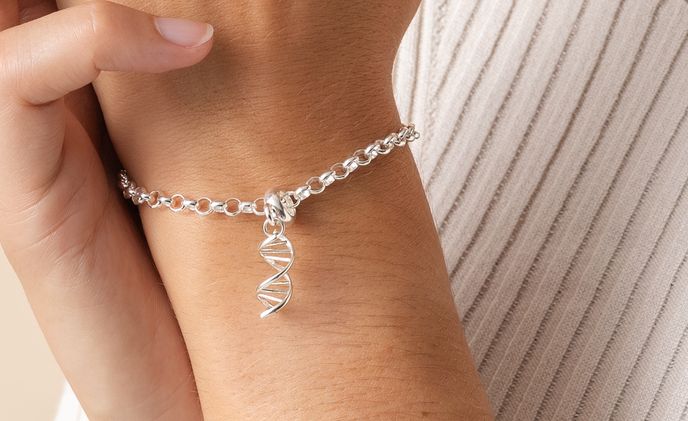
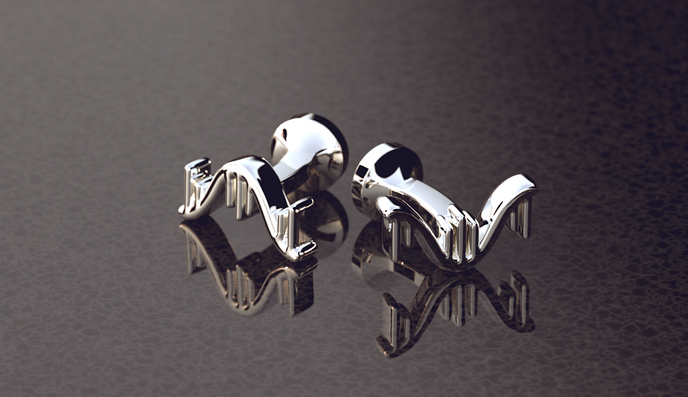
Anatomical wonders have never been so elegantly articulated. Our anatomical collection embodies the intricate and awe-inspiring structures that make us who we are. From DNA double helices to neuronal networks, our pieces don't merely imitate—they interpret. The collection serves as a tangible tribute to the hidden beauty within us all, elevating the realms of biology and medicine into wearable art. With exquisite attention to detail, each piece is a dialogue between form and function, revealing the enigmatic eloquence of the human body.
Find your perfect fit: measure an Existing Ring
Finding out your ring size at home is a simple process and can help you shop for jewelry online with confidence.
Necklace length guide