€ 175


Still questions? Contact us
Hemoglobin necklace | sterling silver
If you have read enough oxygen-dissociation curves to know why the sigmoidal shape matters, why a leftward shift means trouble, and why hemoglobin is still the textbook example of cooperativity 60 years after Perutz solved its structure, you already recognise what this is. The most-studied protein in biology, in 16 mm of silver.
The Science of Hemoglobin
Hemoglobin is a tetrameric protein: two alpha and two beta globin subunits, each cradling a haem group with an iron atom that reversibly binds oxygen. The four subunits cooperate. When the first oxygen binds, the protein shifts toward its R (relaxed) state, raising the affinity of the remaining haems. When the last oxygen leaves, the protein shifts back toward T (tense), encouraging release. The result is the famous sigmoidal binding curve: high uptake at lung partial pressures, efficient release at tissue partial pressures. Max Perutz solved the structure in 1959, the first protein structure ever determined and the foundation of modern structural biology. Sickle cell disease, beta-thalassemia, methemoglobinemia, carbon monoxide poisoning, the Bohr effect, fetal hemoglobin physiology, and pulse oximetry all become reasonable when read at the level of this single molecule.
Who Will Recognise It
The audience clusters around hematology and biochemistry:
- hematologists managing sickle cell disease, thalassemia, and other hemoglobinopathies
- transfusion medicine specialists and blood-bank physicians
- biochemists and structural biologists working on allosteric proteins
- pulmonologists and intensivists managing oxygen-delivery problems
- medical students through their first hematology block
The hematology audience tends to recognise the structure across a room. Hemoglobin is the molecule the field is built around, and a piece naming it directly reads as well-chosen.
Explore Related Cellular Biology Jewelry
FAQ
Why does cooperativity matter so much for hemoglobin?
Because it is what makes the protein a useful oxygen carrier. A non-cooperative oxygen-binder (like myoglobin) saturates at low partial pressures and releases slowly. The sigmoidal hemoglobin curve does the opposite: it picks up oxygen efficiently at the lung's high partial pressure and releases it efficiently at the tissue's lower partial pressure. The Bohr effect (CO2 and H+ shift the curve rightward, encouraging release in metabolically active tissue) is part of the same allosteric mechanism. Without cooperativity, oxygen delivery to working muscle and the brain would not work at the rates the body needs.
Why was Perutz's 1959 structure so important?
Because it was the first protein structure ever solved. John Kendrew solved myoglobin almost simultaneously, and the two structures together founded structural biology as a field. Perutz had been working on hemoglobin since the late 1930s, refining the technique of multiple isomorphous replacement that made X-ray crystallography of proteins possible. The 1962 Nobel Prize in Chemistry went jointly to Perutz and Kendrew for their work. Modern hemoglobin structures, refined by cryo-EM and high-resolution X-ray, have not changed the basic picture from Perutz's original. They have only filled in the details.
What is the size, material, and chain?
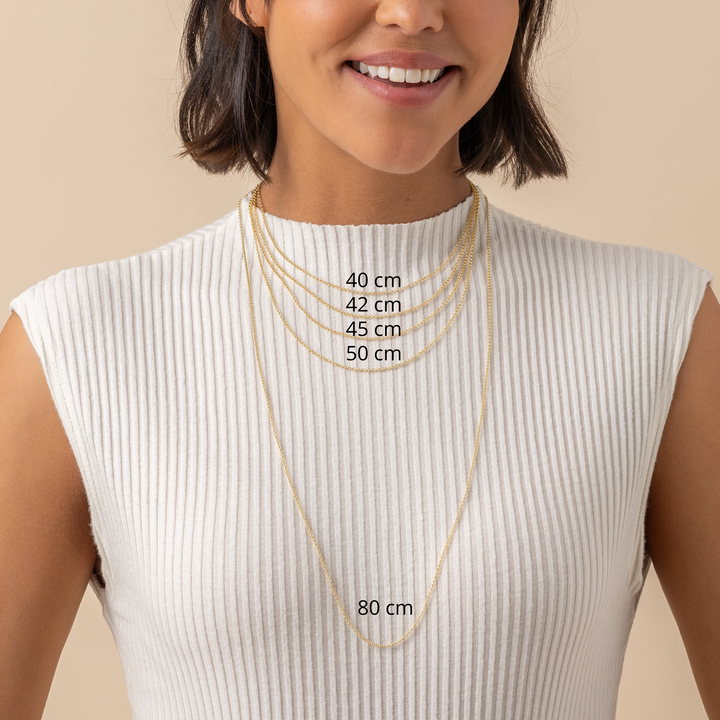
16 mm pendant in 925 sterling silver, nickel-free. 45 cm sterling silver chain with a 5 cm extender. Ships free worldwide via DHL Express in 1-5 business days, with all import duties prepaid. Comes in a ready-to-gift jewelry box with the 30-day “Love It or Return It” policy.
Is there a gold version?
Not currently. The hemoglobin pendant is silver only. The catalog has gold versions of several other molecular pieces (DNA, dopamine, serotonin, ATP) but hemoglobin is single-material for now.
Cellular Biology
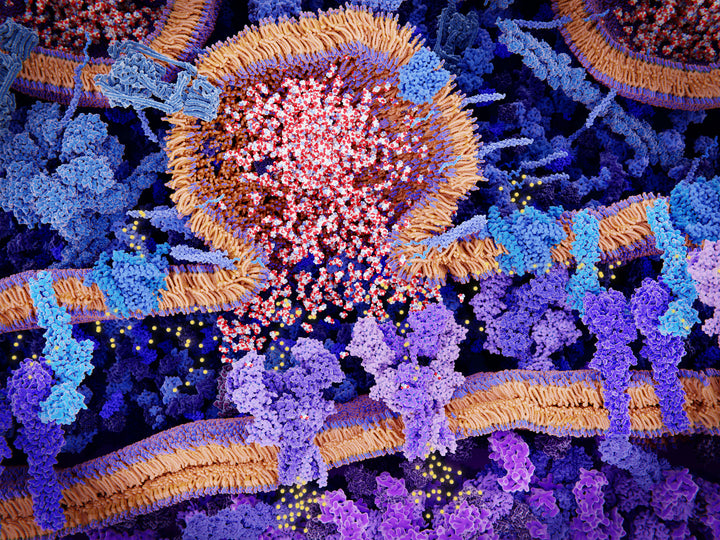
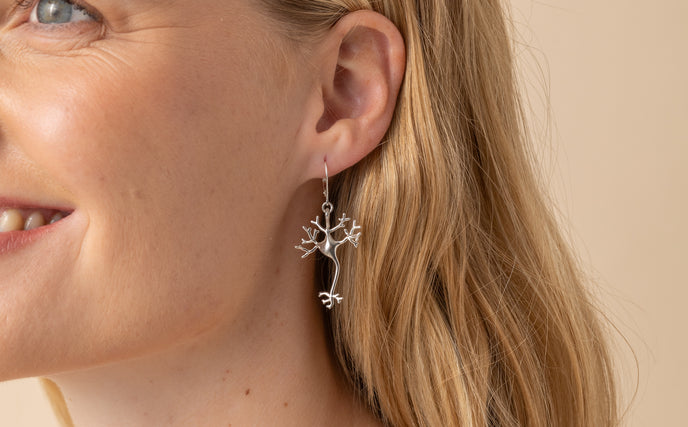
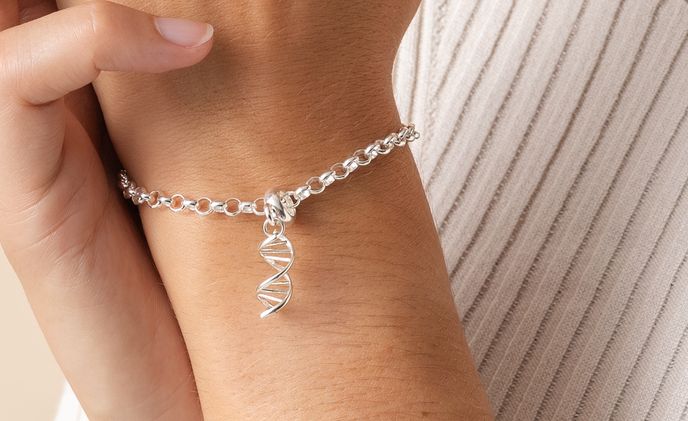
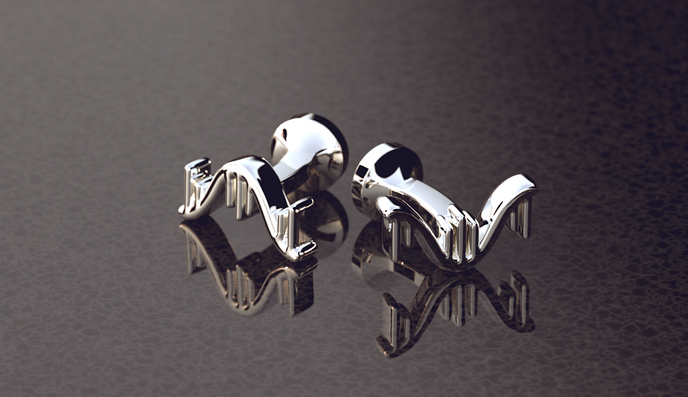
Step into the fascinating world of cellular biology through our unique jewelry designs. These pieces serve as wearable reflections of life's microscopic wonders, capturing the aesthetics of DNA strands, cellular formations, and more. Far from simple adornments, they spark dialogue and honor the captivating complexities found within biological research. Merging scientific accuracy with artistic flair, each creation offers a tactile experience that bridges the gap between scientific inquiry and aesthetic appreciation.
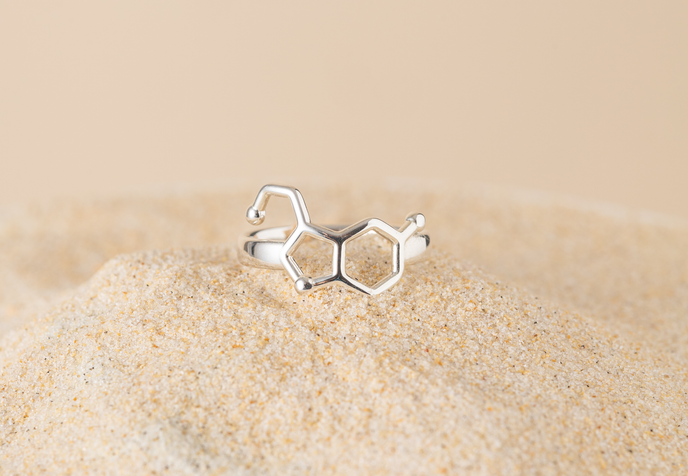
Find your perfect fit: measure an Existing Ring
Finding out your ring size at home is a simple process and can help you shop for jewelry online with confidence.
Necklace length guide