€ 225


Still questions? Contact us
DNA necklace H | sterling silver and 18K gold vermeil
The two strands of DNA pair up base by base, and each one holds the information to rebuild the other. This two-tone DNA necklace gives each strand its own metal: one in sterling silver, one in gold vermeil. A gift for an anniversary, a graduation in the life sciences, or a first job in the lab.
Who It's For
- a partner who works in science, for an anniversary
- a daughter or granddaughter graduating in biology, biomedical or laboratory science
- a PhD student at the start of the doctorate, or at the end of it
- someone who wears both silver and gold jewelry
- a molecular biologist or geneticist buying one for themselves
Bente C. gave it to a newly qualified bioanalyst: “the recipient was really happy with it.” Hanna H., a biomedical laboratory science graduate, bought her own: “I've worn it every day since I got it, and I absolutely adore it.”
The Science Behind the Double Helix
Each strand of DNA is a long chain built from four kinds of base, and the two strands pair by strict rules: A with T, G with C. Read one strand and you know the other. That is what makes copying possible. Before a cell divides, the strands separate and each becomes the template for a new partner, so every new double helix is half old and half new. The same pairing lets cells repair damage: when one strand is broken or altered, the intact strand holds the information to restore it. In humans, that pairing spans about 3 billion base pairs in each set of chromosomes.
Explore Related Genetics Jewelry
FAQ
How big is it, and what is it made of?
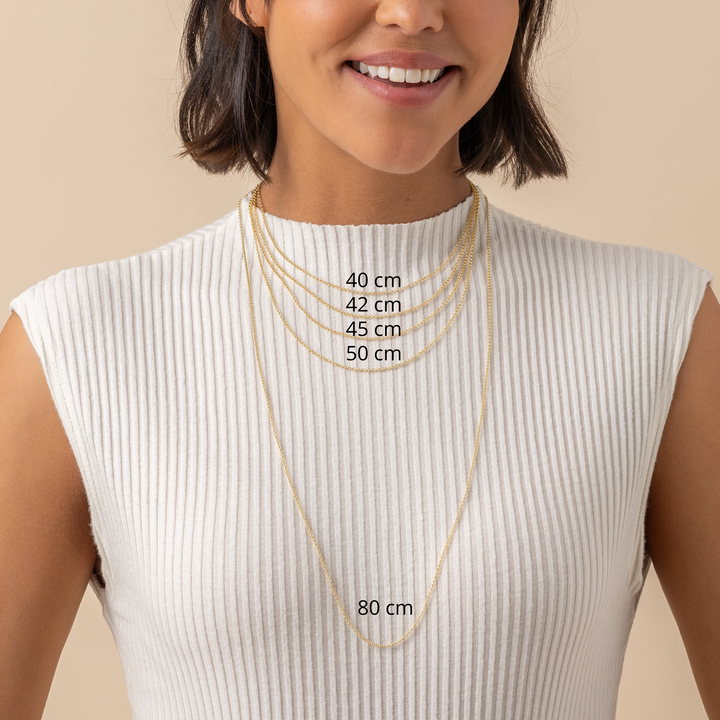
The pendant is 30 mm wide (about 1.2 inches), a little wider than a 2-euro coin or a US quarter. One strand is sterling silver, the other 18K gold vermeil: 2.5 microns of 18K gold over sterling silver. It hangs from both ends on a 45 cm (17.7 inch) sterling silver chain with a 5 cm (2 inch) extender, so it rests at the collarbone or a little lower. Nickel-free and hypoallergenic. Wipe it with a soft cloth, store it dry, and take it off for swimming.
Two-tone, silver or gold: which DNA necklace should I choose?
All three horizontal DNA necklaces share the same design and the same 30 mm size: all silver, all gold vermeil, or this two-tone version. The two-tone goes with both silver and gold jewelry, which helps when you are not sure which the recipient wears. There is also a vertical DNA necklace, 20 mm tall and hanging from a single loop at the top, for a smaller piece.
How fast does it arrive, and can it be returned?
DHL Express delivers it free worldwide in 1-5 business days. Import duties and taxes are paid by us, so there is nothing to pay on delivery. It comes in a ready-to-gift jewelry box and festive envelope. If it isn't right, our 30-day “Love It or Return It” policy applies.
How did scientists prove that each strand is the template for a new one?
In 1958, at Caltech, Matthew Meselson and Franklin Stahl grew bacteria on heavy nitrogen, moved them to normal nitrogen, and measured the density of their DNA by spinning it in a caesium chloride gradient. After one generation, every DNA molecule sat halfway between heavy and light: half old, half new. After two generations, half were in between and half were light. A 2001 book-length history of the work calls it “the most beautiful experiment in biology.”
Genetics
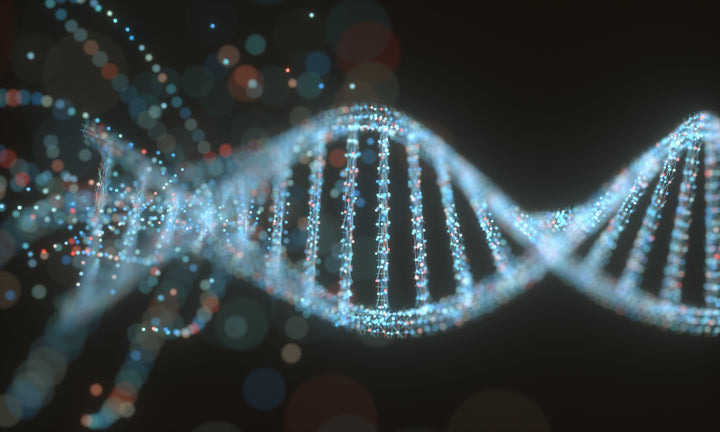
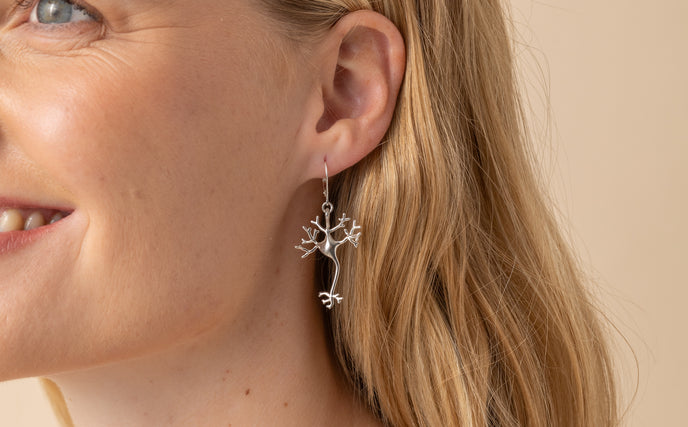
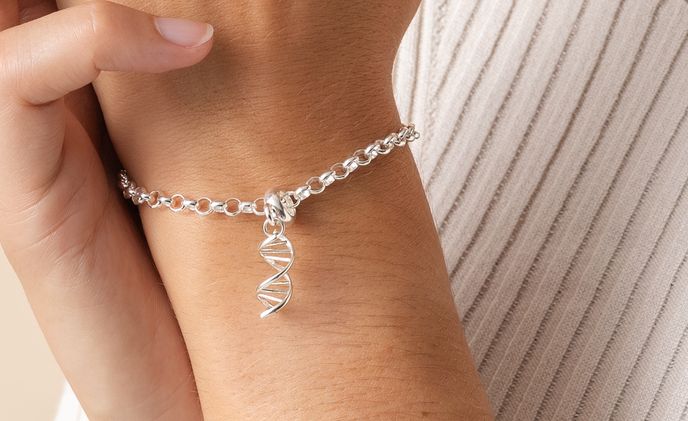
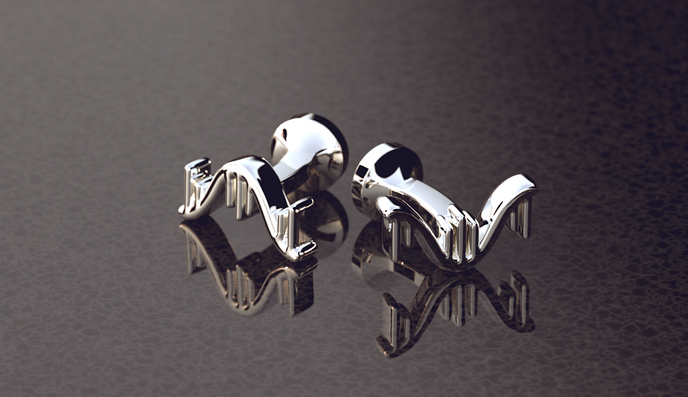
Our genetics-inspired jewelry captures the essence of life's code in striking detail. Crafted to mirror the DNA double helix, each piece is more than an aesthetic marvel—it's a tribute to the complexity of our genetic makeup. Far from ordinary, this collection combines scientific precision with artistic flair, making each item a captivating blend of form and function. It's not just an accessory; it's a meaningful representation of the miracle that is genetics.
Find your perfect fit: measure an Existing Ring
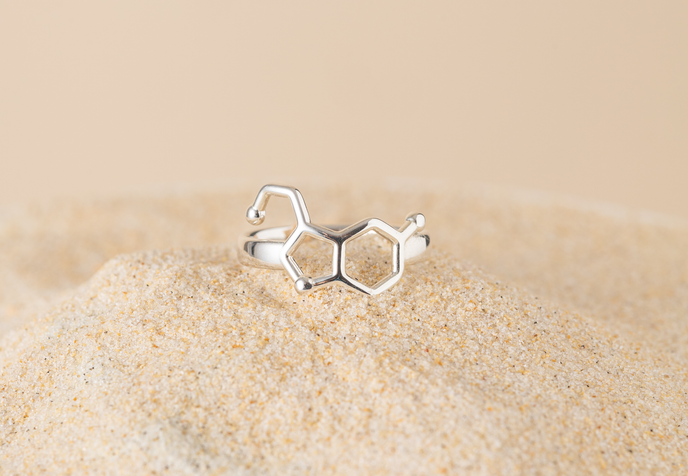
Finding out your ring size at home is a simple process and can help you shop for jewelry online with confidence.
Necklace length guide