€ 225


Still questions? Contact us
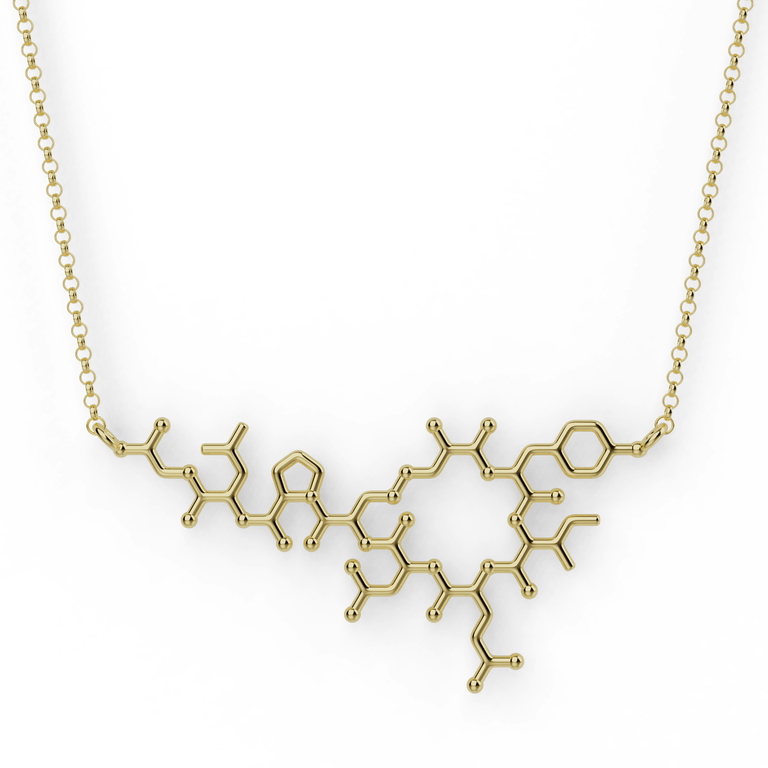
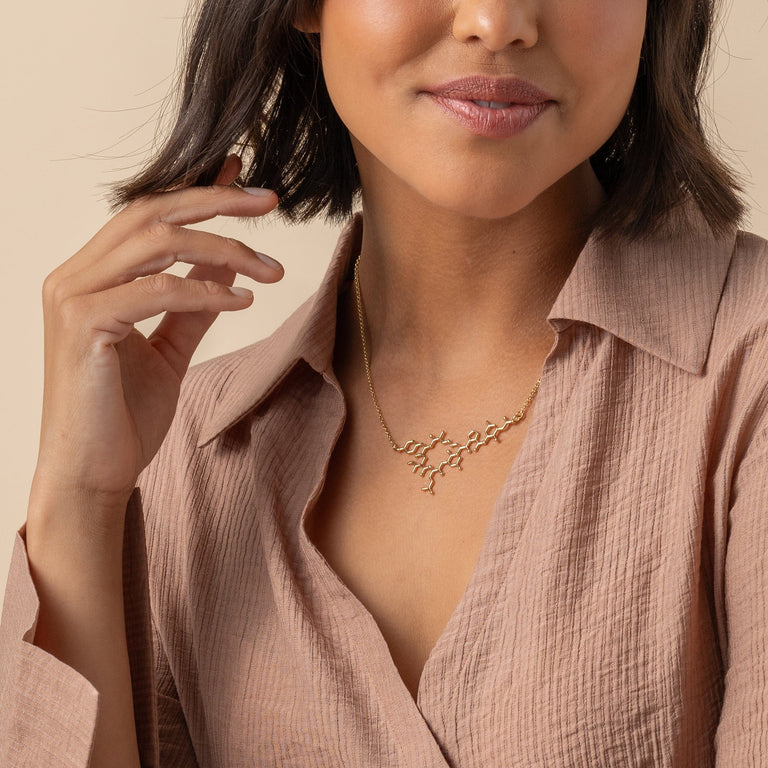
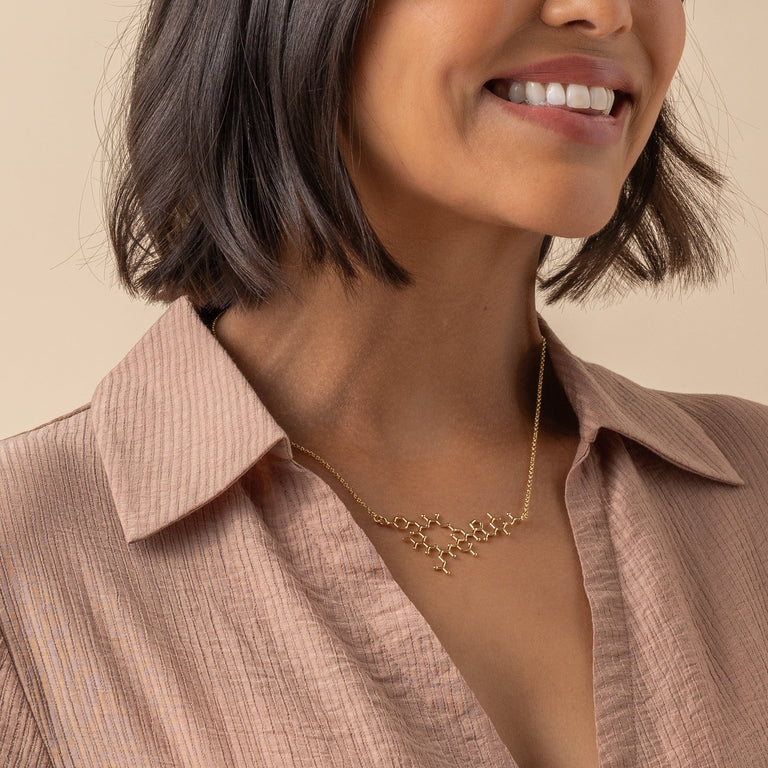
Oxytocin necklace | 18K gold vermeil
Between partners, oxytocin is a quiet way to say something about the two of you. For a midwife, it is part of almost every birth she attends. This gold oxytocin necklace is a gift for both, and for a new mother, or a friend who has just graduated in science.
Who It's For
- a wife-to-be or partner, for an engagement or Valentine's Day
- a new mother, from the family or from her partner
- a midwife or obstetrician who already wears gold
- a friend who has just graduated in biology, chemistry or medicine
- yourself, if hormones and birth are part of your working life
Martin W. gave it to his girlfriend: “It has perfect dimensions being visible and eye-catching even at the same time modern and sophisticated.” Eva B. bought it as a present: “This is the perfect gift to someone that just graduated as a scientist”.
Oxytocin and Its Sibling, Vasopressin
Oxytocin has a close relative, vasopressin. Both are chains of nine amino acids, with a disulfide bridge closing the first six into a ring, and they differ at only two positions. Their genes sit side by side on the same chromosome, the result of one ancestral gene being copied early in vertebrate evolution. The two hormones then took different jobs. Oxytocin contracts the uterus during labour and lets milk flow during breastfeeding. Vasopressin tells the kidneys to hold on to water. Because they are so alike, each can also switch on the other's receptors: vasopressin binds the oxytocin receptor almost as tightly as oxytocin does, and large doses of oxytocin can make the kidneys hold water.
Explore Related Molecules Jewelry
- oxytocin necklace | silver
- oxytocin necklace 3D | gold vermeil
- oxytocin ring | silver
- dopamine serotonin necklace H | gold vermeil
FAQ
How big is it, and how does it wear?
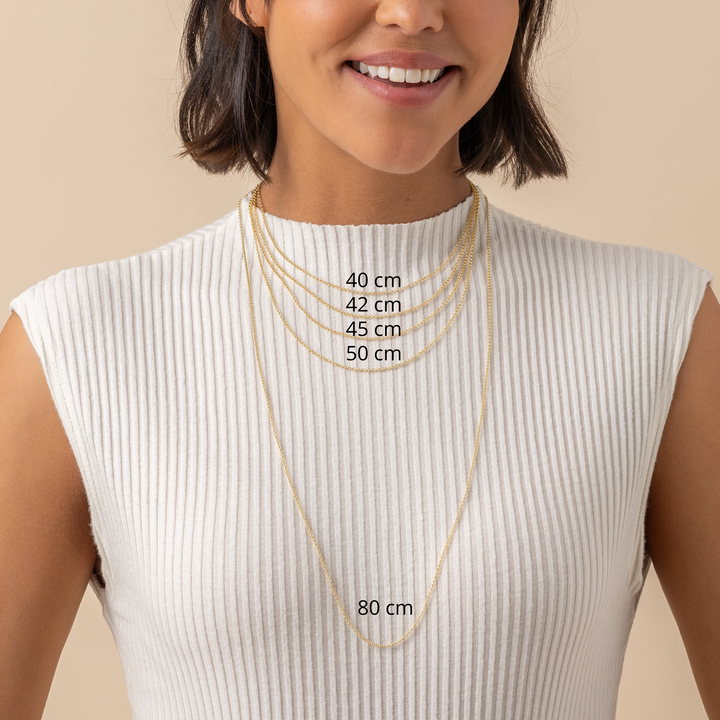
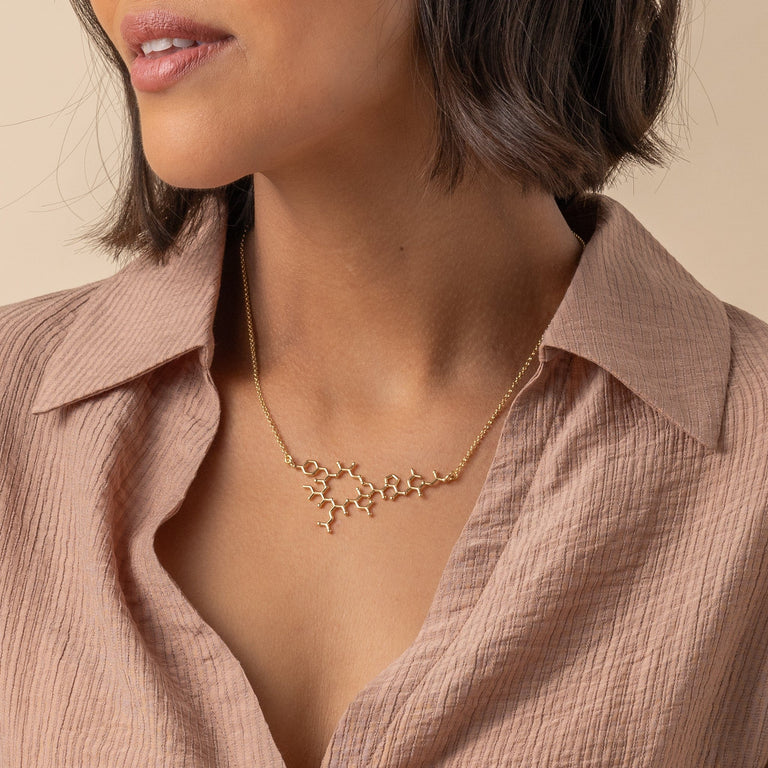
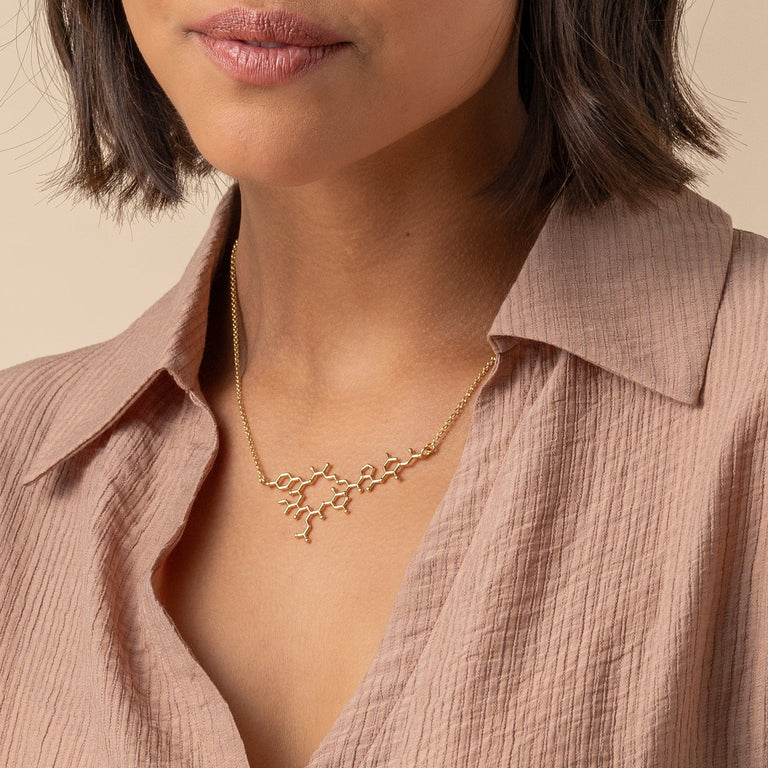
The pendant is 62 mm wide (about 2.4 inches), about two and a half 2-euro coins or US quarters side by side. It hangs from both ends on a 45 cm (17.7 inch) gold vermeil chain with a 5 cm (2 inch) extender, and longer chains up to 80 cm can be added on this page. Gold vermeil is 2.5 microns of 18K gold over solid sterling silver, nickel-free and hypoallergenic. The lines are slender, so avoid tugging the pendant, store it flat, and take it off before swimming.
Is there a silver version, or a smaller oxytocin necklace?
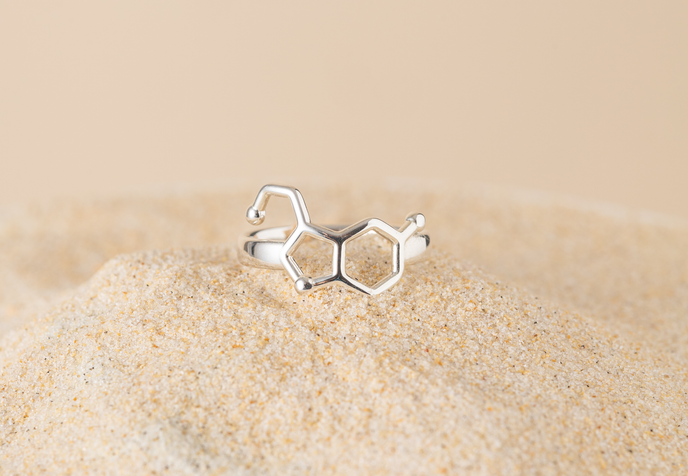
Yes. This design comes in sterling silver at the same 62 mm. Choose the finish she already wears: the design is identical in both. For a smaller piece, the 3D oxytocin necklace is 48 mm and comes in gold vermeil and sterling silver. There is also an oxytocin ring in sterling silver.
Is delivery free, and what if it isn't right?
Yes. DHL Express delivers free in 1-5 business days worldwide, and we pay the import duties and taxes, so nothing is due at the door. It arrives in a ready-to-gift jewelry box and festive envelope. If it isn't right, our 30-day “Love It or Return It” policy applies.
Where does the name oxytocin come from?
From Greek: oxys, swift, and tokos, childbirth. In 1906 the British pharmacologist Henry Dale was studying ergot, a fungus long used to hurry labour, when he found that an extract of the pituitary gland made the uterus contract. In 1910 Isaac Ott and John Scott showed that the same kind of extract released milk. Only in the 1950s did Vincent du Vigneaud work out the molecule behind both effects and make it in the lab.
Molecules
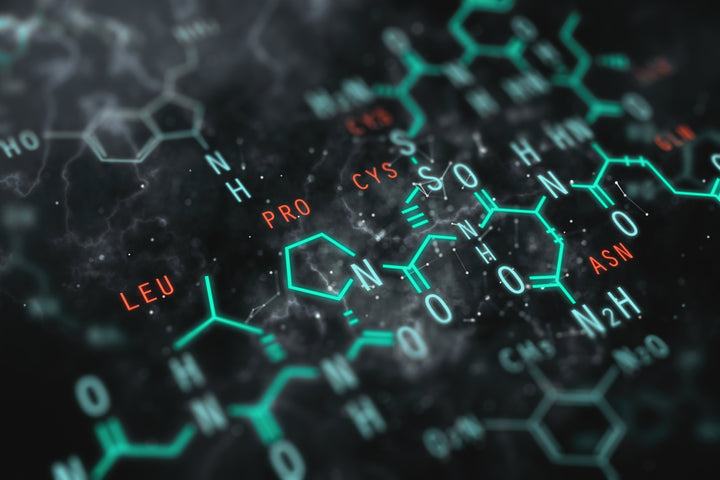
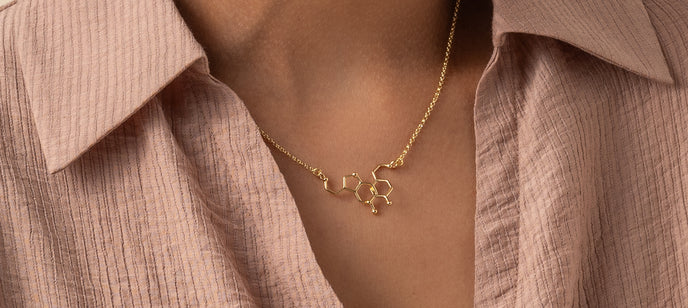
Delve into the hidden elegance of science with our meticulously crafted jewelry, inspired by the intricate structures of chemical molecules. Each piece serves as a tactile tribute to the building blocks of life and matter, capturing the allure of atoms and bonds in precious metals. A harmonious fusion of art and science, these creations are more than mere accessories; they're a celebration of the enigmatic beauty that underpins our universe.
Find your perfect fit: measure an Existing Ring
Finding out your ring size at home is a simple process and can help you shop for jewelry online with confidence.
Necklace length guide