



€ 130


Still questions? Contact us
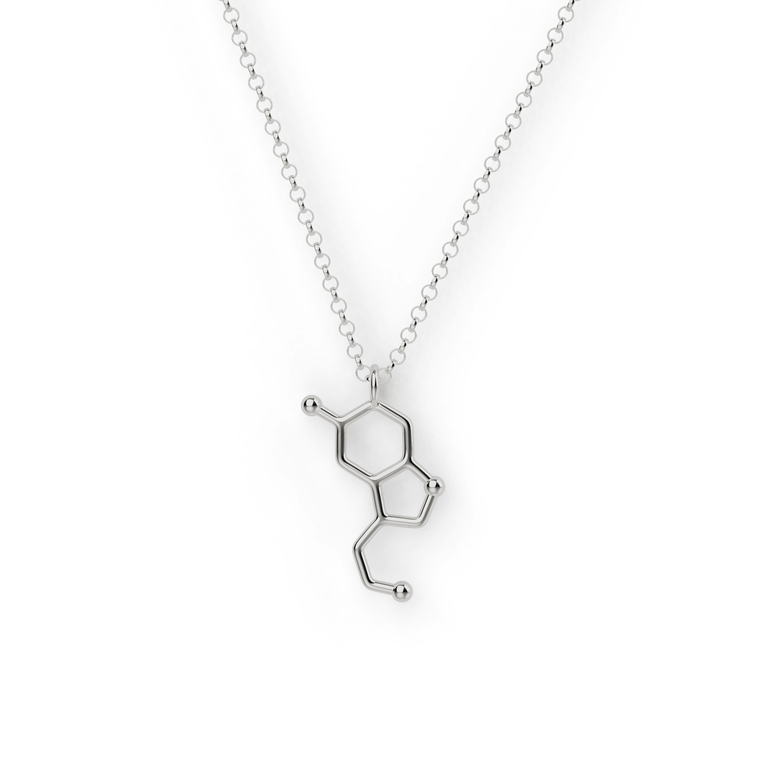
Serotonin necklace V | silver
Serotonin's 5-HT2A receptor is the primary target of classical psychedelics — LSD, psilocin, mescaline, DMT. The structural similarity between serotonin and these compounds is what gave Albert Hofmann the insight, after synthesizing LSD, that its effects might involve serotonin receptors. It took decades to confirm that this was exactly right.
The Science Behind Serotonin
Serotonin is an indoleamine — it contains a tryptamine core with a hydroxyl group at the 5-position. Classical psychedelics share this tryptamine scaffold (or, in the case of LSD, a modified ergoline that fits the same receptor pocket). 5-HT2A receptors are Gq-coupled GPCRs expressed most densely in layers II/III/V of the cortex and in the prefrontal cortex. Agonism at 5-HT2A increases glutamatergic excitation in pyramidal neurons and disrupts the hierarchical predictive coding that normally filters sensory input. This is the current leading mechanistic account of the perceptual effects of psychedelics — reduced top-down prediction leading to unfiltered sensory experience. The same receptor is blocked by antipsychotics as part of their mechanism of action: second-generation antipsychotics combine D2 antagonism with 5-HT2A antagonism, which reduces extrapyramidal side effects.
A Meaningful Gift for Science Lovers
For neuroscientists studying consciousness and perception, psychopharmacologists, psychiatrists in the psychedelic medicine space, and anyone fascinated by how serotonin receptors shape experience.
- neuroscientists studying consciousness and sensory processing
- psychopharmacologists and 5-HT2A researchers
- psychiatrists working with psychedelic-assisted therapy
- anyone interested in the molecular basis of perception
The molecule whose receptor, when activated by the right compound, changes the nature of perception.
Explore Related Molecules Jewelry
- Serotonin necklace H | silver
- Serotonin necklace V | gold vermeil
- Psilocybin necklace | silver
- Fluoxetine necklace | silver
- Dopamine-serotonin necklace V | silver
FAQ
Q: How does the vertical orientation change how we see serotonin?
A: The vertical view emphasizes the amine group at the top and the hydroxyl at the bottom, showing serotonin's polar regions. This perspective highlights the molecule's chemical polarity and its ability to form multiple bonds with water and receptor proteins.
Q: Is this better as a gift than the horizontal version?
A: Neither is better, just different. The vertical orientation has a more balanced, centered look. Choose based on personal preference or which feels right for the person.
Q: What is this made from and what chain comes with it?
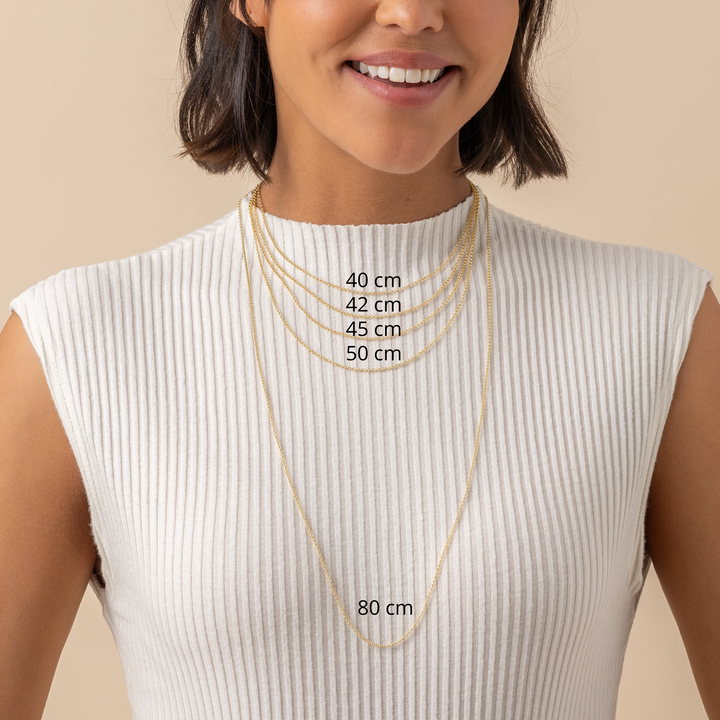
A: Sterling silver pendant on a 45cm (18-inch) sterling silver chain. Shipped via DHL Express worldwide.
Molecules
Delve into the hidden elegance of science with our meticulously crafted jewelry, inspired by the intricate structures of chemical molecules. Each piece serves as a tactile tribute to the building blocks of life and matter, capturing the allure of atoms and bonds in precious metals. A harmonious fusion of art and science, these creations are more than mere accessories; they're a celebration of the enigmatic beauty that underpins our universe.

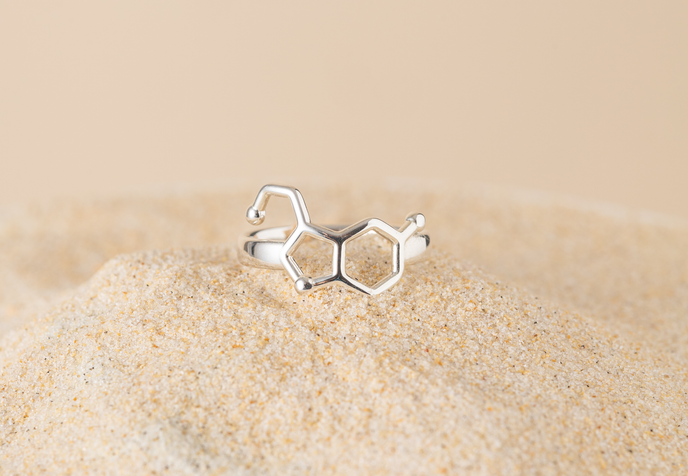

Find your perfect fit: measure an Existing Ring
Finding out your ring size at home is a simple process and can help you shop for jewelry online with confidence.
Necklace length guide