€ 140


Still questions? Contact us
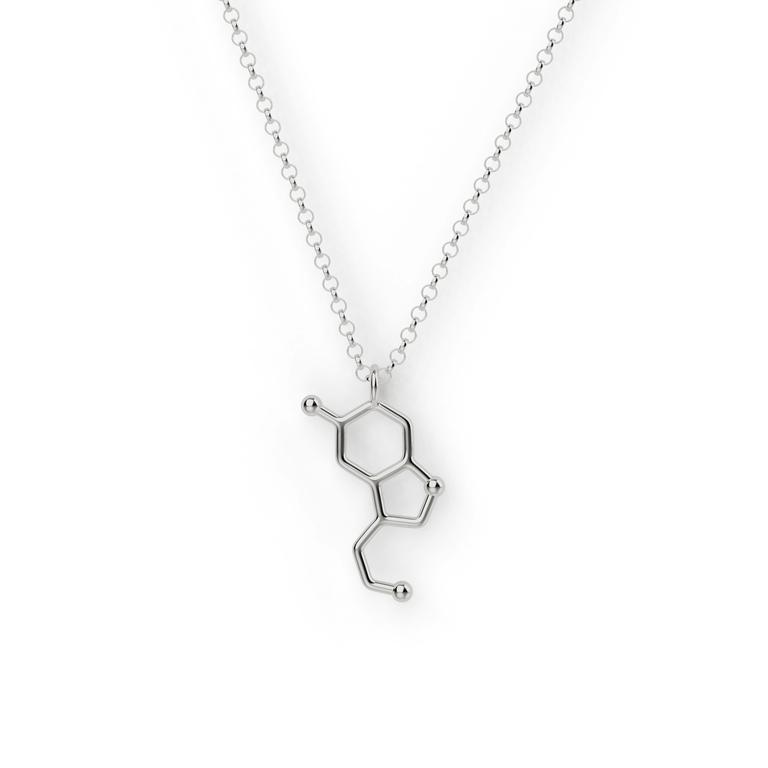
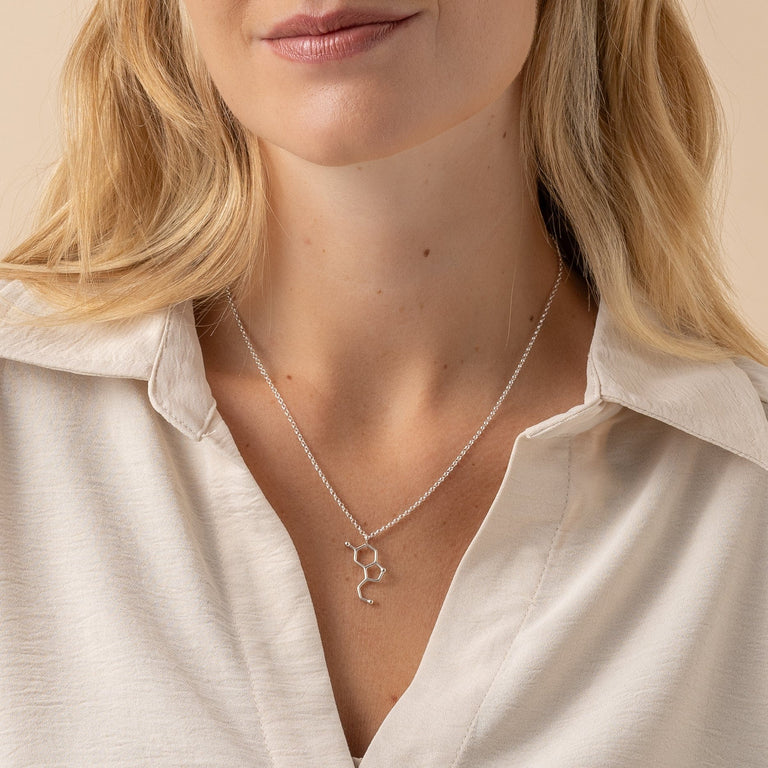
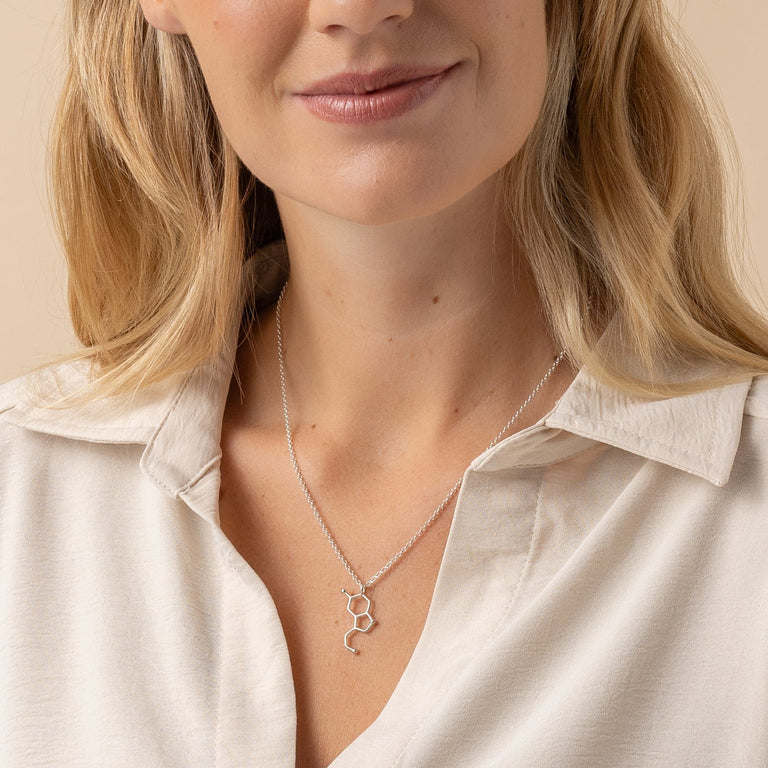
Serotonin necklace V | sterling silver
One customer had this serotonin necklace in mind for about a year, then finally bought it to mark their own graduation. It suits that kind of milestone: a degree in psychology, pharmacy or neuroscience, for yourself or for a daughter who has just finished hers.
Who It's For
- a daughter or granddaughter, for Christmas or her birthday
- a wife or partner who works in nursing or medicine
- a best friend who loves science as much as you do
- a student starting out in a chemistry lab
- yourself, as a necklace to wear every day
Kyla S. wrote about this necklace: “This is the 3rd of these necklaces I have purchased from here. They are beautiful and meaningful to the recipients.” Ana F. bought one for herself: “This piece joins elegance and nerdiness in one.”
How Plants Make Serotonin
Plants make serotonin too, from the same amino acid, tryptophan. In rice and most other plants studied, the two steps run in the opposite order to animals. Animals add a hydroxyl group first and then remove the carboxyl (acid) group. Plants remove the acid group first, which gives tryptamine, and add the hydroxyl group last. In rice, the gene for that last step was identified only in 2010. For the plant, serotonin is part of its defences. When fungi such as the brown spot or blast pathogen attack a rice leaf, serotonin is built into the cell walls around the damage, where it is thought to help hold the infection back.
Explore Related Neuroscience Jewelry
- serotonin necklace V | gold vermeil
- serotonin necklace H | silver
- dopamine serotonin necklace H | silver
- serotonin studs | silver
FAQ
How big is the pendant, and how does it sit?
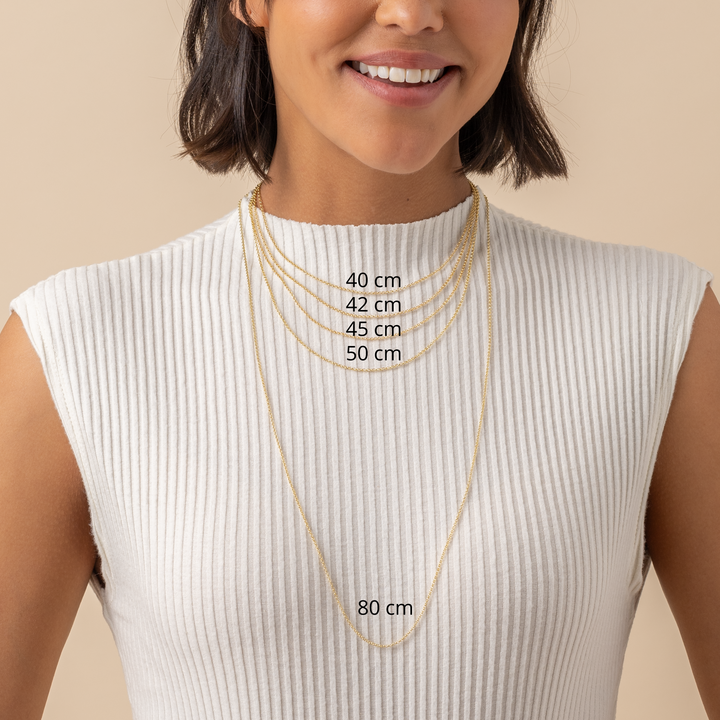
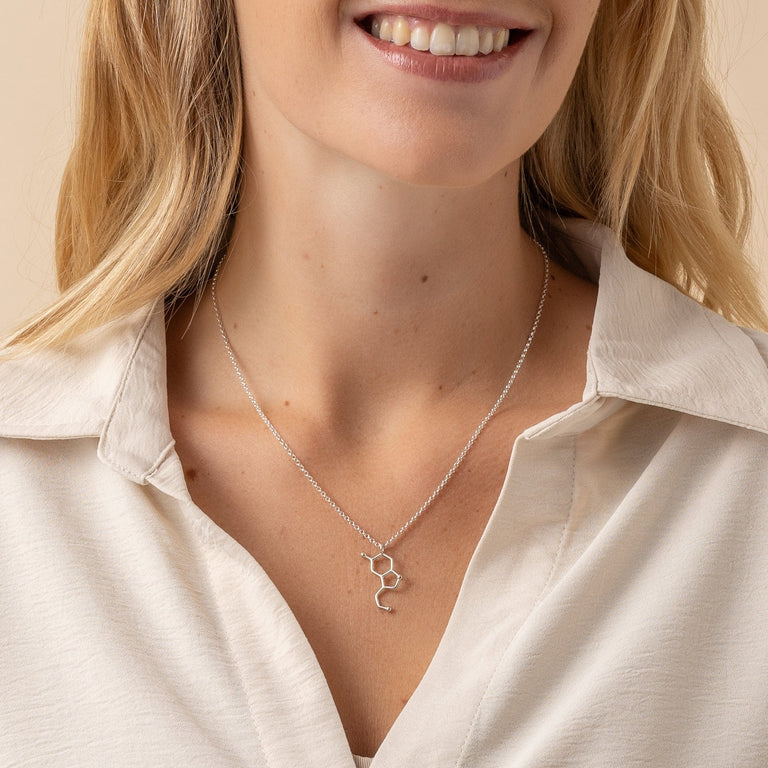
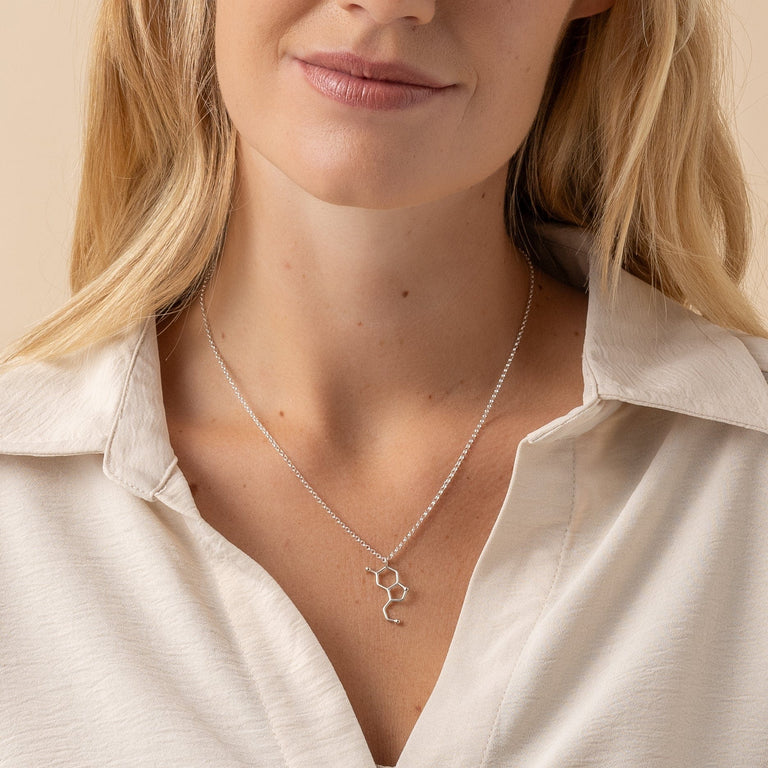
The pendant measures 25 mm (about 1 inch), close to the size of a 2-euro coin and a little larger than a US quarter. It hangs from a single point at the top, so the pendant sits upright just below the collarbone, on a 45 cm (17.7 inch) sterling silver chain with a 5 cm (2 inch) extender. Extra chains of 40, 42, 45 or 50 cm with extender, or 80 cm, are sold on this page. Our sterling silver pendant and chain are nickel-free.
Is there a gold version, or a horizontal one?
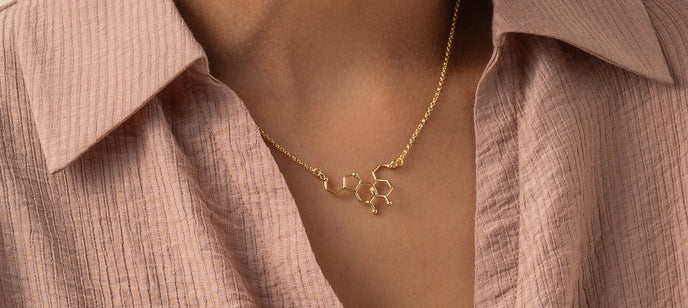
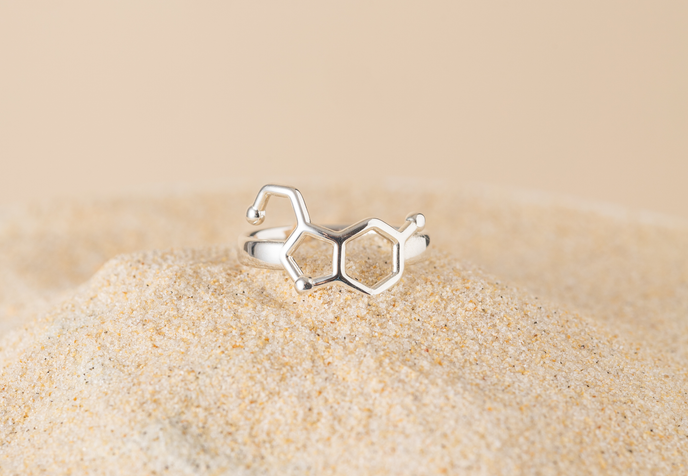
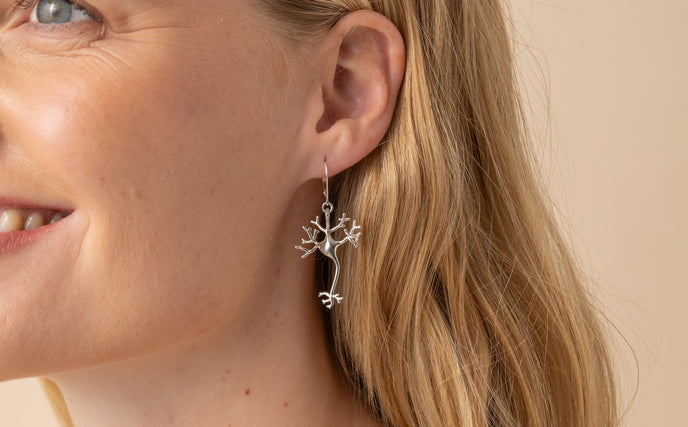
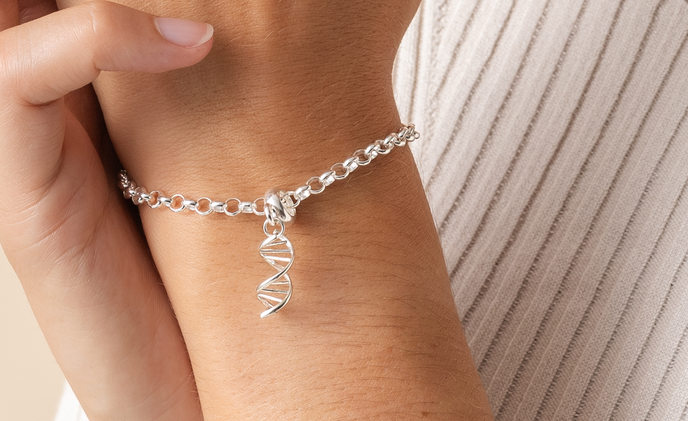
Yes to both. The same vertical pendant comes in 18K gold vermeil, also 25 mm. Choose the finish the recipient already wears. The horizontal serotonin necklace (26 mm) is fixed to the chain at both ends, so the pendant lies sideways, and it also comes in both finishes. For matching earrings there are serotonin studs (19 mm) in silver or gold vermeil. The earring hoops, bracelet and ring come only in sterling silver.
Will it arrive in time, and what if it isn't right?
It ships free worldwide with DHL Express and arrives in 1-5 business days. We pay the import duties and taxes, so there is nothing to pay on delivery. It comes in a ready-to-gift jewelry box and festive envelope. If it isn't right, our 30-day “Love It or Return It” policy applies.
Does serotonin make cowhage itch?
Probably not. Cowhage, the fine hairs on the pods of the tropical bean Mucuna pruriens, has long been known to cause intense itching. In 1954 Bowden, Brown and Batty reported serotonin in those hairs, one of the earliest finds of it in a plant. A year later Walter Shelley and Robert Arthur proposed something else, a protein-cutting enzyme they named mucunain but could not isolate. In 2008 a team isolated it, showed that it causes itch on its own, and that it switches on two receptors that sensory nerves carry.
Molecules
Delve into the hidden elegance of science with our meticulously crafted jewelry, inspired by the intricate structures of chemical molecules. Each piece serves as a tactile tribute to the building blocks of life and matter, capturing the allure of atoms and bonds in precious metals. A harmonious fusion of art and science, these creations are more than mere accessories; they're a celebration of the enigmatic beauty that underpins our universe.
Find your perfect fit: measure an Existing Ring
Finding out your ring size at home is a simple process and can help you shop for jewelry online with confidence.
Necklace length guide