€ 175


Still questions? Contact us
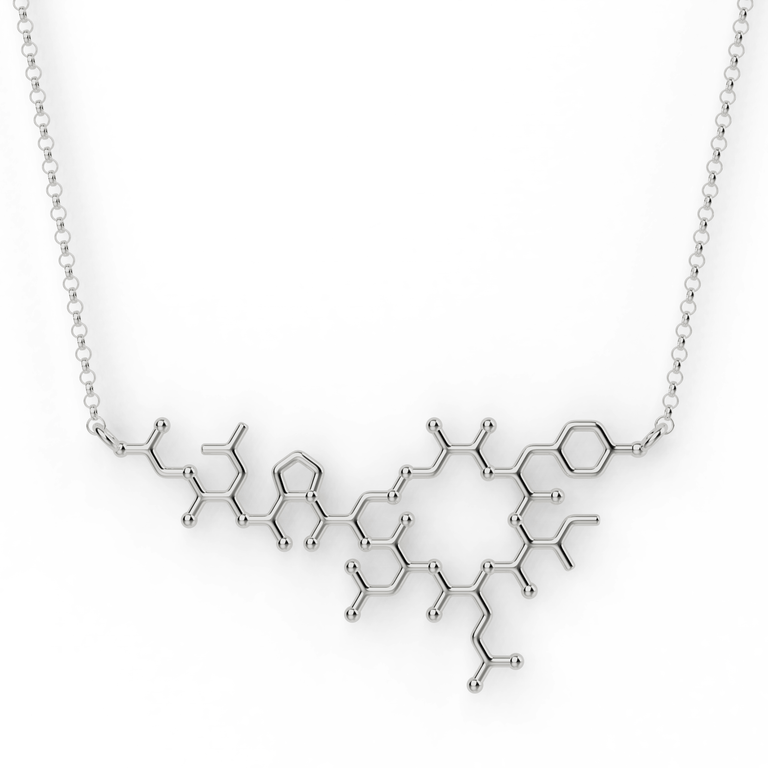
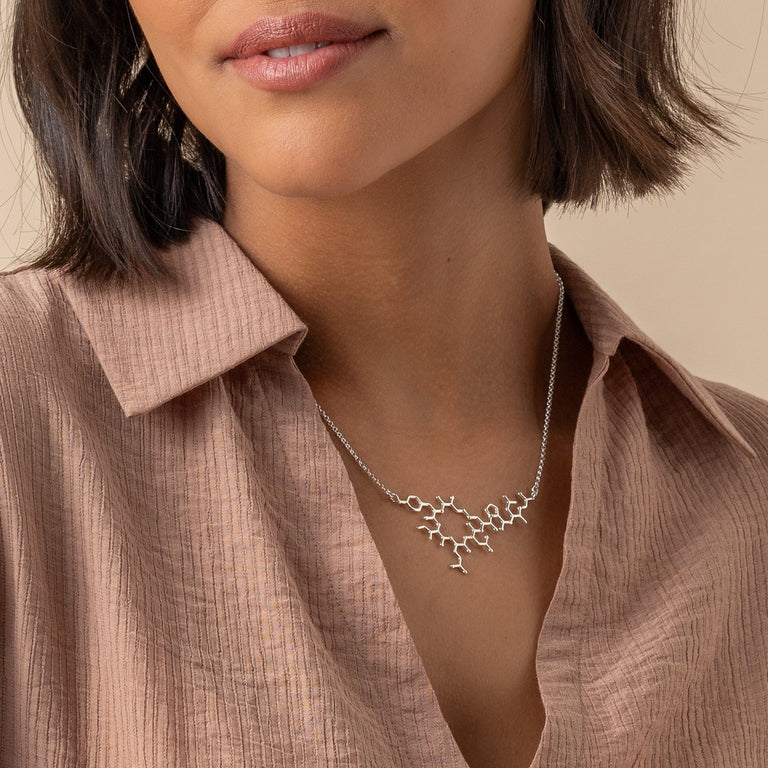
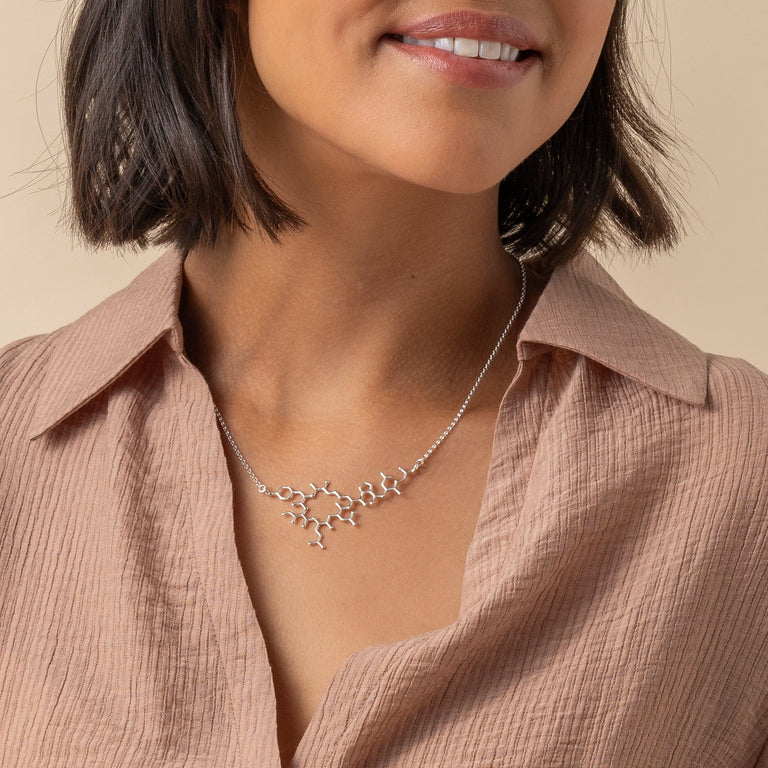
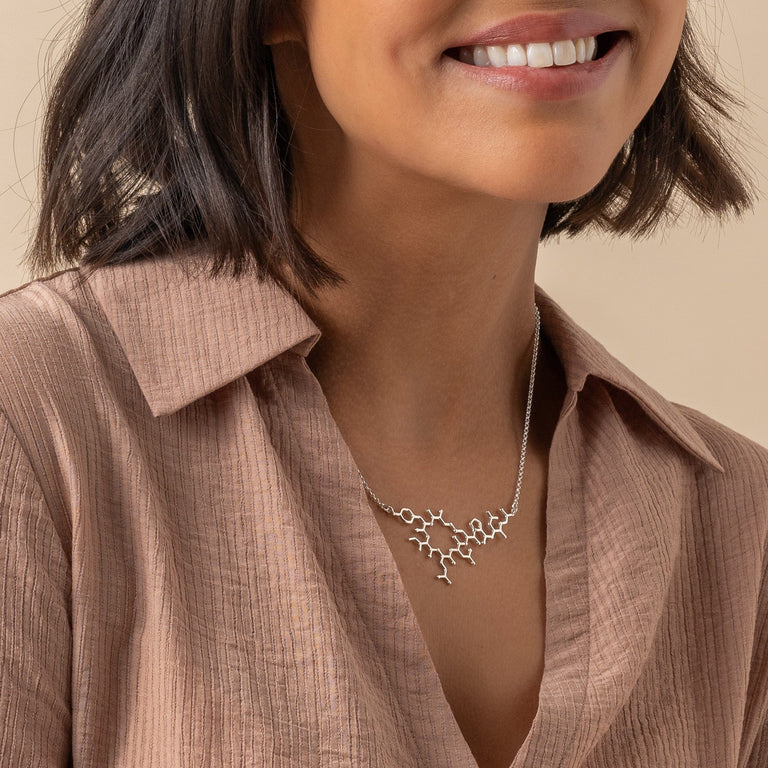
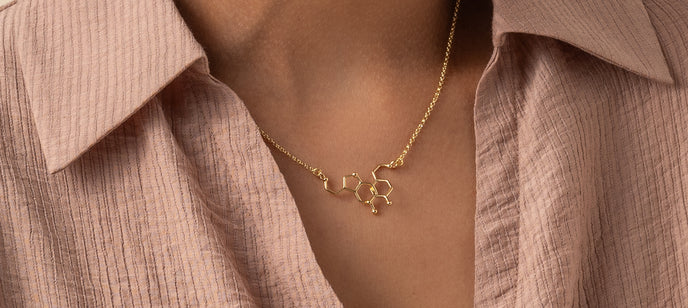
Oxytocin necklace | sterling silver
Oxytocin rises during birth and breastfeeding, and it plays a part in how mammals form bonds. That makes this oxytocin necklace a gift for a new mother, for a partner on an anniversary, or for a midwife or obstetrician who works with this hormone every day.
Who It's For
- a partner, for an anniversary or a birthday
- a midwife, obstetrician or labour nurse
- a new mother, or your own mother
- a biology or chemistry student, or a biology teacher
- a graduate in veterinary or life sciences
Matthew R. gave it to his girlfriend: “Looks absolutely beautiful on her, and she hasn't taken it off since!” Loren M., a midwife, bought her own: “I get to wear my greatest passion around my neck as a touch stone!”
The Science Behind Oxytocin
Oxytocin is a small peptide of nine amino acids. Two of them are cysteines, joined by a disulfide bridge that closes part of the chain into a ring. It is made in the hypothalamus and released into the blood from the posterior pituitary. It tightens the muscles of the uterus during labour and triggers the let-down of milk during breastfeeding. Its role in pair bonding is well studied in prairie voles, while in people the picture is more mixed. A synthetic version is one of the most widely used medicines in childbirth, given to start or strengthen labour and to prevent and treat heavy bleeding after birth.
Explore Related Molecules Jewelry
- oxytocin necklace | gold vermeil
- oxytocin necklace 3D | silver
- oxytocin ring | silver
- dopamine necklace H | silver
FAQ
How big is it, and how does it wear?
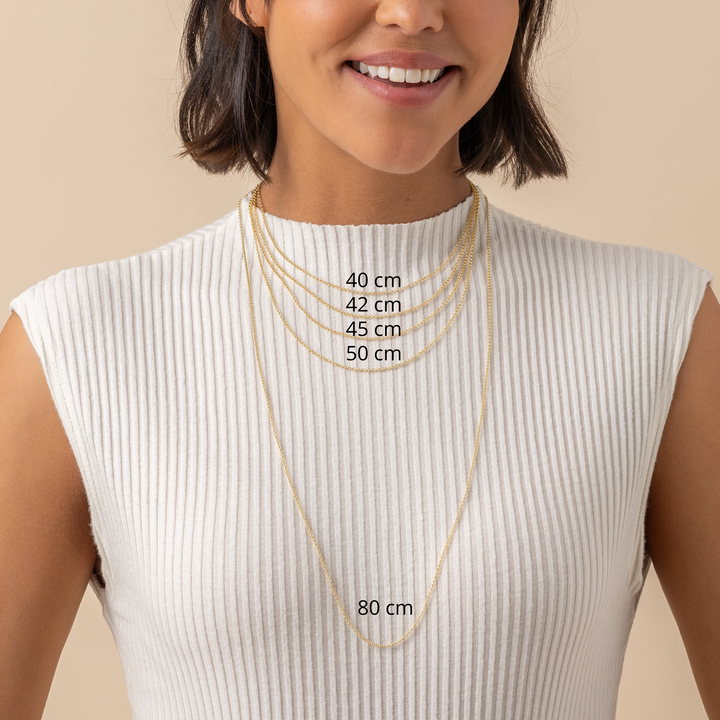
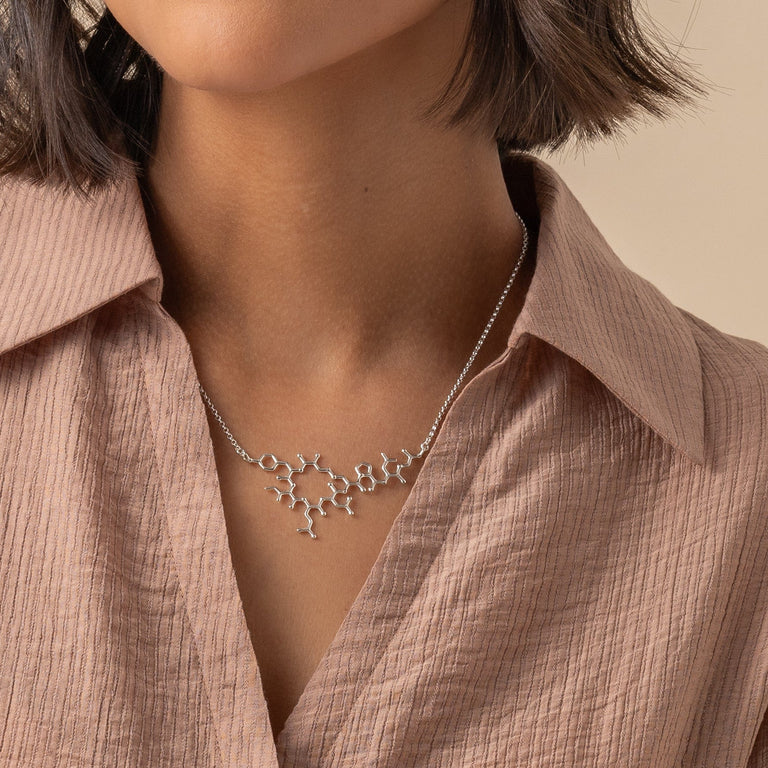
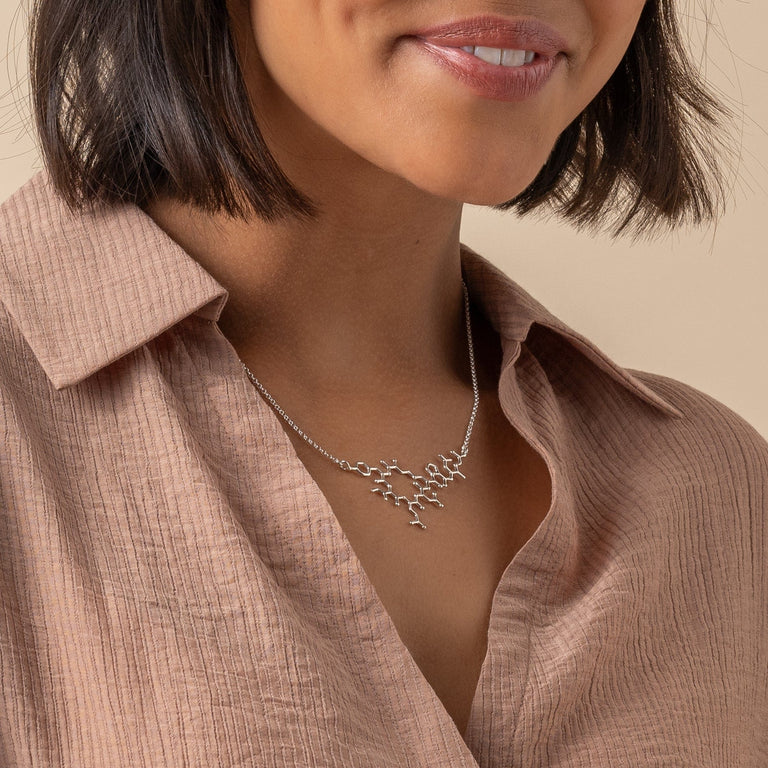
The pendant is 62 mm wide (about 2.4 inches), just under two and a half 2-euro coins side by side. It hangs from both ends on a 45 cm (17.7 inch) sterling silver chain with a 5 cm (2 inch) extender. It is 925 sterling silver, nickel-free and hypoallergenic. The lines are slender, so take it off for sleep and sport, avoid tugging the pendant, and keep it flat in its box when you are not wearing it.
Is there a gold version, a 3D version or a ring?
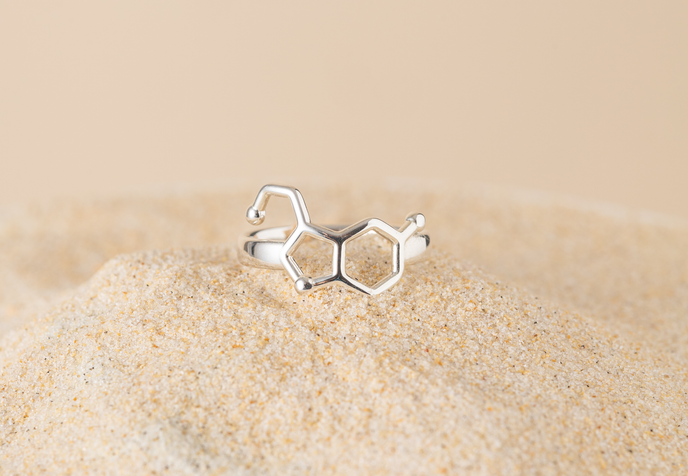
Yes. This design also comes in 18K gold vermeil at the same 62 mm. Choose the finish the recipient already wears. There is also a 3D oxytocin necklace in sterling silver, at 48 mm, and an oxytocin ring in sterling silver.
Will it arrive in time?
Free DHL Express shipping takes 1-5 business days, and we pay the import duties and taxes, so nothing is due on delivery. It arrives in a ready-to-gift jewelry box and festive envelope. If it isn't right, our 30-day “Love It or Return It” policy applies.
Who first made oxytocin in a lab?
Vincent du Vigneaud, an American biochemist at Cornell University Medical College in New York. In 1953 his team worked out oxytocin's structure and then built it from scratch, the first time a peptide hormone had been synthesised in a laboratory. The man-made hormone behaved like the natural one. Du Vigneaud received the Nobel Prize in Chemistry in 1955.
Molecules
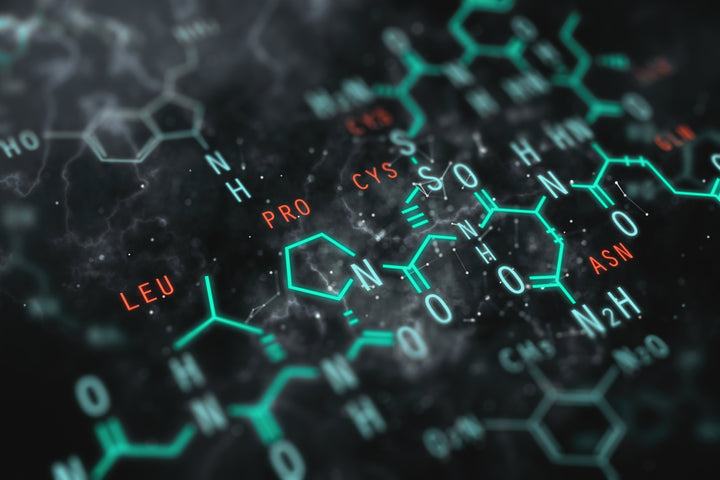
Delve into the hidden elegance of science with our meticulously crafted jewelry, inspired by the intricate structures of chemical molecules. Each piece serves as a tactile tribute to the building blocks of life and matter, capturing the allure of atoms and bonds in precious metals. A harmonious fusion of art and science, these creations are more than mere accessories; they're a celebration of the enigmatic beauty that underpins our universe.
Find your perfect fit: measure an Existing Ring
Finding out your ring size at home is a simple process and can help you shop for jewelry online with confidence.
Necklace length guide