€ 160


Still questions? Contact us
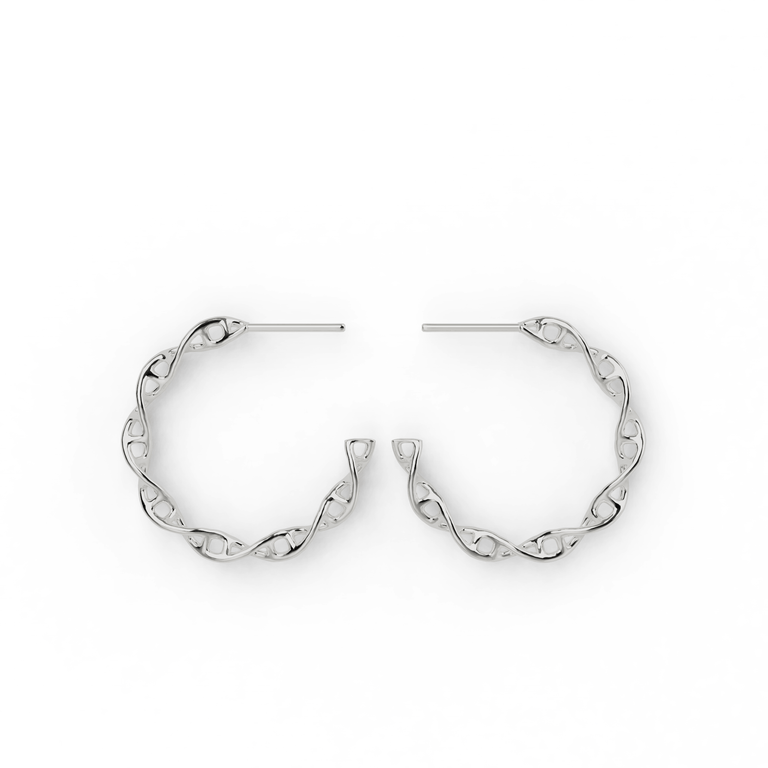
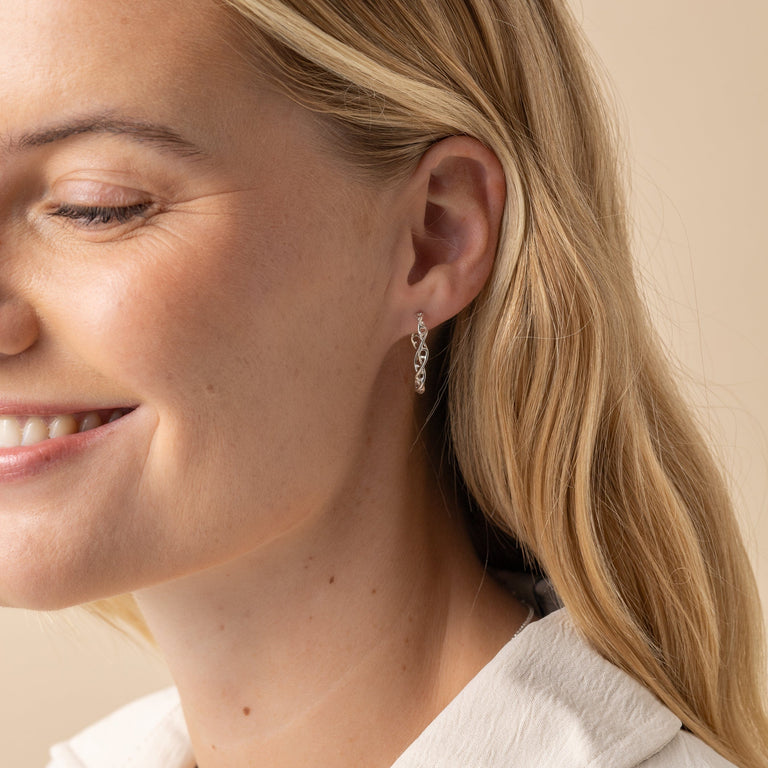
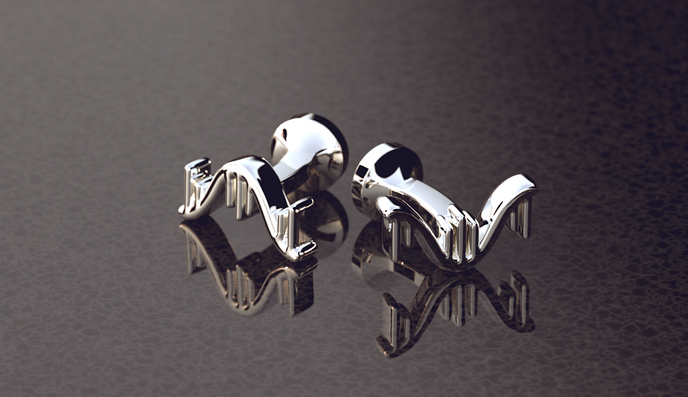
DNA earring hoops S | sterling silver
DNA holds the instructions for building us, and these small DNA earring hoops let her wear that idea every day. Give them to a daughter who works in a genetics lab, or keep a pair for yourself. They are light and easy to leave in from the lab bench to dinner.
Who It's For
- a science graduate who prefers small, quiet jewelry
- a best friend studying medicine or nursing
- a niece or sister starting a PhD, for her birthday
- a partner in genetics or molecular biology, for Christmas or Valentine's Day
- yourself, as an everyday pair
Kathleen H. bought them for a graduate: “These were exactly what I was looking for as a gift for a science grad. They're dainty enough for someone who isn't flashy but striking enough that they will probably garner a notice and a compliment.” Susan A. gave them as a present too: “I bought these as a gift. They look beautiful and arrived promptly.”
What DNA Is Made Of
DNA carries four bases, A, C, G and T, each attached to a backbone of sugar and phosphate. Across the two strands, A pairs with T and G pairs with C. A G-C pair is held together by three hydrogen bonds, an A-T pair by two. The share of G and C differs from one species to the next. Human DNA averages about 41 per cent G and C. In Plasmodium falciparum, the parasite behind the deadliest form of malaria, it is just under 20 per cent. In the soil bacterium Streptomyces coelicolor, it is about 72 per cent.
Explore Related Genetics Jewelry
- DNA earring hoops S | gold vermeil
- DNA earring hoops L | silver
- DNA earring hoops - crossed | silver
- DNA necklace H | silver
FAQ
How big are the hoops, and how do they fasten?
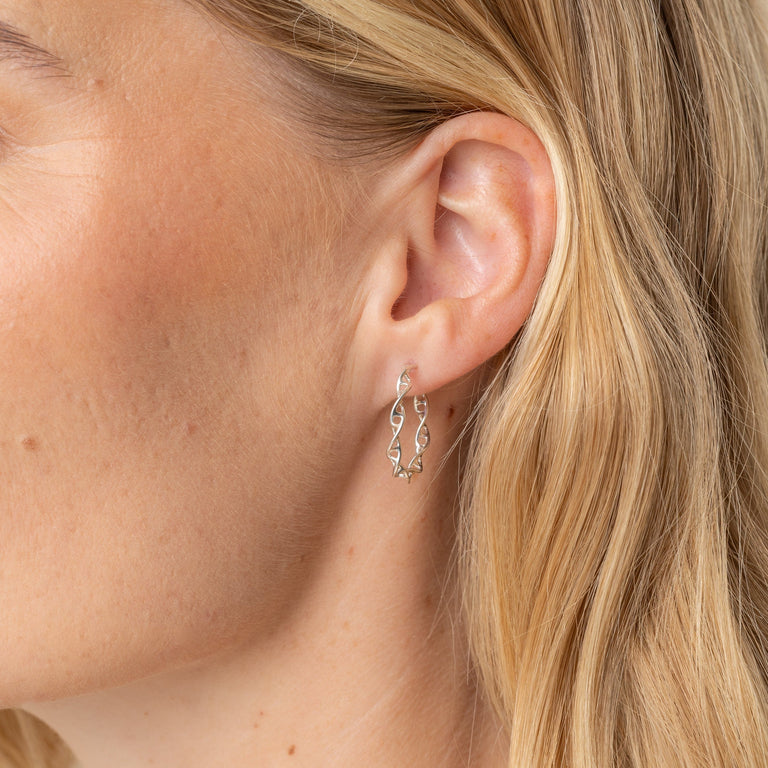
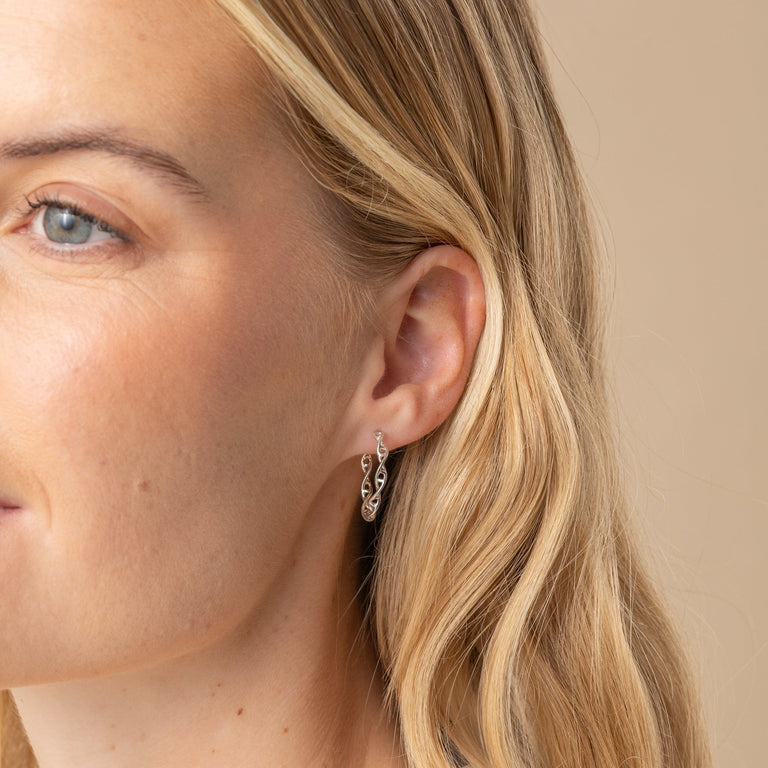
Each hoop measures 20 mm across (about 0.8 inch), close to the size of a 10-euro-cent coin or a US nickel. They are open hoops: a post goes through the ear and an ear nut holds it at the back, and each hoop hangs just below the lobe. They are 925 sterling silver, nickel-free. Silver can darken over time, and the cleaning cloth that comes with them brings the shine back.
Is there a gold version, or a larger size?
Yes to both. The small hoops also come in 18K gold vermeil, at the same 20 mm. Choose the finish the recipient already wears. The design is the same in silver and gold vermeil. The large DNA hoops measure 33 mm, in silver or gold vermeil. The crossed DNA hoops (20 mm) and the DNA earrings on leverback hooks (20 mm) also come in both finishes.
Will they arrive in time, and what if they aren't right?
They ship free worldwide with DHL Express and arrive in 1-5 business days. We pay the import duties and taxes, so there is nothing to pay on delivery. They come in a ready-to-gift jewelry box and festive envelope. If they aren't right, our 30-day “Love It or Return It” policy applies to unworn earrings.
Who found the first clue that A pairs with T?
Erwin Chargaff, at Columbia University in New York. In the late 1940s his team measured the four bases in DNA from different species. The mix of bases changed from species to species, so DNA could not be a plain repeat of four units. And in every sample, the amount of A came out close to that of T, and G close to C. Chargaff set out both findings in a 1950 paper, without an explanation. The double helix of 1953 supplied one: the bases pair across the two strands.
Genetics
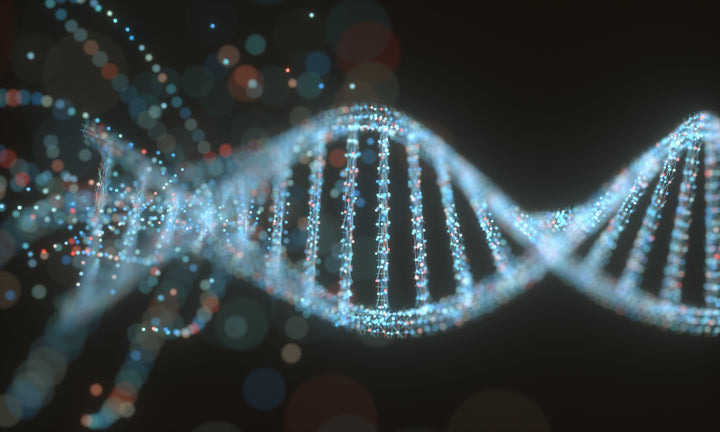
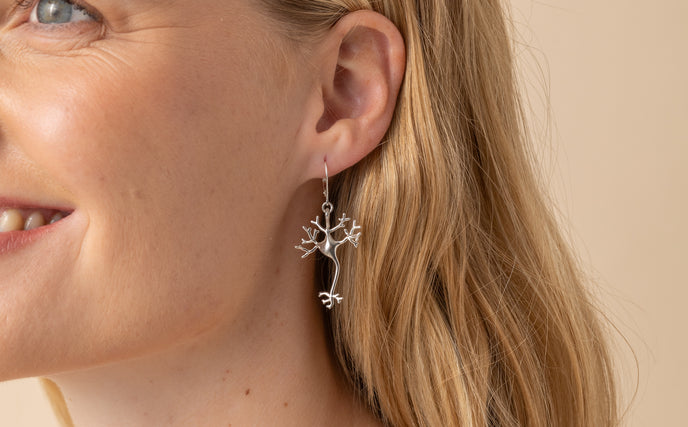
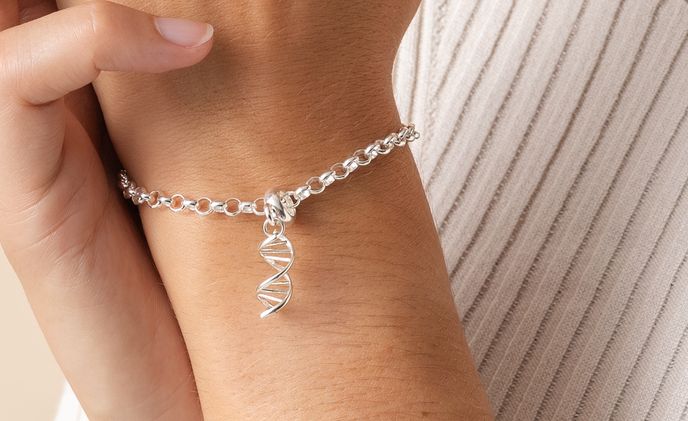
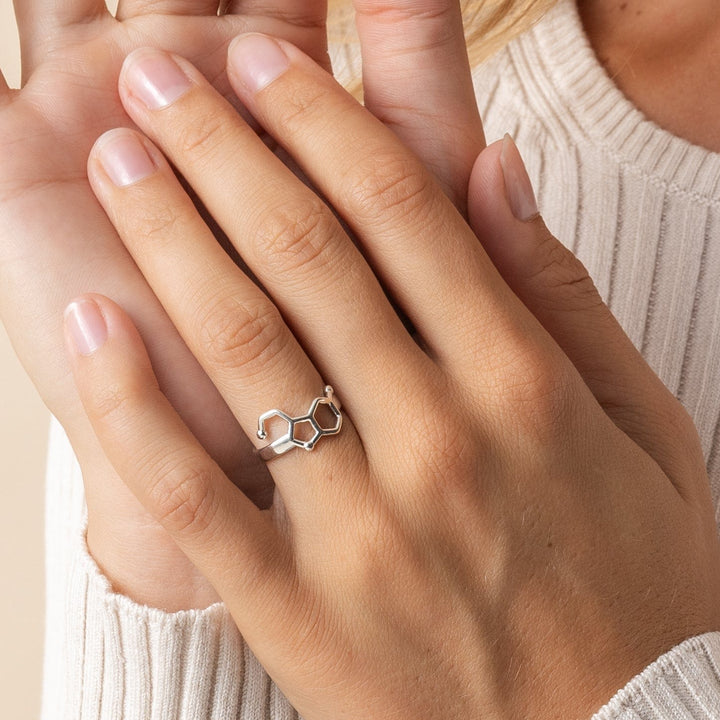
Our genetics-inspired jewelry captures the essence of life's code in striking detail. Crafted to mirror the DNA double helix, each piece is more than an aesthetic marvel—it's a tribute to the complexity of our genetic makeup. Far from ordinary, this collection combines scientific precision with artistic flair, making each item a captivating blend of form and function. It's not just an accessory; it's a meaningful representation of the miracle that is genetics.
Find your perfect fit
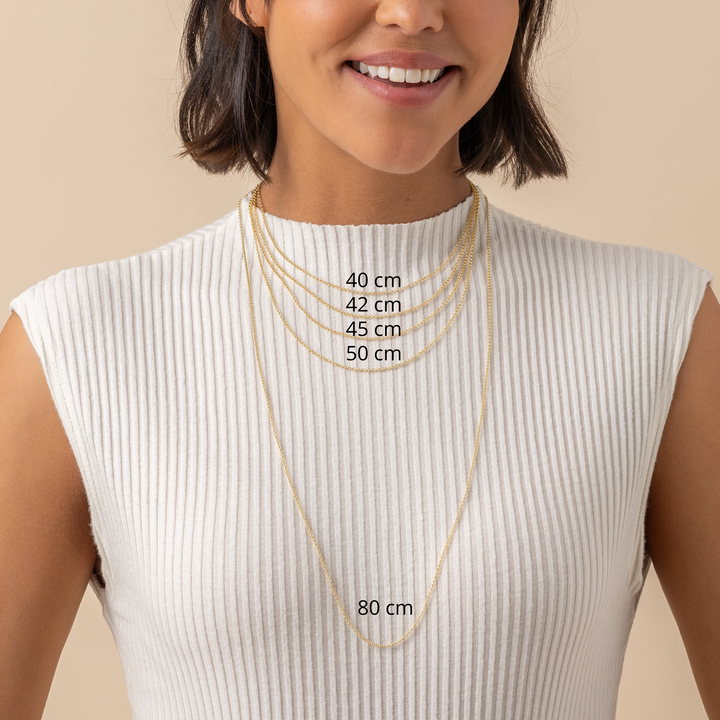
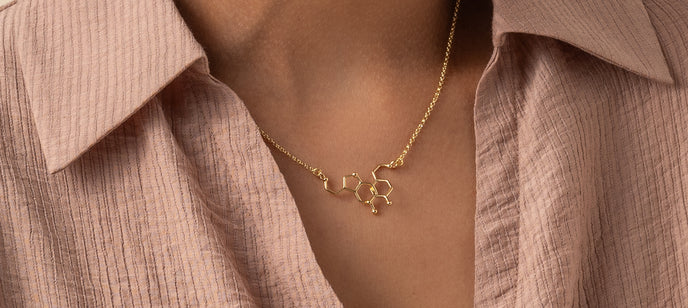
Necklace length guide