$336


Still questions? Contact us
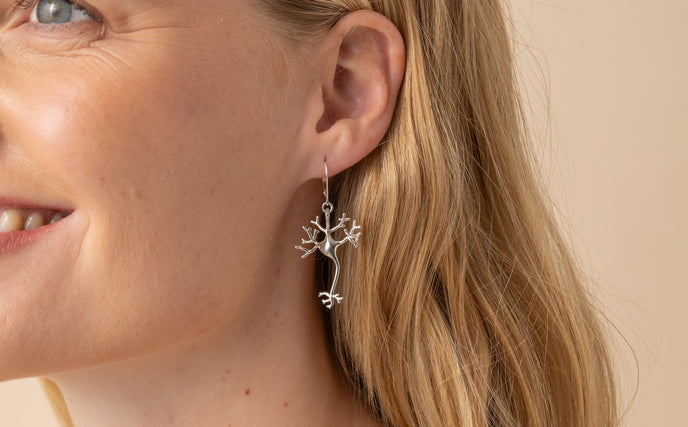
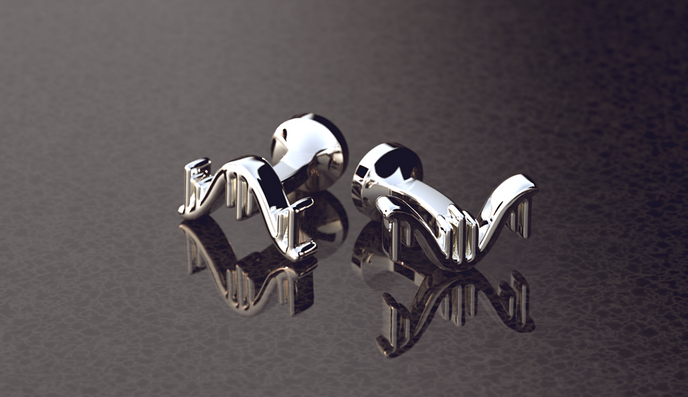
DNA earring hoops S | 18K gold vermeil
DNA earring hoops S in gold vermeil, for a woman in biology or medicine. DNA can also last a very long time: in 2022 researchers read DNA about two million years old, recovered from frozen sediment in northern Greenland.
Who It's For
- your daughter, for her birthday, if she works in science at a university
- a friend who works in genetics
- a sister in a biology lab
- yourself
The Trouble with Copying the Ends of DNA
Copying DNA has a blind spot at the end. The enzymes that build a new strand can only extend one already started, from a short starter piece. On one of the two new strands, the last starter piece lands short of the end, so each round of copying leaves that strand a little shorter. James Watson and, independently, Alexey Olovnikov pointed out the problem in the early 1970s. Human chromosomes end in long runs of one six-letter sequence, TTAGGG. Those runs give each end room to lose, and with their proteins they stop the cell treating the end as broken DNA. In cultured human cells without telomerase, they shorten by about 50 to 100 base pairs per division.
Explore Related Genetics Jewelry
- DNA earring hoops S | silver
- DNA earring hoops L | gold vermeil
- DNA earring hoops - crossed | gold vermeil
- DNA necklace H | gold vermeil
FAQ
What size are the hoops, and how do they go in?
Each hoop measures 20 mm across (about 0.8 inch), close to a 10-euro-cent coin (19.75 mm). They are open hoops on a post: the post goes through the ear, an ear nut with a solid gold core holds it at the back, and the hoop curves down below the lobe. Our gold vermeil is 2.5 microns of 18K gold over solid sterling silver, nickel-free and hypoallergenic. To keep the shine, wipe them with a soft cloth and store them dry.
Is there a silver version, or a larger hoop?
Yes to both. The S hoops also come in sterling silver, at the same 20 mm with a post and ear nut. Choose the finish the recipient already wears. The design is the same in gold vermeil and silver. The L hoops measure 33 mm, in gold vermeil or silver. The crossed DNA hoops (20 mm, two hoops per earring) and the DNA earrings on leverback hooks (20 mm) also come in both finishes.
Will they arrive in time, and what if they aren't right?
DHL Express delivers them free worldwide in 1-5 business days, and we pay the import duties and taxes, so nothing is due at the door. They arrive in a ready-to-gift jewelry box and festive envelope. If they aren't right, our 30-day “Love It or Return It” policy applies to unworn earrings.
Who discovered the enzyme that lengthens chromosome ends?
Carol Greider and Elizabeth Blackburn, at Berkeley, where Greider was Blackburn's graduate student. Working with the single-celled Tetrahymena, Greider looked for an enzyme that adds repeats to chromosome ends, and on Christmas Day 1984 her results showed new repeats being added to a short synthetic piece of chromosome-end sequence. The pair published in 1985, and later found that the enzyme, telomerase, carries its own RNA, with a stretch that matches the repeats it adds. Blackburn, Greider and Jack Szostak shared the Nobel Prize in Physiology or Medicine in 2009.
Genetics
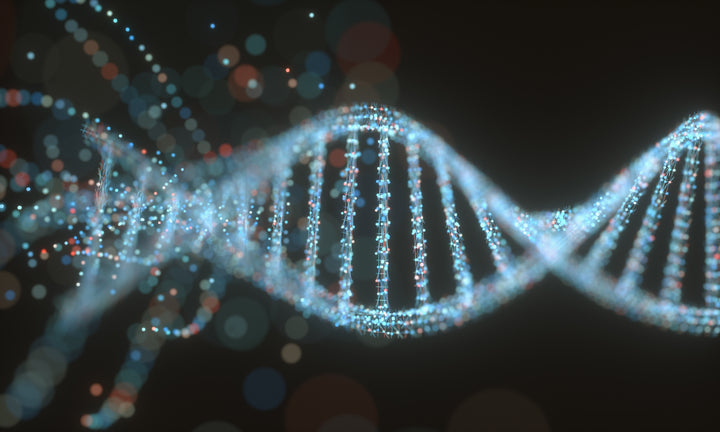
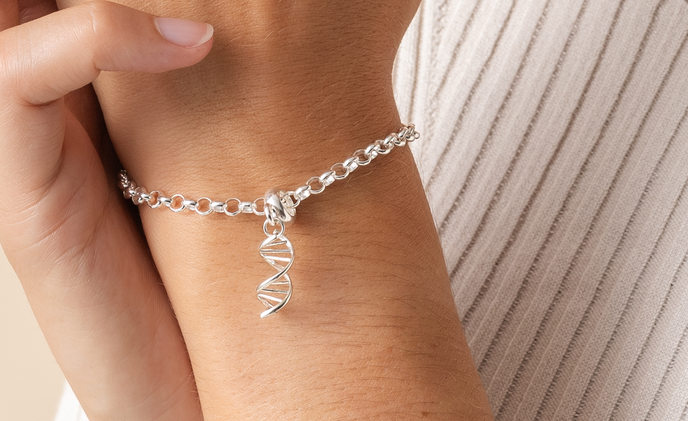
Our genetics-inspired jewelry captures the essence of life's code in striking detail. Crafted to mirror the DNA double helix, each piece is more than an aesthetic marvel—it's a tribute to the complexity of our genetic makeup. Far from ordinary, this collection combines scientific precision with artistic flair, making each item a captivating blend of form and function. It's not just an accessory; it's a meaningful representation of the miracle that is genetics.
Find your perfect fit
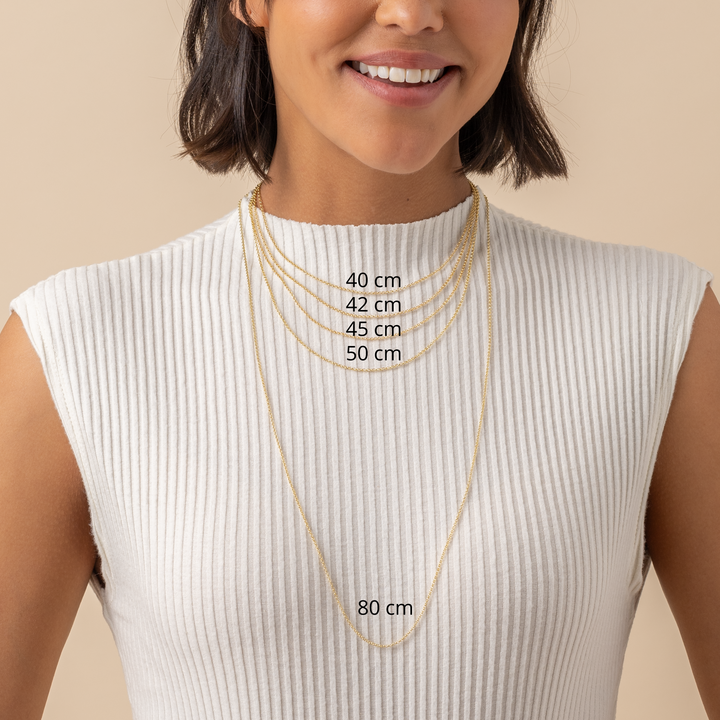
Necklace length guide