€ 160


Still questions? Contact us
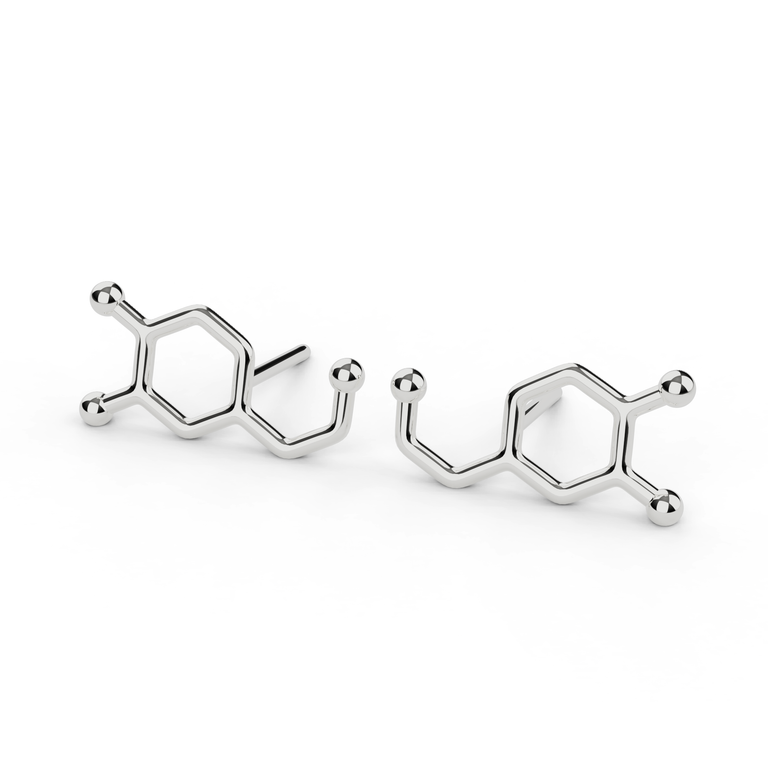
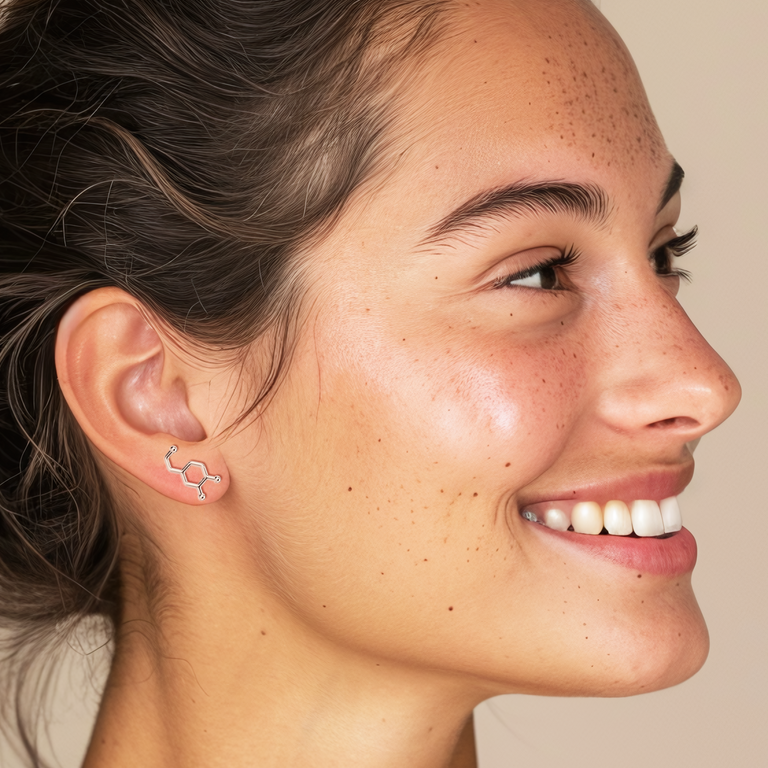
Dopamine studs | sterling silver
Dopamine is the molecule of pursuit, not pleasure. The catecholamine that signals what to do next. Tyrosine becomes DOPA through tyrosine hydroxylase, then DOPA becomes dopamine through aromatic amino acid decarboxylase. The link between motivation and movement, and the one thing that goes wrong first in Parkinson disease.
The Science Behind Dopamine
Dopamine is synthesised from tyrosine in two enzymatic steps. Tyrosine hydroxylase is the rate-limiting enzyme and the target of feedback inhibition by dopamine itself. Three major dopaminergic pathways carry the molecule through distinct circuits. The nigrostriatal pathway (substantia nigra to striatum) controls movement and motor planning. The mesolimbic pathway (ventral tegmental area to nucleus accumbens) drives reward salience and motivated approach. The mesocortical pathway (ventral tegmental area to prefrontal cortex) supports working memory and cognition. Five GPCR receptor subtypes (D1 through D5) mediate the effects, and the dopamine transporter (DAT) recycles dopamine from the synapse. Parkinson disease, addiction, and ADHD each map to dysfunction in one of those circuits.
A Meaningful Gift for Science Lovers
The audience clusters around neuroscience and behaviour:
- neuropharmacologists and neuroscientists
- neurologists specialising in movement disorders
- psychiatrists working on addiction and motivation
- neuroscience graduate students and postdoctoral researchers
- ADHD researchers and clinicians
Explore Related Molecules Jewelry
- dopamine studs | gold vermeil
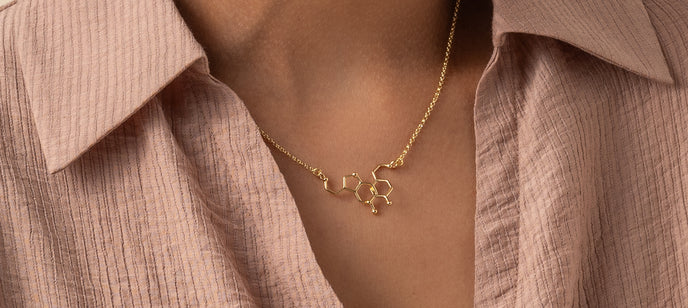
- Dopamine necklace V | silver
- Dopamine necklace H | silver
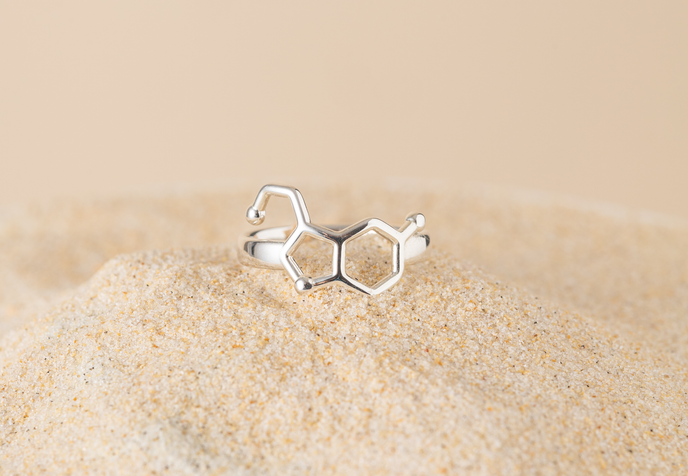
- Dopamine ring | silver
- Serotonin studs | silver
FAQ
Who wears dopamine jewelry?
Neuropharmacologists, neuroscientists, neurologists, psychiatrists, and neuroscience students, and anyone whose work touches monoamine neurotransmission, movement disorders, addiction, or motivation. They also make a thoughtful gift from someone who knows the wearer's thesis topic or clinical speciality.
Is dopamine really not about pleasure?
Not primarily. While dopamine is active in reward-related learning and helps assign salience to positive outcomes, the core function is motivation and approach behaviour. People with dopamine depletion in Parkinson disease do not describe loss of pleasure alone, they describe loss of drive and volition. You can experience pleasure without dopamine, but you struggle to pursue it. The shift from “dopamine = pleasure” to “dopamine = salience and pursuit” is one of the major reframings in neuroscience over the past two decades.
What is the size, material, and earring type?
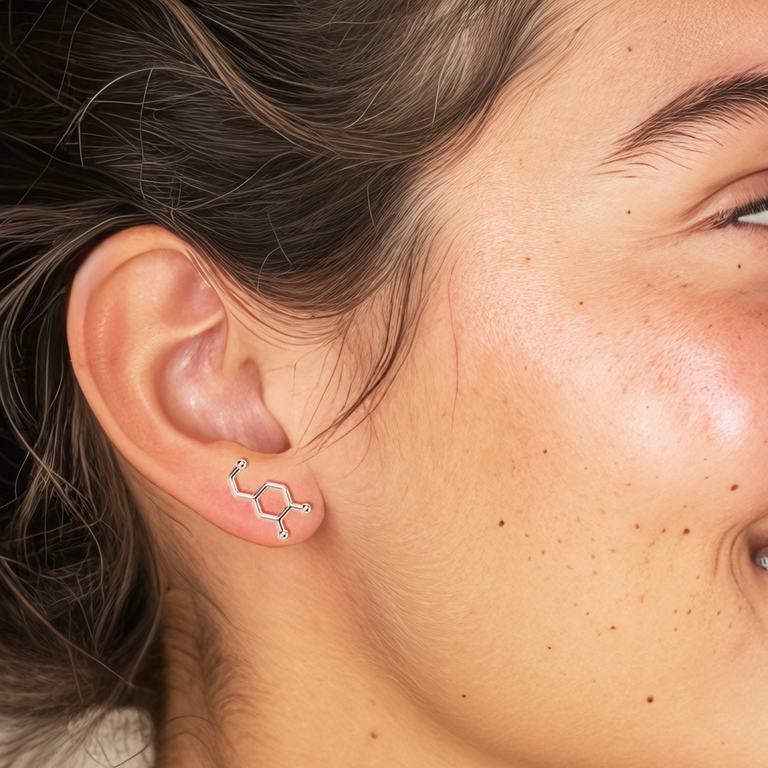
15 mm studs in 925 sterling silver, nickel-free, with sterling silver ear nuts (post backs). Ships free worldwide via DHL Express in 1-5 business days, with all import duties prepaid. Comes in a ready-to-gift jewelry box with the 30-day “Love It or Return It” policy.
Is there a gold version, or a matching set?
Yes. Dopamine studs are also available in 18K gold vermeil at the same 15 mm size. Material is the only difference. Choose the finish the recipient already wears. These studs also pair with the serotonin studs for a neurochemistry duo, or with the dopamine necklace in either vertical or horizontal format for a matching set.
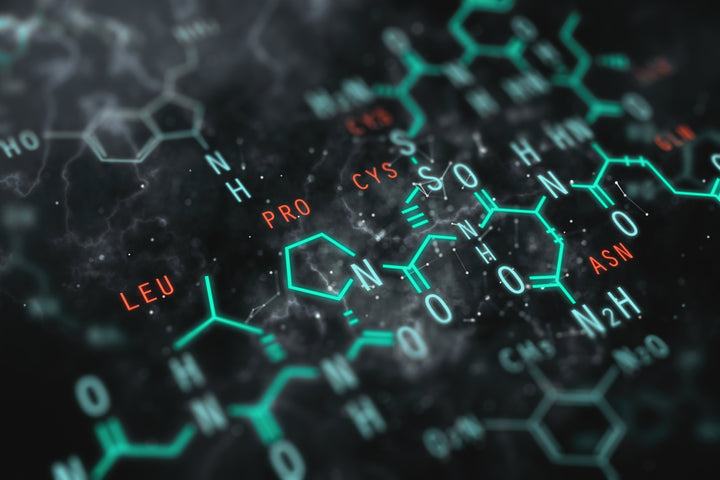
Molecules
Delve into the hidden elegance of science with our meticulously crafted jewelry, inspired by the intricate structures of chemical molecules. Each piece serves as a tactile tribute to the building blocks of life and matter, capturing the allure of atoms and bonds in precious metals. A harmonious fusion of art and science, these creations are more than mere accessories; they're a celebration of the enigmatic beauty that underpins our universe.
Find your perfect fit
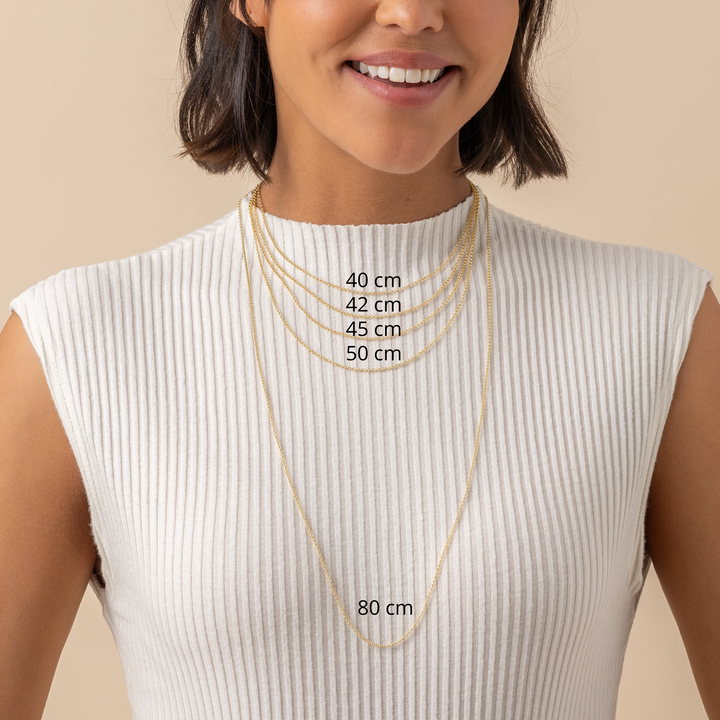
Necklace length guide