€ 200


Still questions? Contact us
Dopamine studs | 18K gold vermeil
Dopamine is part of what makes the next experiment, or the next chapter, feel worth chasing. These dopamine studs are a small, everyday reminder of it for the woman who works on the brain for a living, or reads about it for fun. Give them to her, or keep the pair for yourself.
Who It's For
- a daughter studying neuroscience or psychology, for her birthday or graduation
- a friend or colleague in psychiatry, neurology or pharmacology
- a partner or a sister who can't stop talking about the brain, for Christmas
- someone who already wears the dopamine necklace, to make a set
- yourself, as a small daily reminder of what drives you
From reviews of the silver version. Elizabeth L. gave a pair as a gift: “Very nice. Great quality”. Jaime S. bought a pair to wear: “Love these adorable little studs so much!!”
The Chemistry of Dopamine
Dopamine is a small molecule of just 22 atoms: a ring of six carbon atoms carrying two hydroxyl groups, and a short side chain that ends in an amine. Neurons build it from the amino acid tyrosine in two steps, by way of a molecule called L-DOPA. Some neurons stop there. Others add one more step and turn dopamine into noradrenaline. Dopamine in the blood cannot pass into the brain, but L-DOPA can, and the brain converts it. That is why treatment for Parkinson's disease, in which dopamine-making neurons are lost, gives L-DOPA rather than dopamine itself.
Explore Related Molecules Jewelry
- dopamine studs | silver
- serotonin studs | gold vermeil
- dopamine necklace V | gold vermeil
- dopamine serotonin earrings | gold vermeil
FAQ
How big are they, and how do they fasten?
Each stud measures 15 mm (about 0.6 inches), not counting the post. That is smaller than a US dime and just over half the width of a 2-euro coin, so they sit close to the earlobe. They fasten with gold vermeil posts and ear nuts at the back. 18K gold vermeil means 2.5 microns of 18K gold over solid sterling silver, nickel-free and hypoallergenic. To keep the gold bright, wipe them with a soft cloth and store them dry in their box.
Is there a silver pair, or a matching necklace?
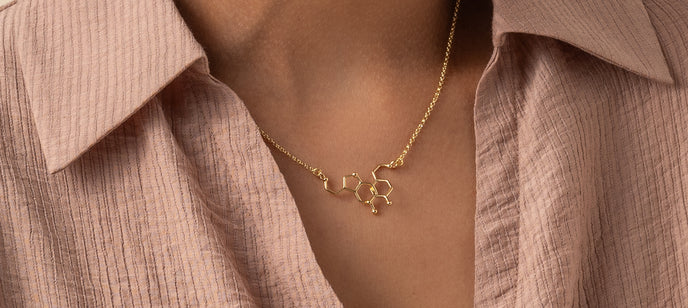
Yes. Dopamine studs also come in sterling silver, at the same 15 mm. Choose the finish she already wears: the design is the same in both. For a set, the dopamine necklace comes in sterling silver and in gold vermeil, horizontal or vertical, with a 20 mm pendant. For two molecules instead of one, the serotonin studs come in both finishes too.
Is delivery free, and what if they aren't right?
Yes. DHL Express delivers free in 1-5 business days worldwide, and we pay the import duties and taxes, so nothing is due at the door. They arrive in a ready-to-gift jewelry box and festive envelope. If they aren't right, our 30-day “Love It or Return It” policy applies to unworn earrings.
Who first found dopamine in the brain?
Katharine Montagu, a researcher at Runwell Hospital in Essex, England. In August 1957 she reported in Nature a substance, probably hydroxytyramine, the chemical name for dopamine, in rat brain and in the brains of other species. Over the next two years, Arvid Carlsson's group in Sweden showed that dopamine is needed for normal movement, work that led to his share of the 2000 Nobel Prize in Physiology or Medicine. Montagu's paper came first, and is far less often remembered.
Molecules
Delve into the hidden elegance of science with our meticulously crafted jewelry, inspired by the intricate structures of chemical molecules. Each piece serves as a tactile tribute to the building blocks of life and matter, capturing the allure of atoms and bonds in precious metals. A harmonious fusion of art and science, these creations are more than mere accessories; they're a celebration of the enigmatic beauty that underpins our universe.
Find your perfect fit
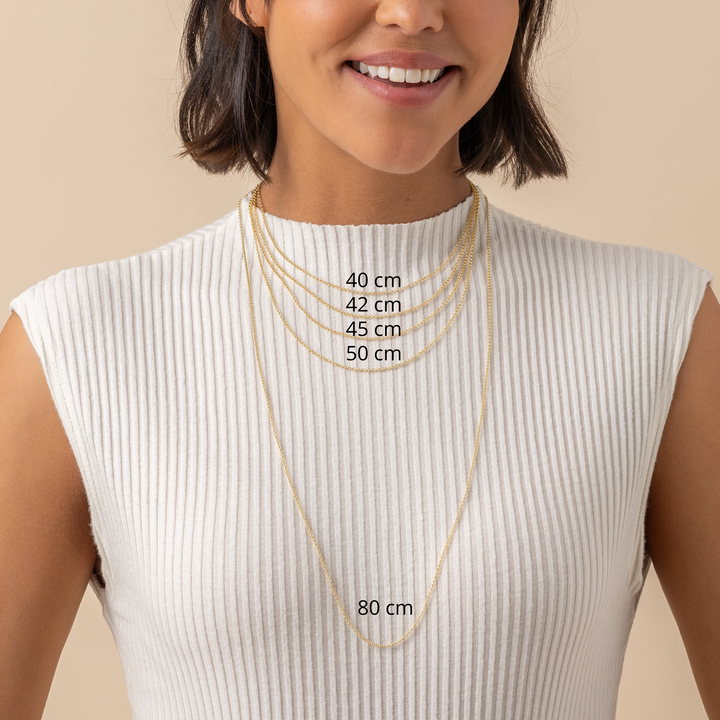
Necklace length guide