€ 160


Still questions? Contact us
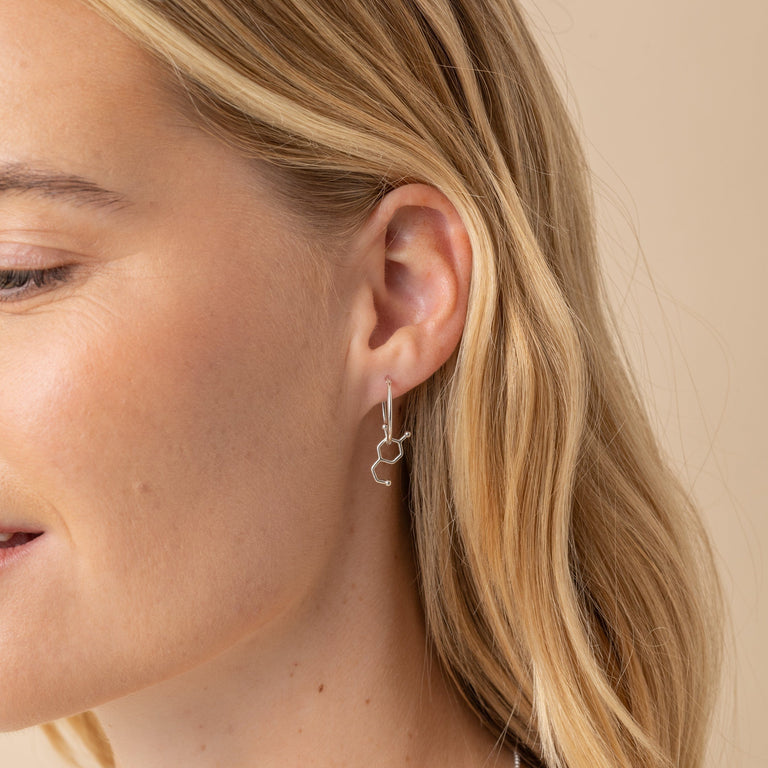
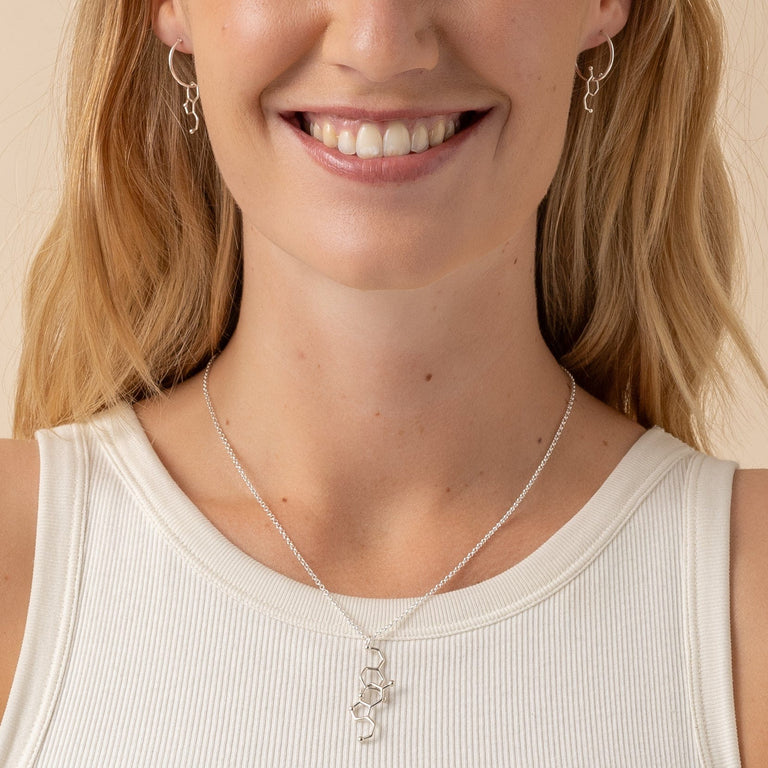
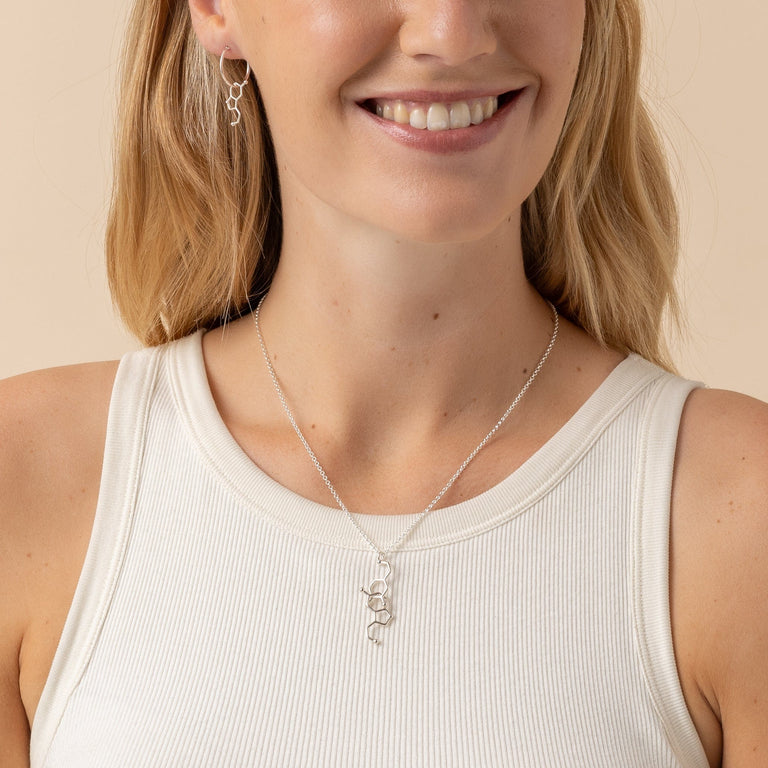
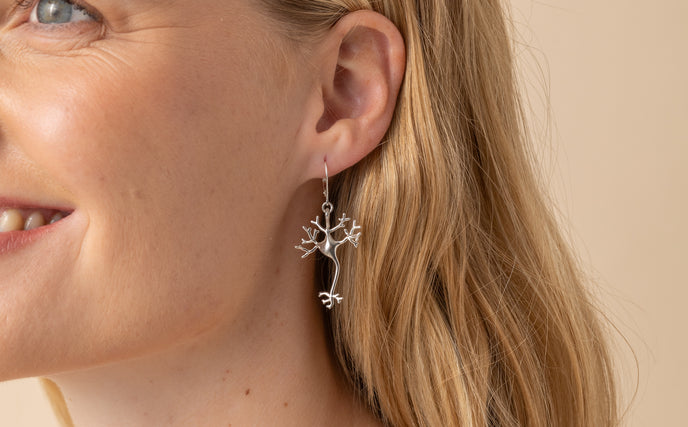
Dopamine serotonin earrings | sterling silver
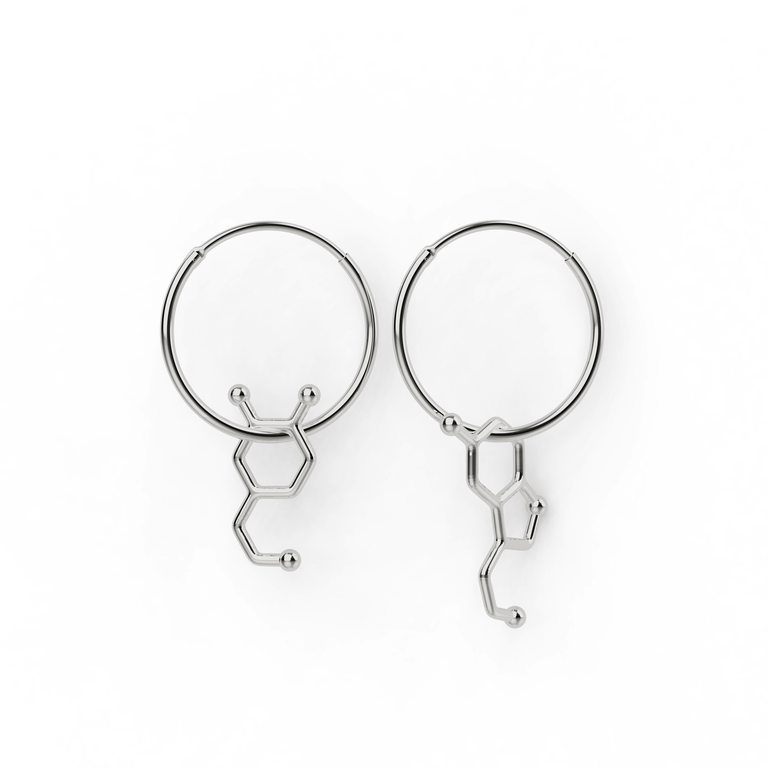
One ear wears dopamine, the other serotonin. These dopamine serotonin earrings split two of the brain's chemical messengers between them, pretty from a distance and a small joke for anyone who knows the science. Give them to a friend in psychology, a nursing student or a sister who reads everything about the brain.
Who It's For
- a nursing or medical student, when her exams are behind her
- a friend in psychology or psychiatry, for her birthday or a new job
- a chemist who likes her science with a sense of humour
- a sister or daughter who already wears the dopamine serotonin necklace, to make a set
- yourself, as a treat, or if these two molecules are part of your own story
Ali S. bought them as a gift: “Was worried they may look cheap but lovely sturdy and well made.” Leah S. bought a pair for herself: “Thanks for helping me fly my nerd flag in an unusual way.”
Dopamine and Serotonin Outside the Human Brain
Dopamine and serotonin were at work long before human brains. The roundworm C. elegans, with just 302 nerve cells, uses both. Eight of its neurons make dopamine, which helps it sense when it is crawling over food and slow down to stay there. Plants make them too. Banana pulp contains both molecules, and stinging nettles inject serotonin along with histamine. Insects use dopamine for a job that has nothing to do with nerves: they turn it into the compounds that harden and darken their outer shell.
Explore Related Molecules Jewelry
- dopamine serotonin earrings | gold vermeil
- dopamine serotonin earring hoops | silver
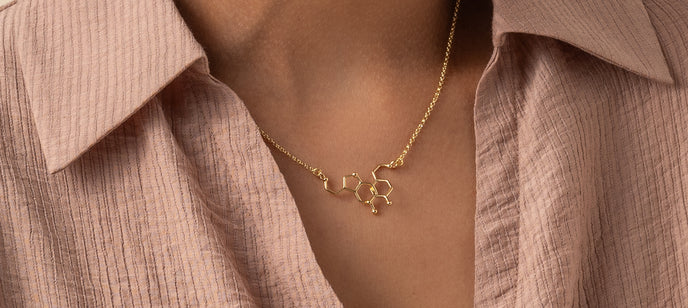
- dopamine serotonin necklace H | silver
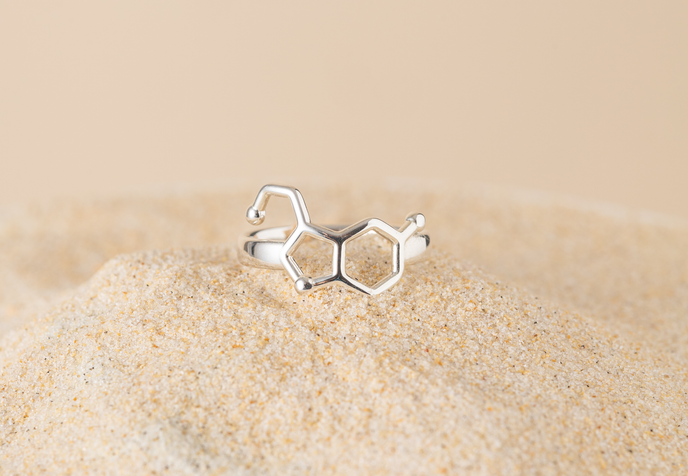
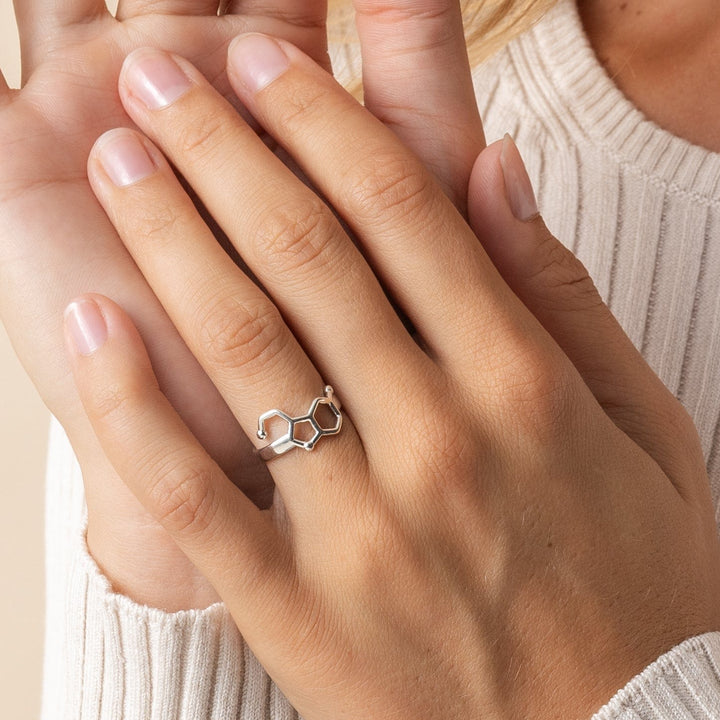
- dopamine - serotonin ring | silver
FAQ
How big are they, and how do the hoops close?
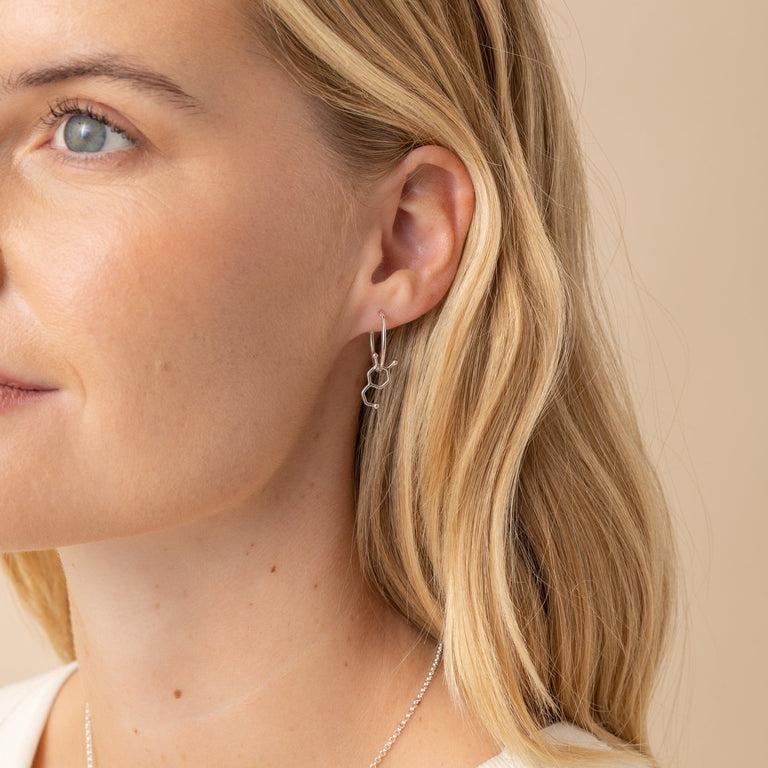
Each molecule measures 15 mm (about 0.6 inch), not counting the hoop, a little smaller than a 1-cent euro coin or a US dime. They hang from thin 17.5 mm sterling silver hoops, just below the earlobe. Each hoop has a small hinged section that opens, passes through the piercing and clicks shut. It can take a little practice the first time, so try them once at home before a day out. They are 925 sterling silver, nickel-free and hypoallergenic.
Is there a gold version, or a matching necklace?
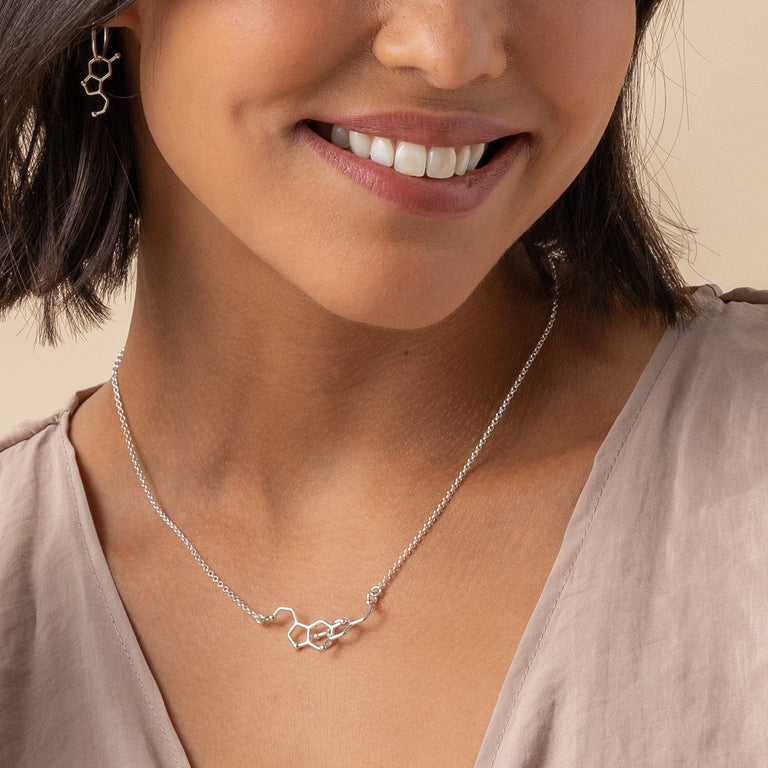
Yes. The same pair comes in 18K gold vermeil (18K gold over sterling silver), with 15 mm molecules on 17.5 mm gold vermeil hoops. Choose the finish she already wears. Either way it is dopamine on one ear and serotonin on the other. To make a set, the dopamine serotonin necklace links the two molecules in one 40 mm pendant, in silver, gold vermeil or two-tone. There is also a larger silver version, 26 mm, worn on ear nuts.
When will they arrive, and can they be returned?
DHL Express delivers them free worldwide in 1-5 business days, and we pay the import duties and taxes, so nothing is due at the door. They arrive in a ready-to-gift jewelry box and festive envelope. If they aren't right, our 30-day “Love It or Return It” policy applies to unworn earrings.
Who first found dopamine in the brain?
Katharine Montagu, a researcher at Runwell Hospital in Essex. In August 1957 she reported in Nature that rat brains, and the brains of other animals, contained a substance that was “probably hydroxytyramine”, the chemical name for dopamine. Others confirmed it within months. In 1958 Arvid Carlsson's group in Sweden measured dopamine in the brain and began to show what it does there, work that later earned him a share of a Nobel Prize. Montagu's first report is often left out of the story.
Molecules
Delve into the hidden elegance of science with our meticulously crafted jewelry, inspired by the intricate structures of chemical molecules. Each piece serves as a tactile tribute to the building blocks of life and matter, capturing the allure of atoms and bonds in precious metals. A harmonious fusion of art and science, these creations are more than mere accessories; they're a celebration of the enigmatic beauty that underpins our universe.
Find your perfect fit
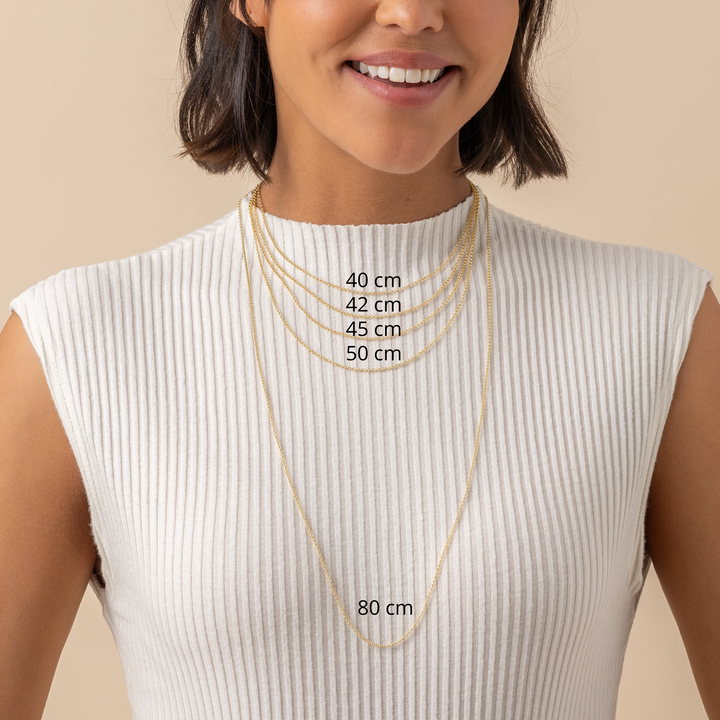
Necklace length guide