$312


Still questions? Contact us
Femur necklace | gold vermeil
The bone a femur necklace in gold vermeil refers to is the only one between hip and knee, and the longest in the human body. It takes your full weight at every step, much like the person you lean on most.
Who It's For
- your girlfriend
- someone who would love an unusual present
- someone close to you, as a keepsake
- yourself, simply because you love it
Blake F., on the silver necklace: “its the perfect size and fits my wife well.” Brian S., also on the silver necklace: “Already has sentimental value”.
How a Femur Grows Longer
A femur grows in length at its growth plates, thin layers of cartilage near each end of the bone. Cartilage cells there divide in columns and then swell, and the cartilage they leave behind is replaced by bone, so the bone lengthens near each end. The two ends don't share the work evenly. The plate just above the knee is the most active in the body: from birth to adulthood it adds about 70 per cent of the femur's growth and 37 per cent of the whole leg's, adding around a centimetre a year. In girls the plates usually close between 14 and 16, and the femur stops growing in length.
Explore Related Anatomy Jewelry
- femur necklace | silver
- femur earrings | gold vermeil
- femur ring | silver
- knee necklace | gold vermeil
FAQ
How big is the pendant, and how does it sit?
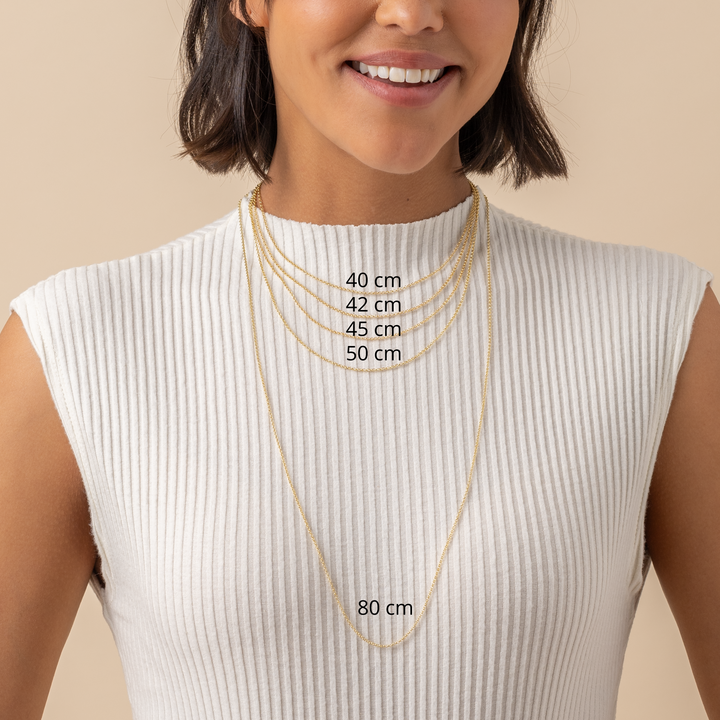
The pendant measures 31 mm (about 1.2 inches), about 5 mm more than the width of a 2-euro coin (25.75 mm). It hangs upright from a small ring at its top and sits below the collarbone on a 45 cm (17.7 inch) gold vermeil chain with a 5 cm (2 inch) extender. Our vermeil is 2.5 microns of 18K gold over solid sterling silver, nickel-free and hypoallergenic. Wipe it with a soft cloth and keep it somewhere dry.
Is there a silver version, or matching earrings?
Yes to both. The femur necklace comes in 18K gold vermeil and in sterling silver, both with a 31 mm pendant on a 45 cm chain with a 5 cm extender. Choose the finish the recipient already wears. The design is the same in both finishes. The femur earrings, 24 mm each without the hook, on leverbacks, also come in gold vermeil and in silver, so a set works in either metal. There is a femur ring too, in sterling silver.
Will it arrive in time, and what if it isn't right?
DHL Express delivers it free worldwide in 1-5 business days, and we pay the import duties and taxes, so nothing is due at the door. It arrives in a ready-to-gift jewelry box and festive envelope. If it isn't right, our 30-day “Love It or Return It” policy applies.
Why was Java Man called erectus?
Because of a thigh bone. The doctor Eugène Dubois joined the Dutch colonial army as a medical officer to look for early human fossils. In 1891 his team found a skullcap at Trinil, on Java. In August 1892, about 12 to 15 metres away, they found a femur shaped much like a modern human's. Dubois took it as a sign that its owner walked upright, and named the species erectus. Whether the femur and skullcap belong together is still debated, but the name stayed, in Homo erectus. It means upright.
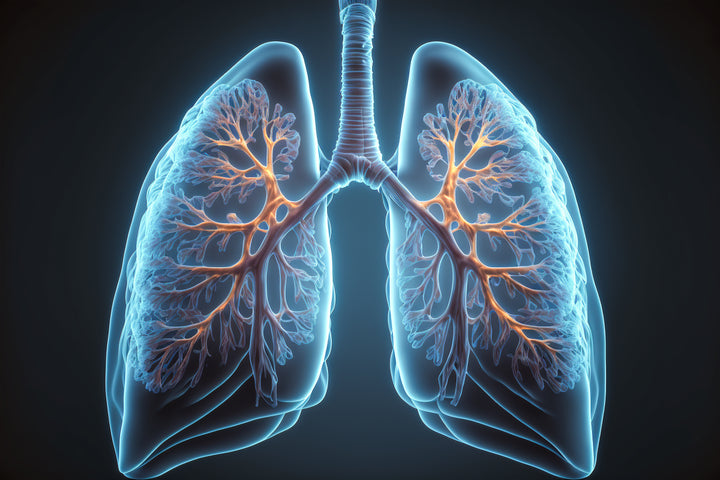
Human Anatomy
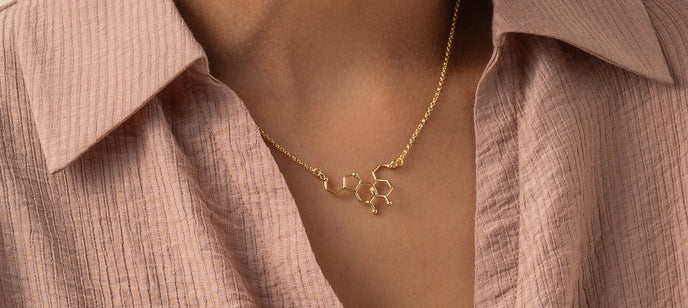
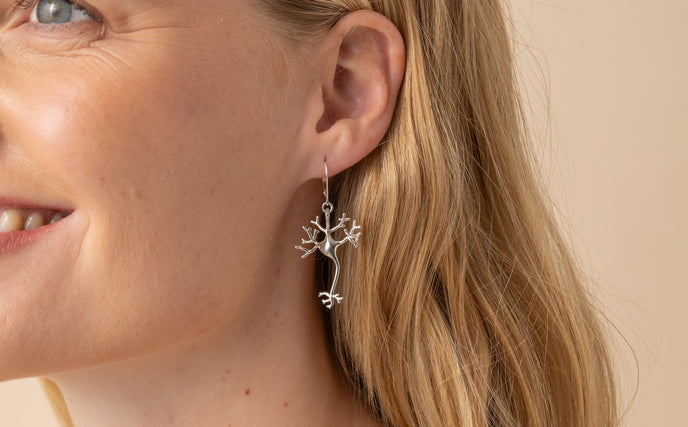
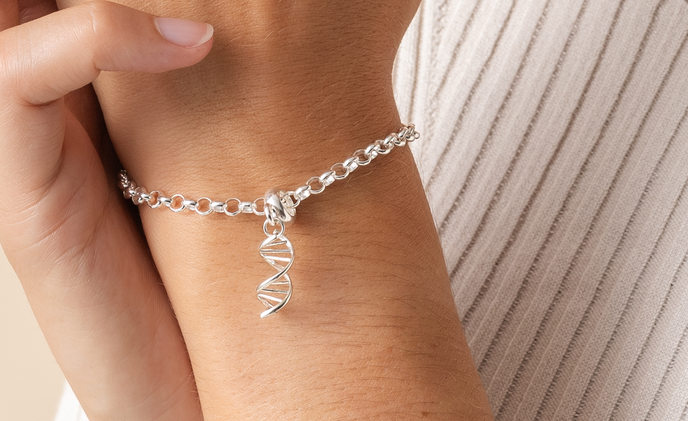
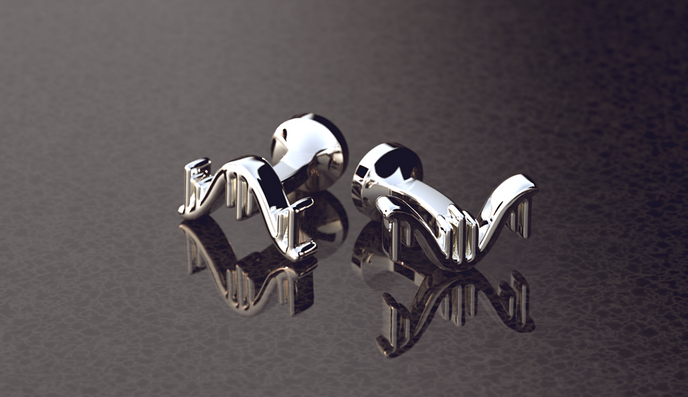
Anatomical wonders have never been so elegantly articulated. Our anatomical collection embodies the intricate and awe-inspiring structures that make us who we are. From DNA double helices to neuronal networks, our pieces don't merely imitate—they interpret. The collection serves as a tangible tribute to the hidden beauty within us all, elevating the realms of biology and medicine into wearable art. With exquisite attention to detail, each piece is a dialogue between form and function, revealing the enigmatic eloquence of the human body.
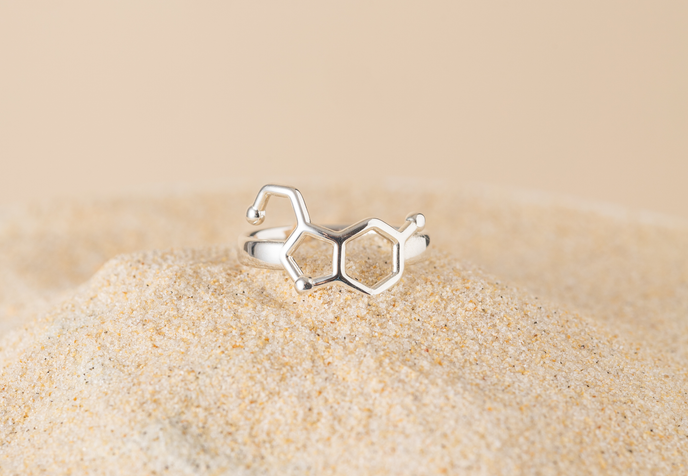
Find your perfect fit: measure an Existing Ring
Finding out your ring size at home is a simple process and can help you shop for jewelry online with confidence.
Necklace length guide