€ 200


Still questions? Contact us
Mendel's peas necklace | gold vermeil
Mendel's experiments on pea plants quietly established the laws of inheritance, and then almost nobody read his paper. The independent rediscovery of his work three decades later, by three different researchers in the same year, is one of the cleanest examples of priority lost and recovered in the history of science.
The Science Behind Mendel's Peas
Mendel worked with seven traits in Pisum sativum across more than 29,000 plants over eight years. He counted offspring ratios precisely (3:1 in monohybrid crosses, 9:3:3:1 in dihybrid crosses) and inferred discrete hereditary units from the numbers, before chromosomes were known to carry genetic information. His paper appeared in 1866 in the proceedings of the Brünn Natural History Society and remained largely unread until Carl Correns, Hugo de Vries, and Erich von Tschermak independently rediscovered the laws of inheritance in 1900. The chromosomal theory of heredity, which provided the physical mechanism for Mendel's ratios, was established in the early 20th century by Walter Sutton and Theodor Boveri.
The Audience
For people who teach genetics or for whom Mendel's name carries professional weight.
- genetics students and researchers
- biology professors and science educators
- science historians and science communicators
- anyone who appreciates the pattern of correct ideas being missed for decades
Most often a teaching prop for a genetics course or a thank-you from students to a professor who taught the laws of inheritance properly.
Explore Related Genetics Jewelry
- Mendel's peas necklace | silver
- Drosophila necklace | gold vermeil
- Mitosis necklace | gold vermeil
- Darwin's phylogenetic tree necklace | gold vermeil
FAQ
Will a genetics professor actually wear this?
If they teach Mendel in their introductory courses, yes. The pea pod and peas are the canonical illustration of segregation and independent assortment, and the pendant reads as a teaching prop and a personal marker simultaneously. We see it bought by departments and by individual students.
Why does Mendel's story matter beyond the genetics?
Because it is a clean case of correct, quantitative, well-supported work being overlooked because it appeared in the wrong journal at the wrong time. The 34-year gap between publication and rediscovery is a useful reminder that scientific priority and scientific impact are not the same thing.
What about size, material, and chain?
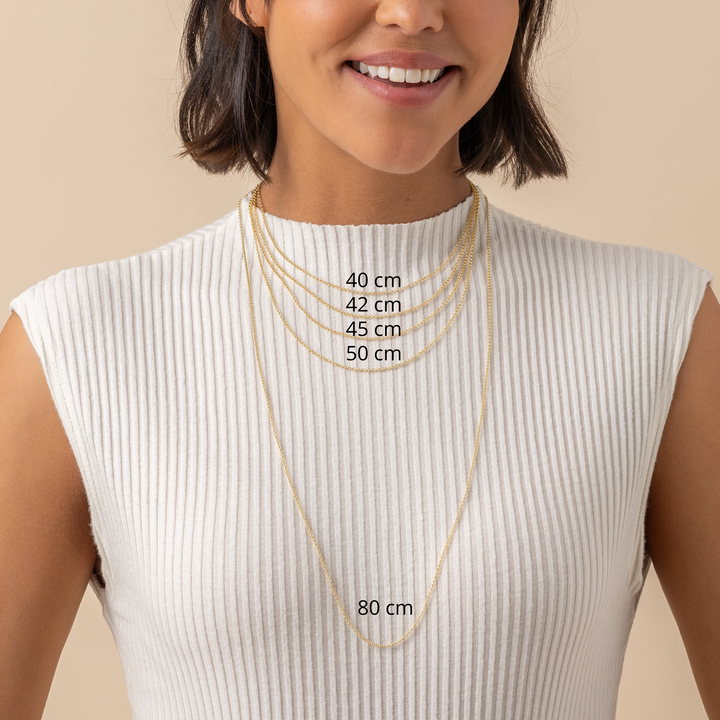
34 mm pendant in 18K gold vermeil (sterling silver core, 2.5 micron gold plating), nickel-free. 45 cm gold vermeil chain with a 5 cm extender. Free worldwide DHL Express, 1-5 business days, duties and taxes covered. 30-day “Love It or Return It” policy.
How does the gold compare to the silver Mendel's peas?
Same design, same 34 mm size. Sterling silver core with 2.5 micron 18K gold plating versus solid 925 sterling silver. The gold reads warmer and tends to be picked for milestone gifts. The silver tends to go as everyday wear.

Genetics
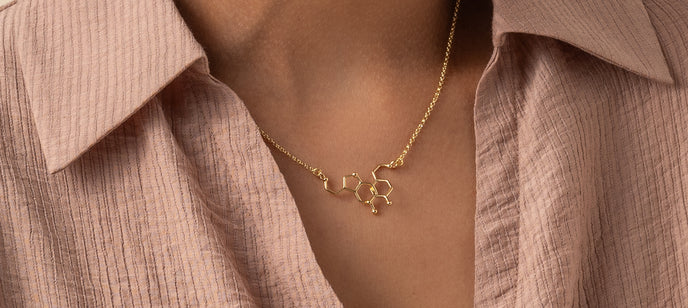
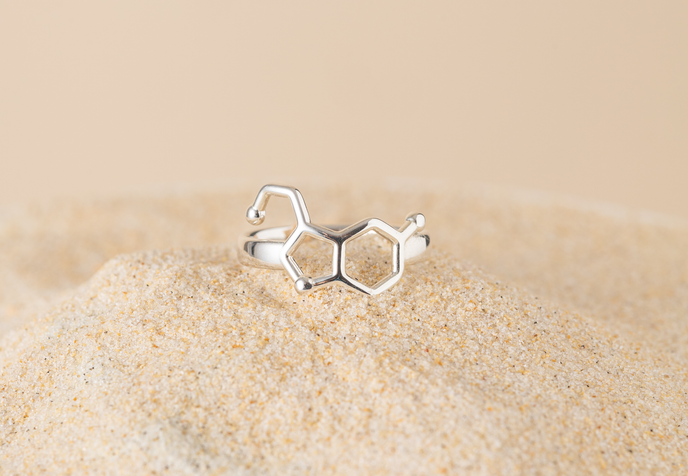
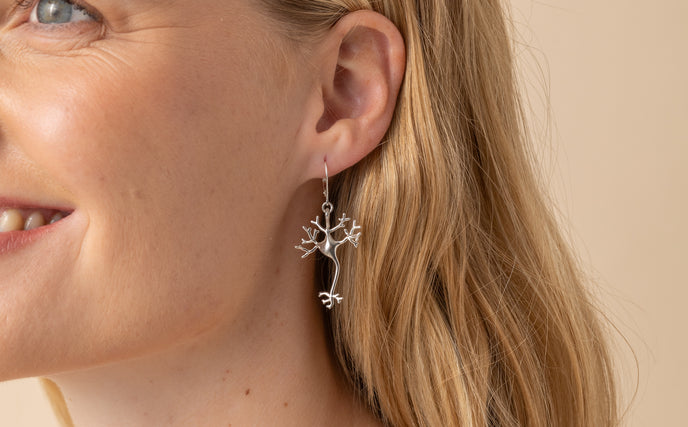
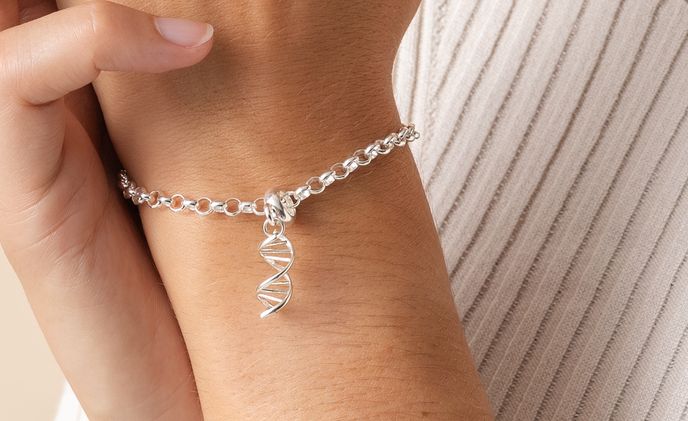
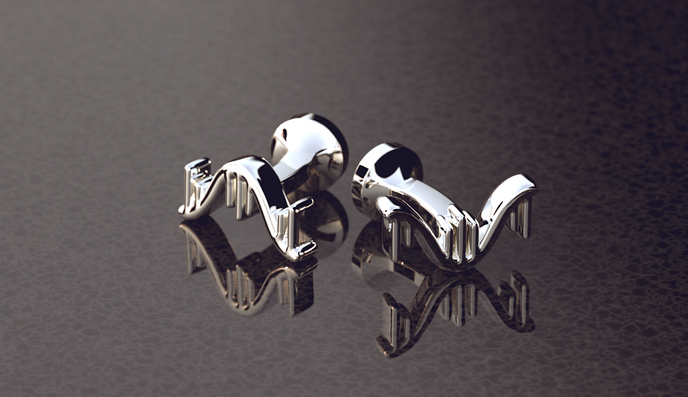
Our genetics-inspired jewelry captures the essence of life's code in striking detail. Crafted to mirror the DNA double helix, each piece is more than an aesthetic marvel—it's a tribute to the complexity of our genetic makeup. Far from ordinary, this collection combines scientific precision with artistic flair, making each item a captivating blend of form and function. It's not just an accessory; it's a meaningful representation of the miracle that is genetics.
Find your perfect fit: measure an Existing Ring
Finding out your ring size at home is a simple process and can help you shop for jewelry online with confidence.
Necklace length guide