€ 260


Still questions? Contact us
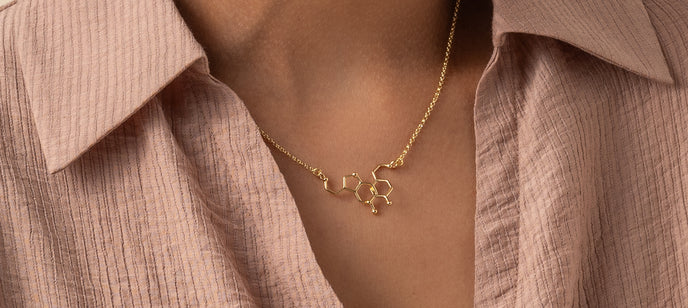
Quinine necklace | 18K gold vermeil
The world's first antimalarial drug. The molecule that made the British Empire survivable in the tropics. The bittering agent in your tonic. Quinine sits at the intersection of pharmacology, colonial history, and synthetic organic chemistry. The 18K gold vermeil version of the molecule, at 42 mm.
The Science Behind Quinine
Pierre Joseph Pelletier and Joseph Bienaimé Caventou isolated quinine from cinchona bark in 1820, one of the first alkaloids ever obtained in pure form. The antimalarial mechanism involves accumulation in the food vacuole of Plasmodium parasites, where quinine interferes with the detoxification of heme produced as the parasite digests haemoglobin. Free heme accumulates and kills the parasite. The failed attempt to synthesise quinine in 1856 led William Henry Perkin to accidentally produce the first synthetic dye (mauve), launching the synthetic dye industry and, eventually, modern pharmacology. Quinine remains in clinical use for chloroquine-resistant malaria and as the bittering compound in tonic water, where it once protected colonial troops from malaria as a daily dose suspended in carbonated water.
Worn By
- pharmacologists and medicinal chemists at career milestones
- infectious disease researchers and tropical medicine specialists
- science historians and chemistry educators
- partners and family of working pharmacologists looking for a meaningful gold gift
Most often given on a pharmacology or chemistry graduation, where the gold version reads as recognition rather than daily wear.
Explore Related Molecules Jewelry
- Quinine necklace | silver
- Cyclosporine necklace | gold vermeil
- Chlorophyll necklace | silver
- Arsenic trioxide necklace | silver
- Doxorubicin necklace | silver
FAQ
Is the gold quinine more historical curiosity or working pharmacology?
Both. Pharmacologists who know how often new drugs trace their lineage back through alkaloid isolation and synthetic organic chemistry pick this up as a gold version of a foundation molecule. Infectious-disease specialists working on chloroquine-resistant malaria still use quinine clinically, so the working-medicine angle is also live. The pendant carries both stories. The cocktail-history angle exists too but is the smaller share of the audience.
How does quinine kill the malaria parasite?
By poisoning Plasmodium with its own waste. The parasite digests host haemoglobin to free up amino acids, which releases heme as a byproduct. Heme is toxic to the parasite, so it normally polymerises the heme into inert hemozoin crystals to detoxify it. Quinine interferes with that polymerisation step. Free heme accumulates inside the parasite's food vacuole, and the parasite dies of its own digestive output. The mechanism is shared by chloroquine and other 4-aminoquinolines.
What size is the pendant and what chain comes with it?
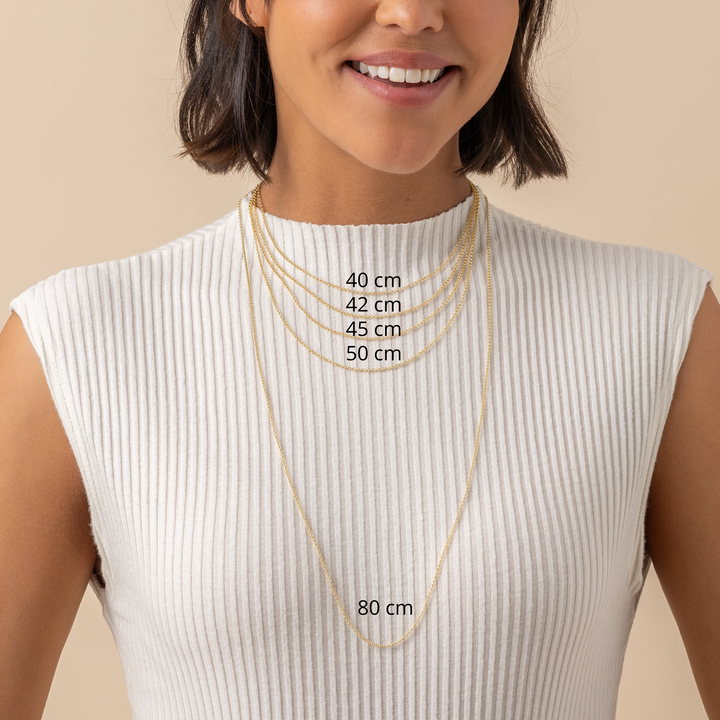
18K gold vermeil over a sterling silver core, 42 mm pendant on a 45 cm gold vermeil chain with a 5 cm extender. Larger scale than most pieces in the catalogue. Nickel-free and hypoallergenic. Free worldwide DHL Express in 1-5 business days, with all import duties and taxes covered. 30-day “Love It or Return It” returns.
Is there a silver version?
Yes. The same quinine molecule is available in sterling silver. Silver tends to suit daily wear, gold tends to suit graduation, retirement, or a major career milestone in pharmacology or infectious-disease medicine.
Molecules
Delve into the hidden elegance of science with our meticulously crafted jewelry, inspired by the intricate structures of chemical molecules. Each piece serves as a tactile tribute to the building blocks of life and matter, capturing the allure of atoms and bonds in precious metals. A harmonious fusion of art and science, these creations are more than mere accessories; they're a celebration of the enigmatic beauty that underpins our universe.
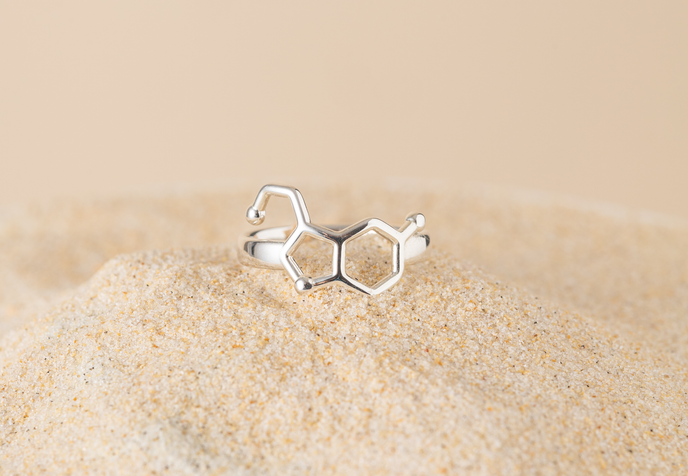
Find your perfect fit: measure an Existing Ring
Finding out your ring size at home is a simple process and can help you shop for jewelry online with confidence.
Necklace length guide