€ 155


Still questions? Contact us
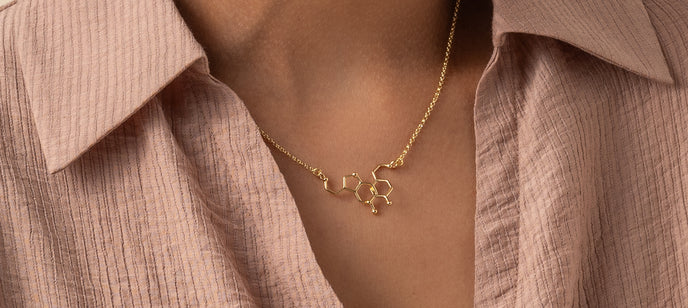
Chlorophyll necklace | sterling silver
If you trained on photosynthesis you know chlorophyll is the reason your food exists. The magnesium-centered porphyrin captures red and blue light to power the reaction that produces virtually all atmospheric oxygen and the base of nearly every food chain on Earth.
The Science Behind Chlorophyll
Chlorophyll is a porphyrin ring with a magnesium ion at its centre, not iron as in haemoglobin. This substitution shifts the light absorption spectrum into the red and blue wavelengths useful for photosynthesis, while reflecting green light, which is why leaves look green. Photons strike the molecule, lift electrons to excited states, and transfer that energy through antenna complexes to the photosynthetic reaction centre. There, charge separation drives ATP synthesis and CO2 fixation. Richard Willstätter elucidated the chlorophyll structure and won the Nobel Prize in Chemistry in 1915. Chlorophyll exists in all photosynthetic organisms (plants, algae, cyanobacteria). Over billions of years it has generated most of the atmospheric oxygen. Without this molecule, there is no aerobic life.
Who Reaches For This
- plant biologists and botanists studying photosynthesis
- biochemists working with porphyrin chemistry or photosynthesis mechanisms
- environmental scientists and climate researchers
- anyone who recognises chlorophyll as the foundation of all terrestrial food chains
Explore Related Molecules Jewelry
- chlorophyll necklace | gold vermeil
- Caffeine necklace | silver
- Glucose necklace | silver
- Mendel's peas necklace | silver
- DNA necklace H | silver
FAQ
Is this a gift for plant scientists?
Yes. Chlorophyll is the reason plants capture light and produce food. Any botanist, plant physiologist, or photosynthesis researcher will understand immediately why this pendant matters. The molecule is foundational to their work.
Why is chlorophyll's structure so important to photosynthesis?
The porphyrin ring absorbs specific wavelengths of light (red and blue) and transfers that energy with high efficiency. The magnesium centre is essential to this function. Remove the magnesium or change the ring structure slightly, and the molecule stops working. Structure and function are inseparable.
What size, material, and chain come with this?
45 mm pendant in 925 polished sterling silver, nickel-free and hypoallergenic. 45 cm sterling silver chain with 5 cm extender. Ships free worldwide via DHL Express in 1-5 business days. Comes ready-to-gift with the 30-day “Love It or Return It” policy.
Is there a gold version of chlorophyll?
Yes. The chlorophyll necklace is also available in 18K gold vermeil at the same 45 mm size. Material is the only difference. Choose the finish the recipient already wears. It also pairs well with related molecules such as caffeine or glucose.
Molecules
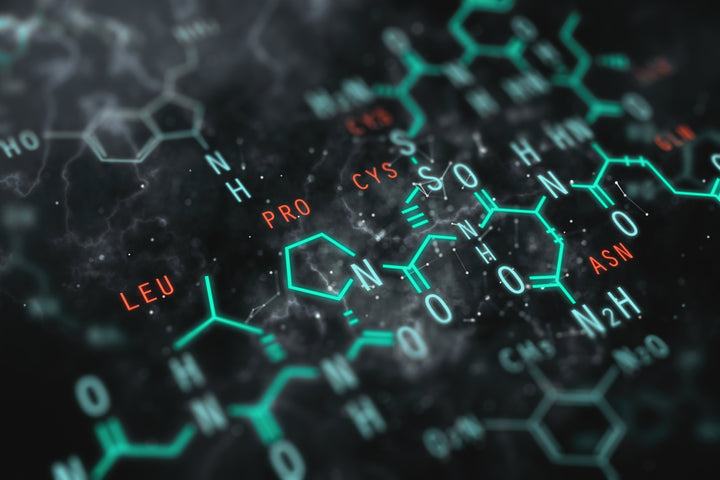
Delve into the hidden elegance of science with our meticulously crafted jewelry, inspired by the intricate structures of chemical molecules. Each piece serves as a tactile tribute to the building blocks of life and matter, capturing the allure of atoms and bonds in precious metals. A harmonious fusion of art and science, these creations are more than mere accessories; they're a celebration of the enigmatic beauty that underpins our universe.
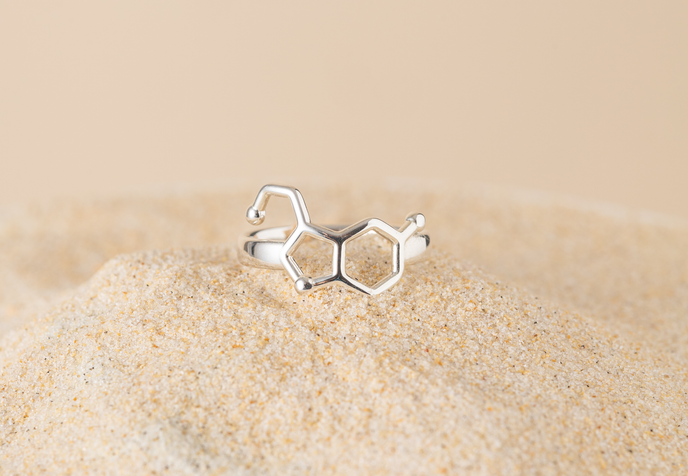
Find your perfect fit: measure an Existing Ring
Finding out your ring size at home is a simple process and can help you shop for jewelry online with confidence.
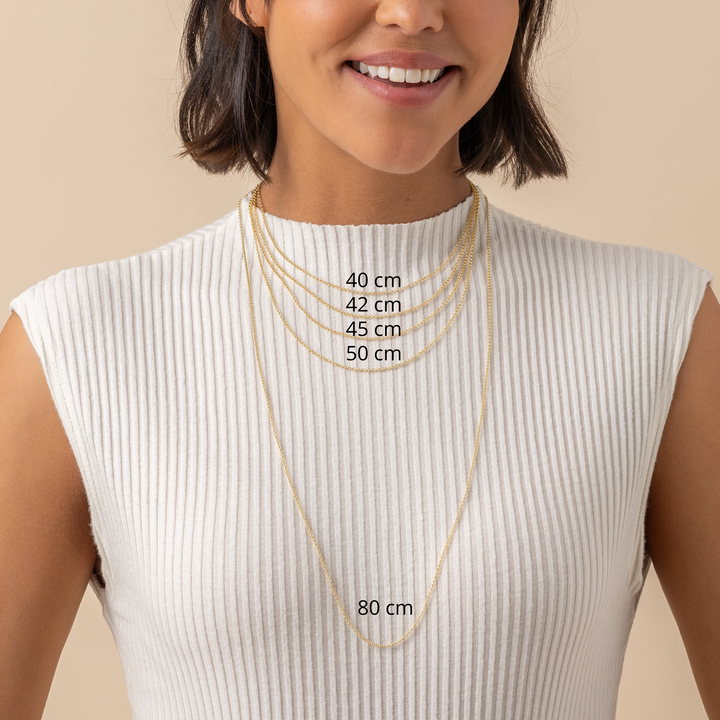
Necklace length guide