€ 195


Still questions? Contact us
Trisomy 21 - Down syndrome necklace | gold vermeil
For the people who have a child, sibling, friend, or patient with Down syndrome, the karyotype is not an abstraction. It is the specific arrangement of three copies of chromosome 21 that defines the condition. This 19 mm pendant in 18K gold vermeil renders that karyotype.
The Science Behind Trisomy 21
Down syndrome is caused by trisomy of chromosome 21, the smallest human autosome. In about 95 percent of cases, the extra chromosome arises from non-disjunction during maternal meiosis I. The remaining cases are translocations or mosaicism. Chromosome 21 carries roughly 200 protein-coding genes, and the developmental and cognitive features of Down syndrome are attributed to overexpression of a subset of these genes, particularly DSCR1 (in the Down Syndrome Critical Region) and APP (the amyloid precursor protein gene, which contributes to the high incidence of early-onset Alzheimer's in the population). Life expectancy and quality of life have improved substantially over the past four decades with better cardiac and medical care.
A Meaningful Gift for Science Lovers
For families, advocates, and clinicians whose lives include Down syndrome.
- parents, siblings, and extended family of someone with Down syndrome
- clinical geneticists and genetic counsellors
- paediatricians and developmental specialists
- educators and therapists working in special education
Often given on World Down Syndrome Day (21 March, the date chosen for the three copies of the 21st chromosome), or as a milestone gift marking a significant moment in a family's journey.
Explore Related Genetics Jewelry
- Trisomy 21 necklace | silver
- XX chromosomes ring | silver
- Flat chromosome necklace | silver
- Round chromosome necklace | silver
- Round chromosome studs | silver
Frequently Asked Questions
What does the pendant show?
Three copies of chromosome 21 arranged together, the karyotype that defines Down syndrome. The geometry is anatomically faithful: three small acrocentric chromosomes, the smallest in the human karyotype, rendered at 19 mm.
Is this appropriate as a family gift?
Yes. The piece is chosen most often by parents, siblings, and grandparents of someone with Down syndrome, and by clinicians who work with families. It carries the karyotype as an accurate reference rather than a metaphor, which is part of why families respond to it.
What are the specs and what is the return policy?
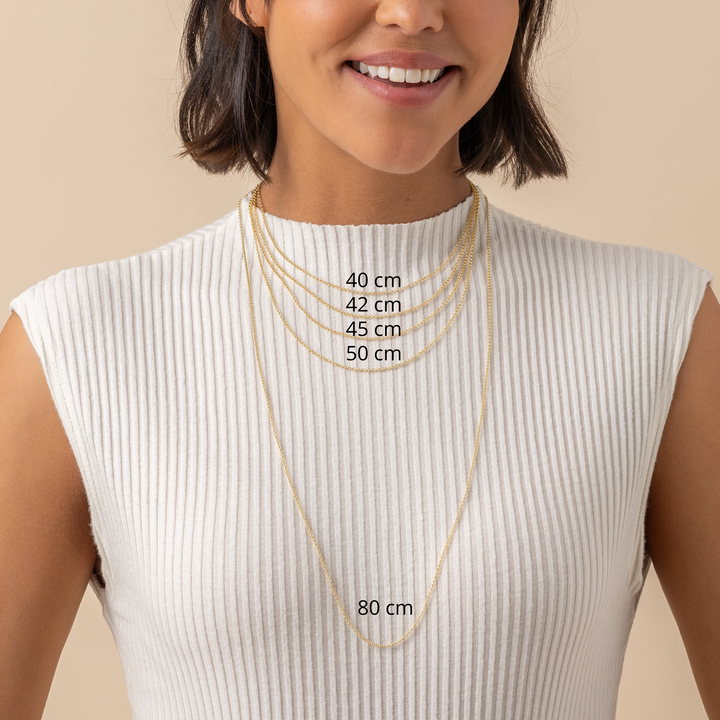
18K gold vermeil with sterling silver core and 2.5 micron gold plating, 19 mm pendant, 45 cm chain with a 5 cm extender. Nickel-free and hypoallergenic. Ships free worldwide via DHL Express in 1-5 business days, with all import duties and taxes covered. 30-day “Love It or Return It” returns.
Is this also available in silver?
Yes. The same 19 mm Trisomy 21 pendant is available in 925 sterling silver at the same size and chain length.
Genetics
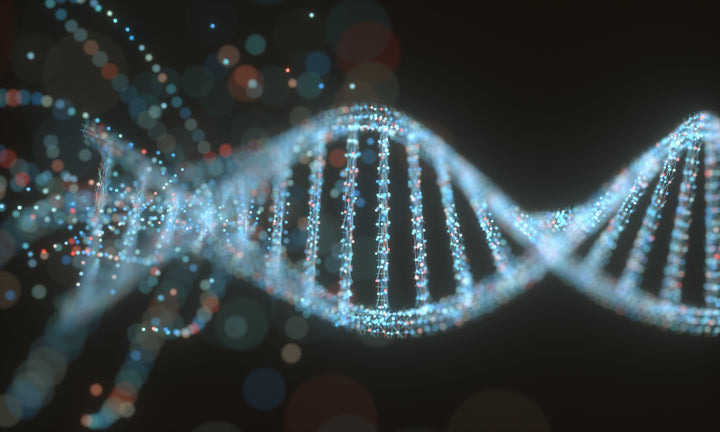
Our genetics-inspired jewelry captures the essence of life's code in striking detail. Crafted to mirror the DNA double helix, each piece is more than an aesthetic marvel—it's a tribute to the complexity of our genetic makeup. Far from ordinary, this collection combines scientific precision with artistic flair, making each item a captivating blend of form and function. It's not just an accessory; it's a meaningful representation of the miracle that is genetics.
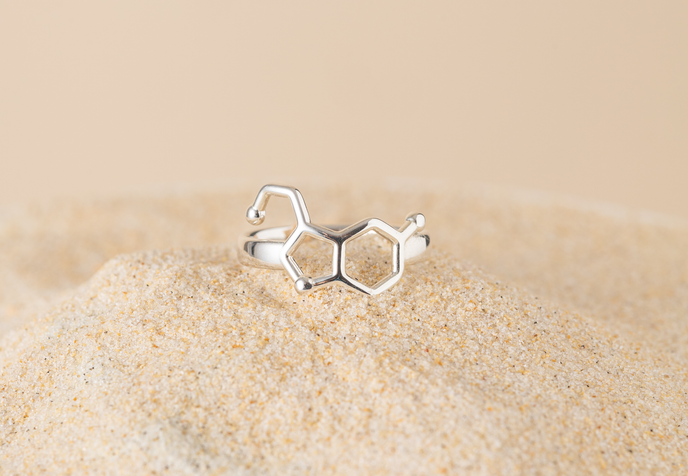
Find your perfect fit: measure an Existing Ring
Finding out your ring size at home is a simple process and can help you shop for jewelry online with confidence.
Necklace length guide