€ 160


Still questions? Contact us
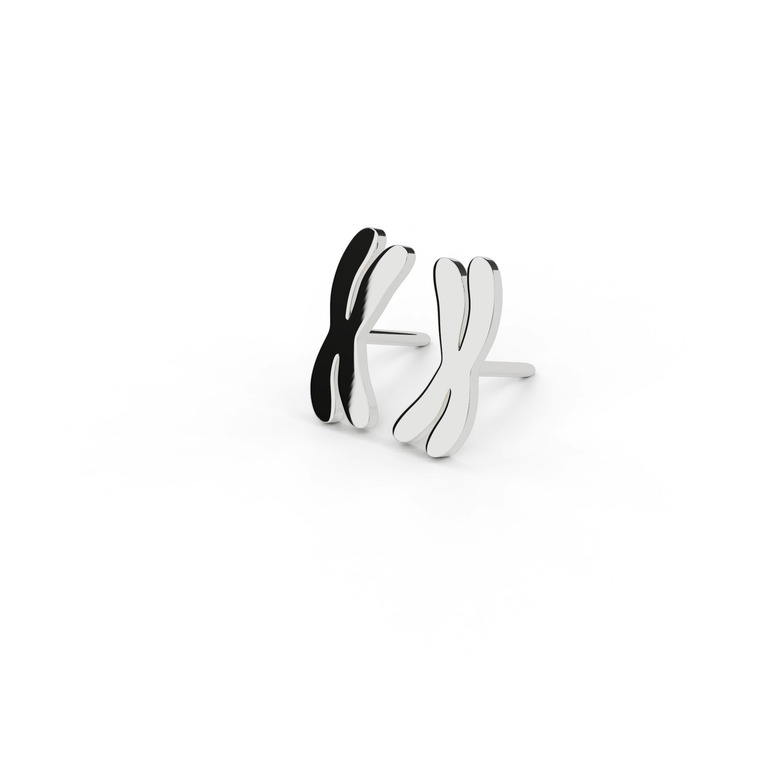
Flat chromosome studs | sterling silver
In 1971 Marina Seabright published a rapid way to band human chromosomes, using the enzyme trypsin before staining. A cytogeneticist with flat chromosome studs in sterling silver uses her microscope to tell each chromosome apart by its pattern of light and dark bands. Banding with trypsin is still a standard method in clinical cytogenetics.
Who It's For
- a sister or a friend studying genetics
- a science teacher
- a bioinformatician who works on genomes
- a medical student
- yourself
Anna C., who bought a pair to keep: “I love the shape and the dimension, very elegant and cute.”
How a Cell Marks Each Centromere
Each human chromosome has one centromere, where the kinetochore assembles. That protein structure is what spindle fibres hold on to when they pull a chromosome's copies apart during cell division. Human centromeres sit in alpha satellite DNA, a stretch of about 171 base pairs repeated head to tail, sometimes for millions of bases. Only part of that repeat array does the work, the part bound by a protein called CENP-A. In 2022, with a complete human genome to map, Nicolas Altemose and colleagues found that this part covers 190,000 to 570,000 base pairs on each chromosome, just 7 to 24 per cent of the repeat array around it.
Explore Related Genetics Jewelry
- flat chromosome necklace | silver
- flat chromosome necklace | gold vermeil
- round chromosome studs | silver
- round chromosome necklace | silver
FAQ
How big are these studs, and what holds them in place?
Each earring measures 11 mm across (0.43 inch), about 15 mm narrower than a 2-euro coin (25.75 mm). They come as a pair. A straight post at the back of each stud goes through the earlobe, and the ear nut that holds it has a sterling silver core. Our 925 sterling silver is nickel-free and hypoallergenic.
Is there a gold version, a round version, or a matching necklace?
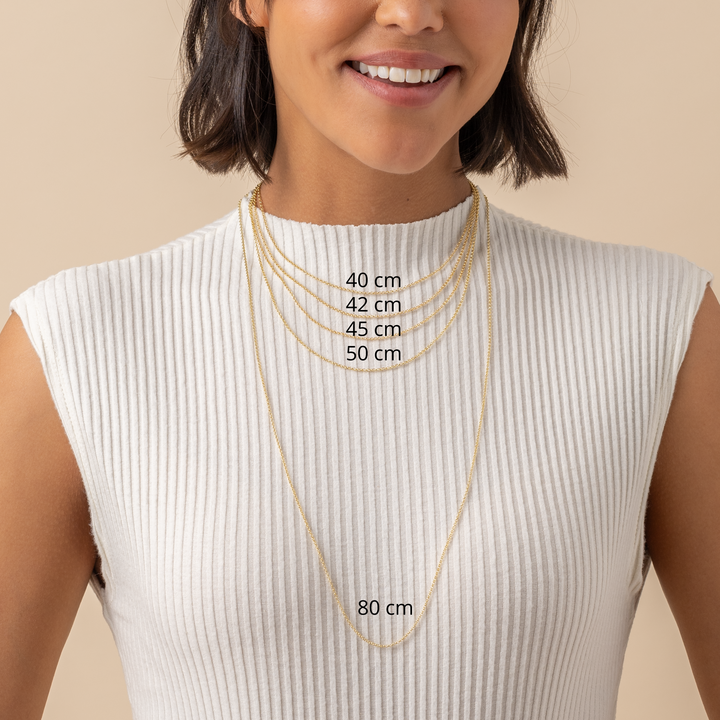
There is no gold version of these studs, but there is a round version and a matching necklace. The round chromosome studs are also 11 mm, on ear nuts and in sterling silver, with rounded arms where these are flat. The flat chromosome necklace has flat arms like these on a 21 mm pendant, fixed sideways on a 45 cm chain with a 5 cm extender. In silver it makes a set with these studs. The necklace also comes in 18K gold vermeil, a separate choice if she wears gold.
Will they arrive in time, and what if they aren't right?
DHL Express delivers them free worldwide in 1-5 business days, and we pay the import duties and taxes, so nothing is due at the door. They arrive in a ready-to-gift jewelry box and festive envelope. If they aren't right, our 30-day “Love It or Return It” policy applies to unworn earrings.
Who gave chromosomes their name?
W. Waldeyer, in a paper of 1888 on cell division. It opens on the easily stained, thread-like structures that appear in a nucleus as it divides. For the ones that split lengthwise, which Boveri had called chromatic elements, Waldeyer proposed Chromosomen. The name primary loops did not fit, he wrote, because they are far from always loop-shaped. Chromatic elements was too long, and Platner's karyosomes recalled the nucleolus. If his word proved useful it would take hold, and if not it should soon be forgotten. It took hold.
Genetics
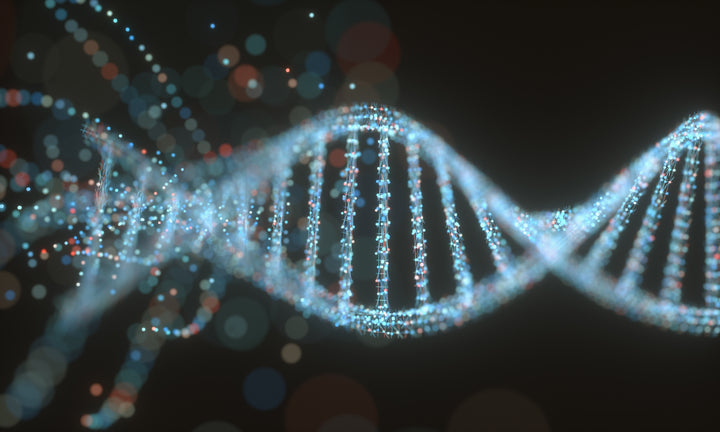
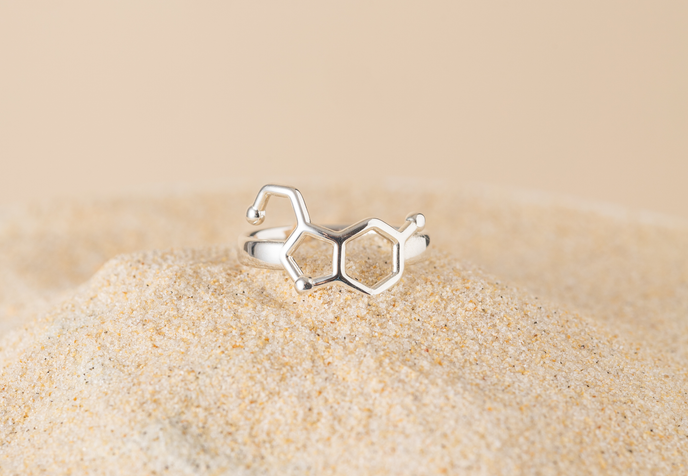
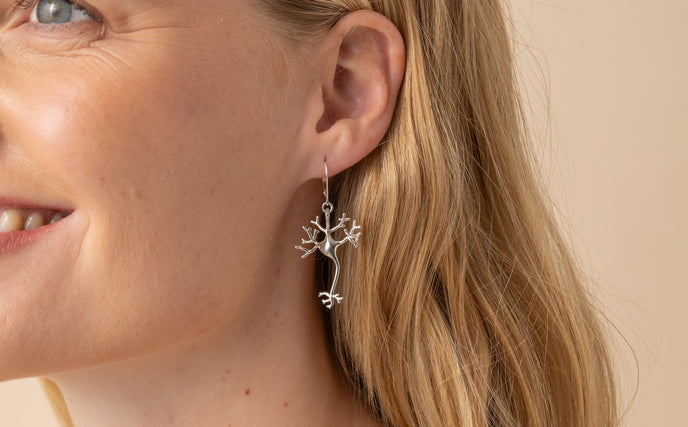
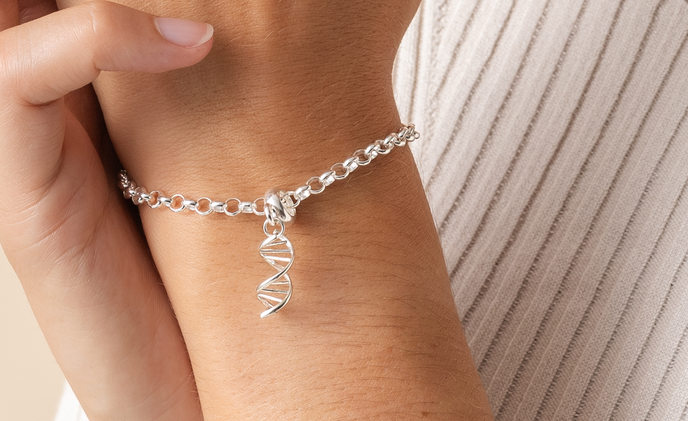
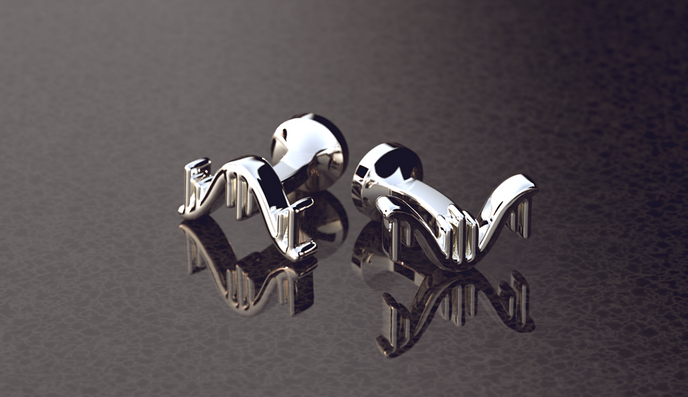
Our genetics-inspired jewelry captures the essence of life's code in striking detail. Crafted to mirror the DNA double helix, each piece is more than an aesthetic marvel—it's a tribute to the complexity of our genetic makeup. Far from ordinary, this collection combines scientific precision with artistic flair, making each item a captivating blend of form and function. It's not just an accessory; it's a meaningful representation of the miracle that is genetics.
Find your perfect fit
Necklace length guide