€ 175


Still questions? Contact us
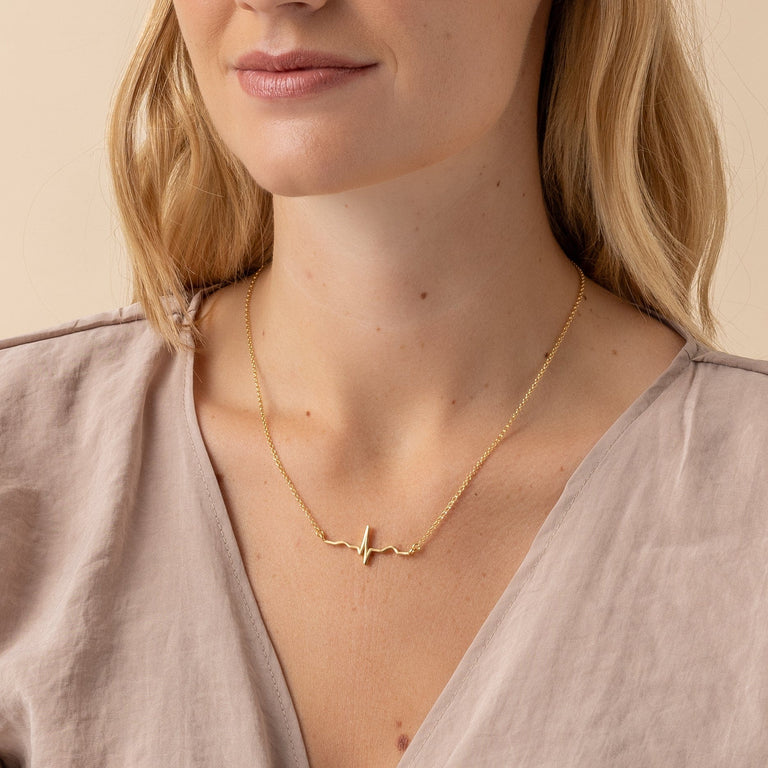
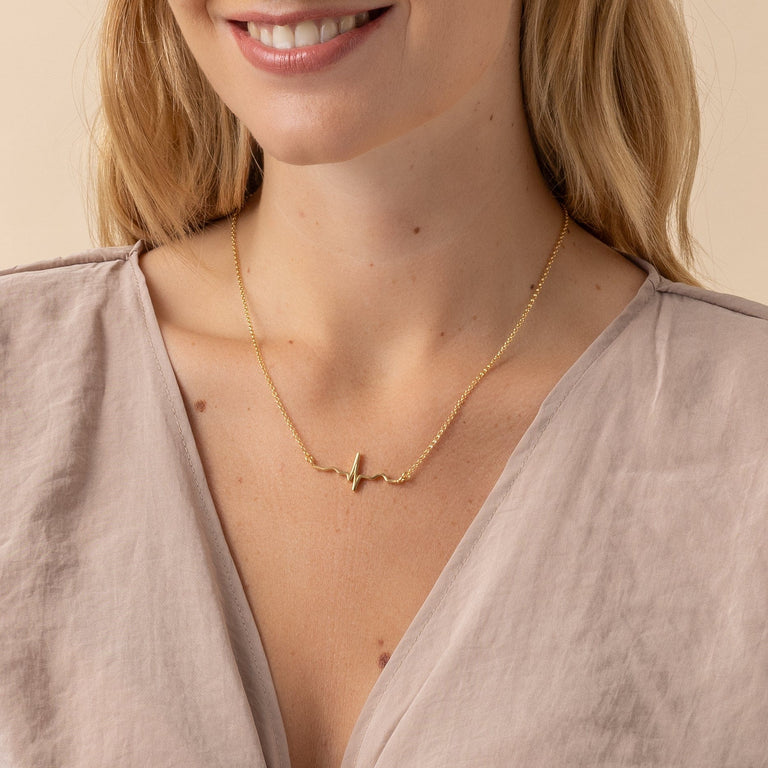
Heartbeat necklace | 18K gold vermeil
On a hospital monitor, the heartbeat is the line everyone watches, and the one that lets a room breathe out when it keeps its rhythm. This heartbeat necklace in gold vermeil is for the woman who reads that line for a living, and for anyone who wants to keep that rhythm close.
Who It's For
- a daughter finishing a hard first year of medical school, or graduating from it
- a friend graduating as a nurse, or a paramedic at Christmas
- a daughter's 16th birthday, if she already talks about medicine
- a wife or a mother who loves a piece with a story behind it
- yourself, for a gold piece that stays discreet and still says something
Chris W. gave the silver version to his wife: “My 21 year old son almost died 2 years ago. He is ok now but when my wife saw his heartbeat come back she was thrilled. I bought this for her and she loves it. It reminds us of that happy moment.” Nikola K. on the gold version: “I love it, it was even more beautiful than I expected.”
How an ECG Reads the Heart
Every heartbeat starts as an electrical wave, and an electrocardiogram records it from the skin. By the time it reaches the electrodes, the signal is tiny, around a thousandth of a volt, yet clear enough to read. The P wave is the atria activating. The tall QRS complex is the ventricles activating, just before they pump. The T wave is the ventricles recovering for the next beat. Standard ECG paper runs at 25 mm a second, so each small square is 40 milliseconds, and a clinician can time the gaps between the waves by eye. Those gaps tell how the signal is moving through the heart.
Explore Related Cardiology Jewelry
- heartbeat necklace | silver
- heartbeat earring hoops | silver
- anatomical heart necklace | gold vermeil
- heart section necklace | gold vermeil
FAQ
How big is it, and how does it sit?
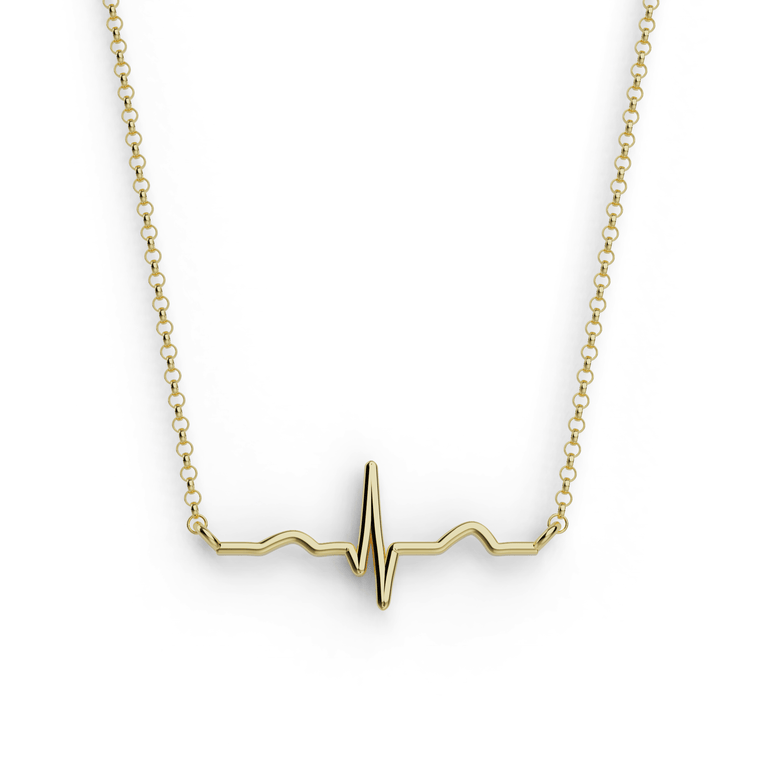
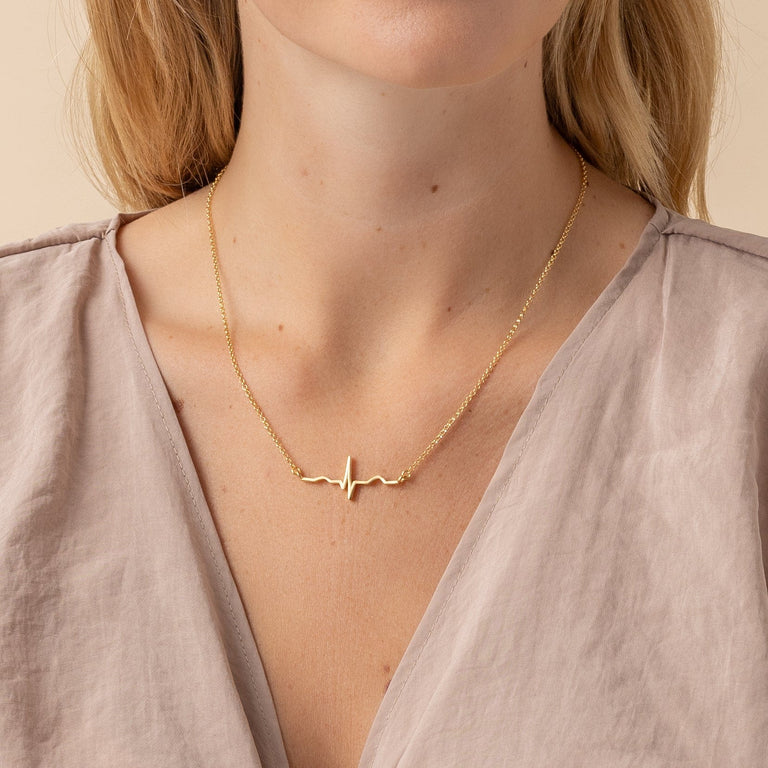
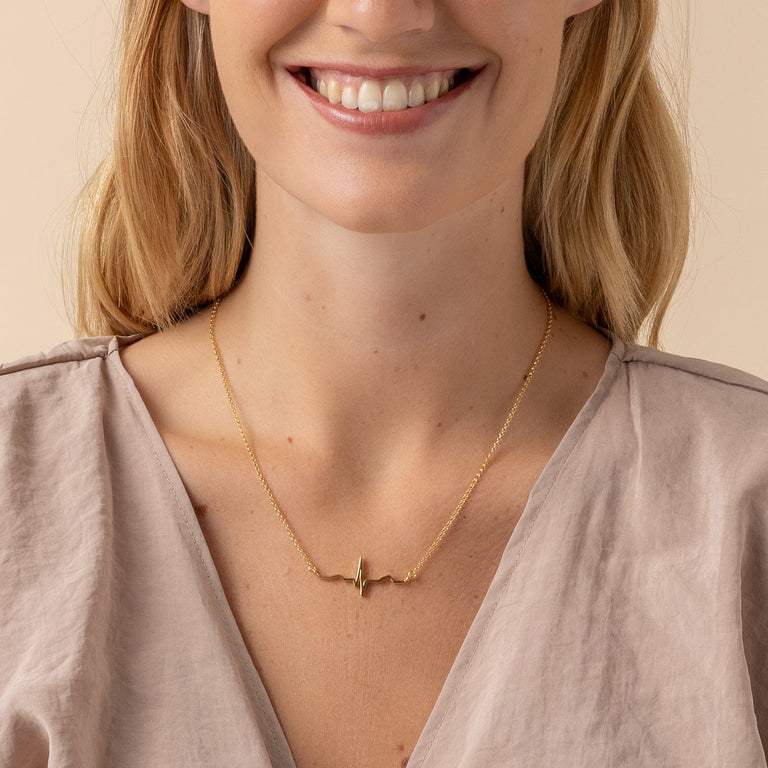
The pendant is 36 mm wide (about 1.4 inches), roughly one and a half US quarters side by side. The chain attaches at both ends, so it lies across the chest just below the collarbone. It comes on a 45 cm (17.7 inch) gold vermeil chain with a 5 cm (2 inch) extender. Gold vermeil is 2.5 microns of 18K gold over solid sterling silver, nickel-free and hypoallergenic.
Is there a silver version, or a different chain length?
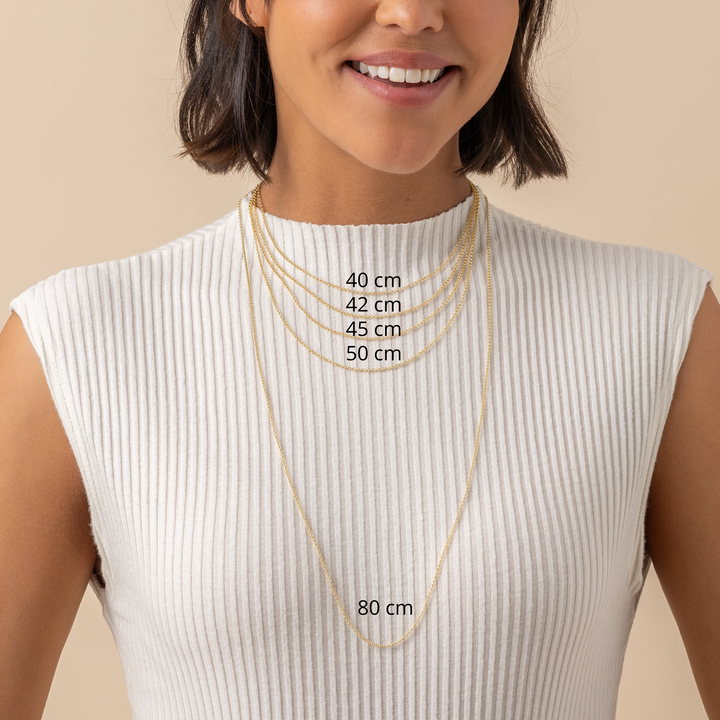
Yes. The same heartbeat necklace comes in sterling silver, also 36 mm. Choose the finish she already wears: the design and size are the same in both. The heartbeat line also comes as silver earring hoops (26 mm), silver studs (11 mm) and a silver ring. For another length, an extra gold vermeil chain is offered on this page in 40, 42, 45 or 50 cm, each with the 5 cm extender, or 80 cm without one.
Is delivery free, and what if it isn't right?
Yes. DHL Express delivers free in 1-5 business days worldwide, and we pay the import duties and taxes, so nothing is due at the door. It arrives in a ready-to-gift jewelry box and festive envelope. If it isn't right, our 30-day “Love It or Return It” policy applies.
Who invented the ECG?
Augustus Waller recorded the first human electrocardiogram in London in 1887, but his instrument was crude and slow. In Leiden, Willem Einthoven built a far more sensitive one, the string galvanometer. It was too heavy to move, and the hospital lay about 1.5 km from his laboratory. So in 1905 patients there placed their hands in salt solution, and their heartbeats travelled down a telephone line to his lab. He called it the telecardiogram. In 1924 he received the Nobel Prize “for his discovery of the mechanism of the electrocardiogram”.

Human Anatomy
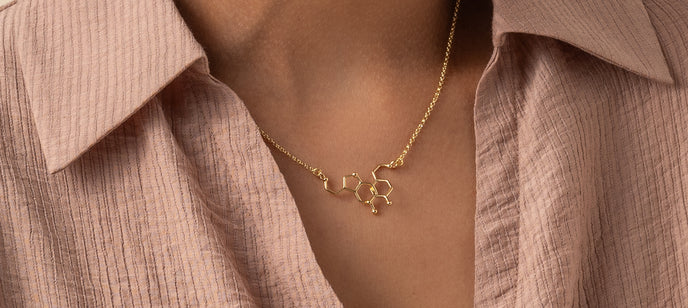
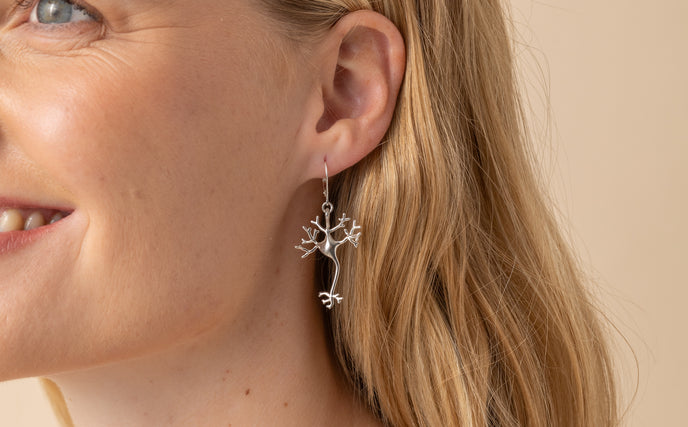
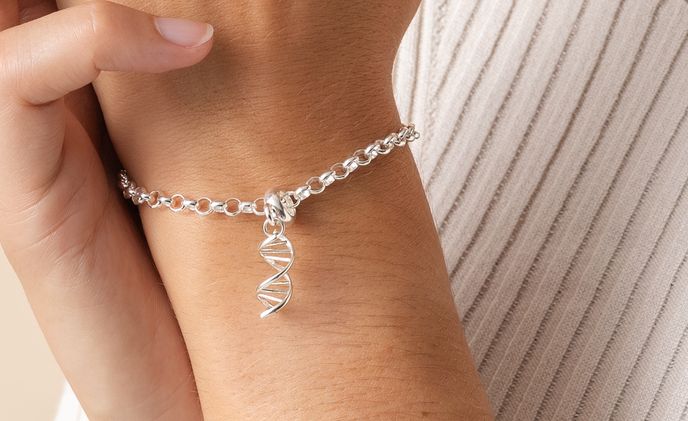
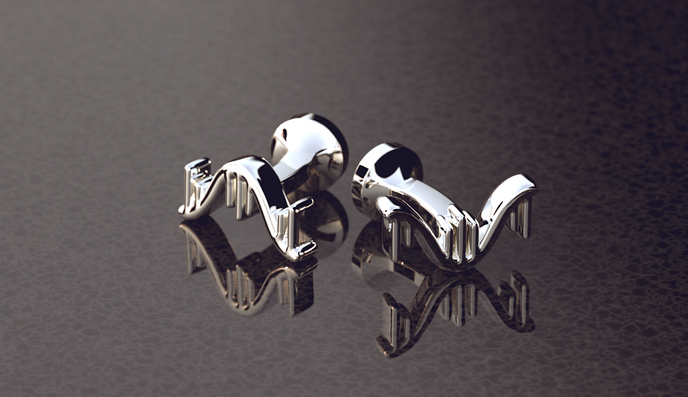
Anatomical wonders have never been so elegantly articulated. Our anatomical collection embodies the intricate and awe-inspiring structures that make us who we are. From DNA double helices to neuronal networks, our pieces don't merely imitate—they interpret. The collection serves as a tangible tribute to the hidden beauty within us all, elevating the realms of biology and medicine into wearable art. With exquisite attention to detail, each piece is a dialogue between form and function, revealing the enigmatic eloquence of the human body.
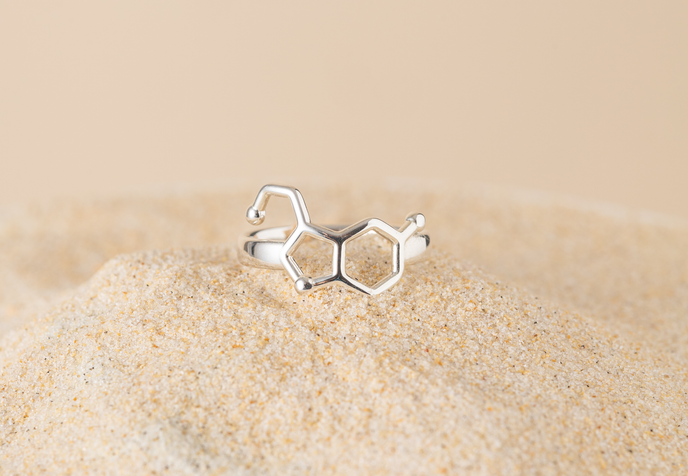
Find your perfect fit: measure an Existing Ring
Finding out your ring size at home is a simple process and can help you shop for jewelry online with confidence.
Necklace length guide