
€ 155


Still questions? Contact us
Astrocyte necklace | sterling silver
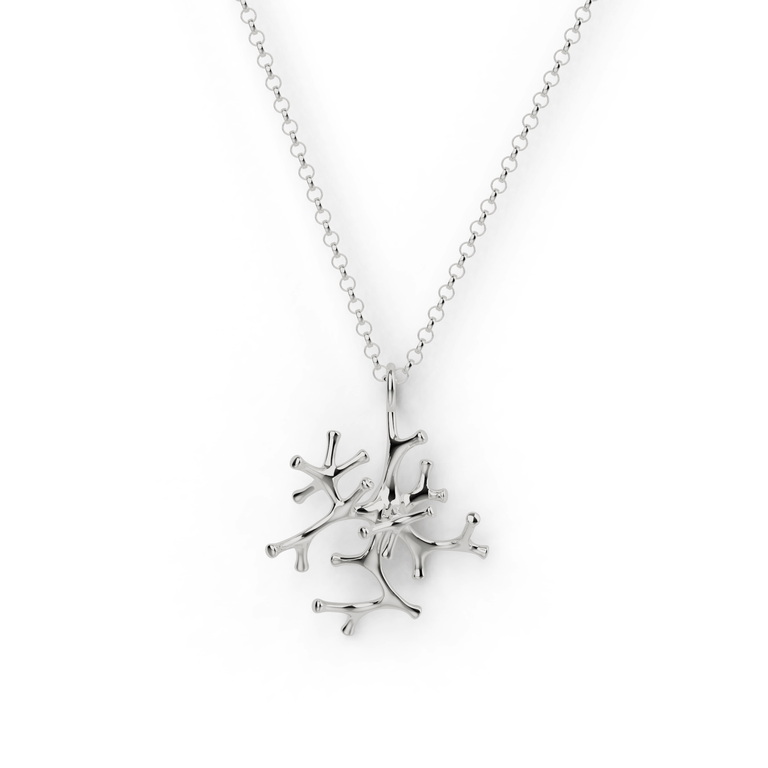
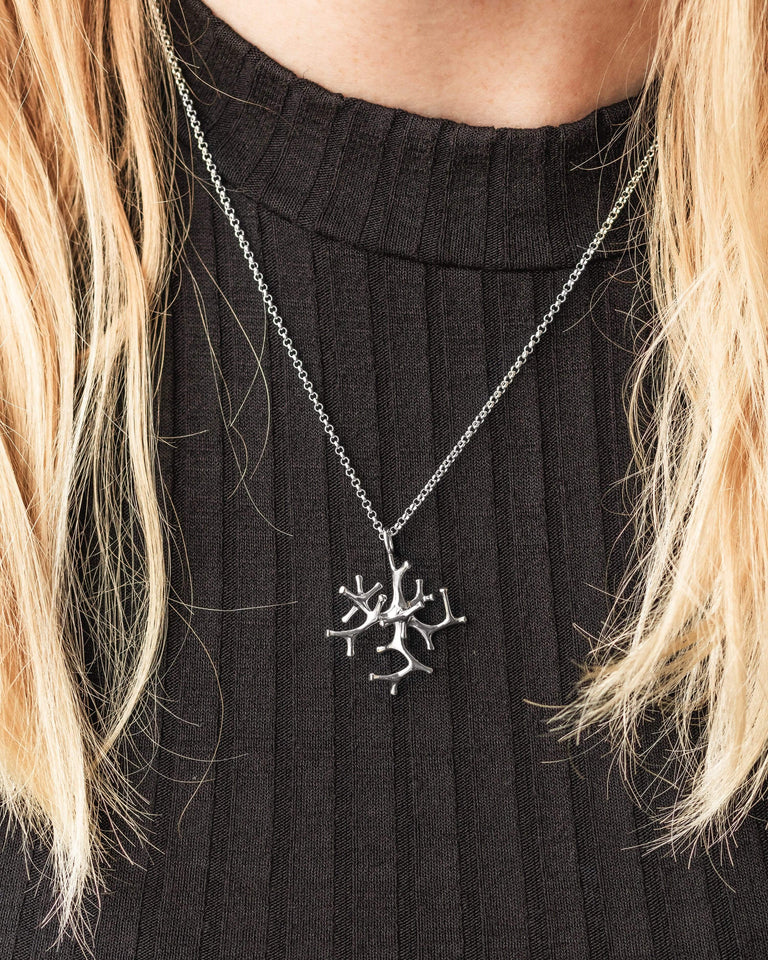
An astrocyte is a star-shaped glial cell, the forgotten scaffold of the nervous system. They buffer potassium, clear glutamate, and hold the blood-brain barrier open. The unseen powerhouse that lets neurons do their work, worn here as a 29 mm sterling silver pendant.
The Science Behind the Astrocyte
Astrocytes are glial cells marked by GFAP (glial fibrillary acidic protein) expression, and they form the bulk of the brain's supporting tissue. They maintain the blood-brain barrier, regulate extracellular potassium concentration to prevent neuronal excitability run-away, and remove glutamate from synaptic space via high-affinity uptake transporters, terminating synaptic transmission. Recent work has revealed that astrocytes participate actively in the tripartite synapse, modulating synaptic strength and plasticity. Astrocyte heterogeneity is substantial: morphologically distinct subtypes exist in different brain regions and perform specialized functions. Loss of astrocytic glutamate uptake capacity is implicated in excitotoxicity associated with ALS, Alzheimer's disease, and stroke.
Who Tends to Wear This
- neuroscientists studying glial biology, synaptic transmission, or neuro-inflammation
- researchers working on astrocyte heterogeneity and functional specialization
- clinicians and researchers focused on excitotoxic pathology in ALS, Alzheimer's, or stroke
- neurobiologists who recognize the star shape and know astrocytes are far more than support tissue
For someone who knows the tripartite synapse and values the invisible infrastructure that holds the brain together.
Explore Related Neuroscience Jewelry
- Astrocyte necklace | gold vermeil
- Neuron necklace | silver
- Purkinje cell necklace | silver
- Sagittal brain necklace | silver
- Spindle neuron necklace | silver
FAQ
What do astrocytes do in the brain?
Astrocytes perform multiple critical functions. They regulate extracellular potassium concentration, preventing neurons from firing spontaneously when K+ rises. They express high-affinity glutamate transporters that remove glutamate from the synapse, terminating synaptic transmission. They maintain the blood-brain barrier by making contact with brain endothelial cells. They respond to neuronal activity and modulate synaptic strength, participating in what is now called the tripartite synapse (neuron-neuron-astrocyte). Loss of astrocytic glutamate uptake is a major mechanism of excitotoxicity in ALS, Alzheimer's disease, and ischemic stroke.
Why is the astrocyte star-shaped?
The star-shaped morphology reflects their function. Each astrocyte extends multiple processes (the arms of the star) that make contact with thousands of synapses. A single astrocyte can wrap around synapses, respond to local neuronal activity, and coordinate neuromodulatory effects across large networks. Astrocyte heterogeneity is substantial: morphologically distinct subtypes exist in different brain regions and cell-type layers, each with specialised properties. The branched shape allows intimate contact with the neural tissue they support.
What size is the pendant and what chain comes with it?
925 sterling silver, 29 mm pendant on a 45 cm sterling silver chain (ø 1.8 mm) with a 5 cm extender. Nickel-free and hypoallergenic. Free worldwide DHL Express in 1-5 business days, with all import duties and taxes covered. 30-day “Love It or Return It” returns.
Is there a gold version of the astrocyte?
Yes. The astrocyte is available in 18K gold vermeil at the same 29 mm size and chain length. Choose the finish the recipient already wears. Both versions carry the same design and the same meaning.

Neuroscience
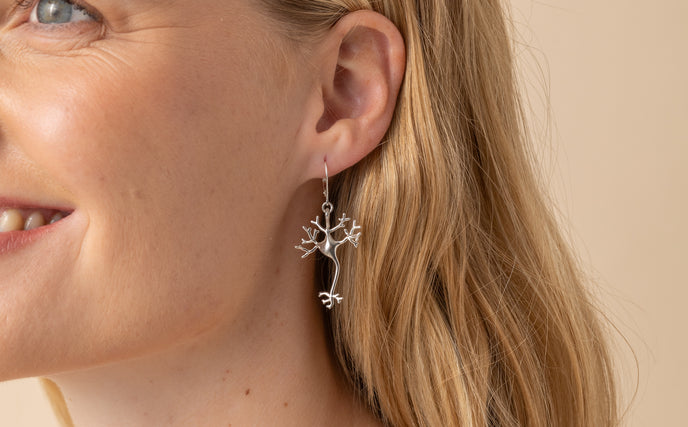
Dive into the intricacies of the human mind with our neuroscience-inspired jewelry collection. Each piece is a tactile ode to the neural networks that shape our thoughts, memories, and consciousness. Crafted with meticulous attention to detail, our designs mirror the dendritic branches and synaptic connections that form the basis of mental activity. With these elegant pieces, wear the enigma of cognition close to your skin, offering a subtle yet profound exploration of what it means to be sentient.
Find your perfect fit: measure an Existing Ring
Finding out your ring size at home is a simple process and can help you shop for jewelry online with confidence.
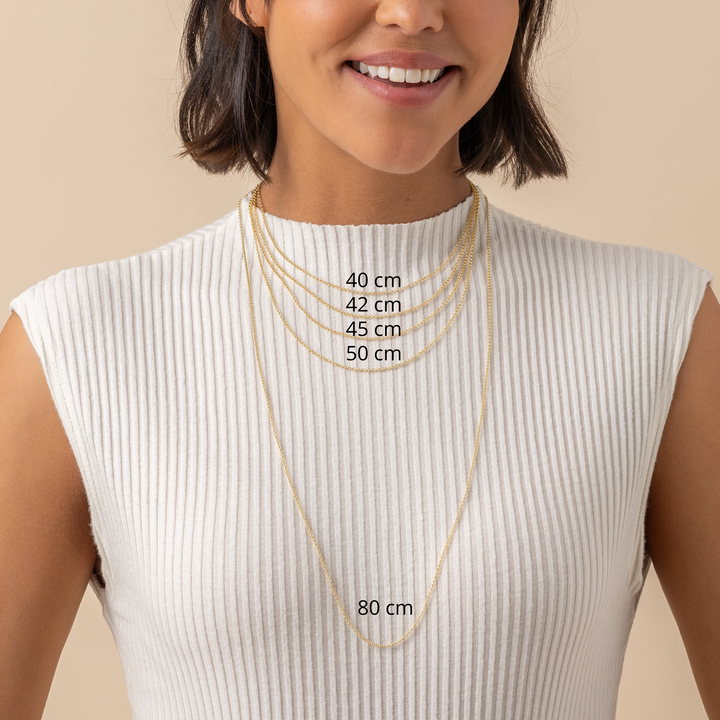
Necklace length guide