€ 200


Still questions? Contact us
Caffeine studs | 18K gold vermeil
For some people the day starts properly with the first cup, and some of them can draw the molecule that makes it work. These caffeine studs in 18K gold vermeil are a gift for the pharmacologist, chemist or coffee lover in your life, or for yourself.
Who It's For
- your girlfriend, if coffee is how her morning starts
- a pharmacologist or neuroscientist, on the day she defends her PhD
- a barista or coffee roaster with a soft spot for chemistry, for her birthday
- a chemistry teacher, at the end of the school year
- someone who wears the caffeine necklace in gold vermeil and would like studs to match
“I bought these earrings for my girlfriend. She loves them.” (Marco B., from a review of the silver version)
“Simple and understated with lively detail” (Elangovan N., from a review of the silver version)
Why Coffee Plants Make Caffeine
The coffee plant does not make caffeine for us. Caffeine is bitter, and in large doses it is toxic to many insects, so the leaves and seeds that carry it are better protected from being eaten. Coffee, tea and cacao each found their own route to the molecule, a hint that caffeine earns its keep. There is a gentler side too. The nectar of coffee flowers carries a small dose. In experiments, honeybees given sugar water with the same small dose were three times as likely to remember a floral scent a day later as bees given sugar water alone. A bee that remembers the scent is more likely to come back to the same kind of flower.
Explore Related Molecules Jewelry
- caffeine studs | silver
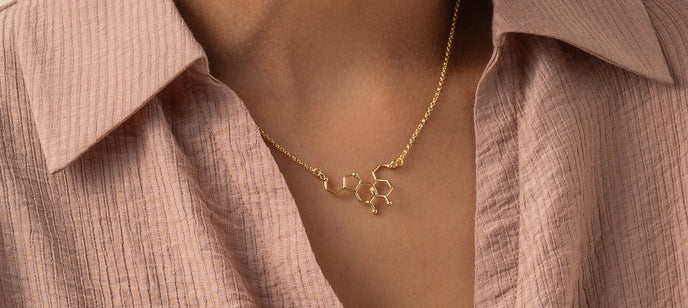
- caffeine necklace | gold vermeil
- caffeine earrings | gold vermeil
- dopamine studs | gold vermeil
FAQ
How big are they, and how do they close?
Each stud is 11 by 14 mm (about half an inch), a little smaller than a US dime. They sit on the earlobe and close with ear nuts on gold vermeil posts. 18K gold vermeil means 2.5 microns of 18K gold over solid sterling silver, nickel-free and hypoallergenic.
Is there a silver pair?
Yes. The caffeine studs also come in sterling silver, at the same 11 by 14 mm. Choose the finish the recipient already wears: the design is the same in both. For a matching set, the caffeine necklace and the caffeine hoop earrings come in both finishes too.
Is delivery free, and what if they aren't right?
Yes. DHL Express delivers free in 1-5 business days worldwide, and we pay the import duties and taxes, so nothing is due at the door. They arrive in a ready-to-gift jewelry box and festive envelope. If they aren't right, our 30-day “Love It or Return It” policy applies to unworn earrings.
Who first isolated caffeine from coffee?
A young German chemist, prompted by a poet. In 1819 Friedlieb Ferdinand Runge visited Johann Wolfgang von Goethe to show him how belladonna extract widens the pupil of a cat. Goethe was impressed, handed him a box of rare coffee beans and suggested he analyze them. Within months Runge had isolated the bitter substance we now call caffeine. Its chemical structure, the one these studs are based on, was only worked out by Hermann Emil Fischer near the end of the century.
Molecules
Delve into the hidden elegance of science with our meticulously crafted jewelry, inspired by the intricate structures of chemical molecules. Each piece serves as a tactile tribute to the building blocks of life and matter, capturing the allure of atoms and bonds in precious metals. A harmonious fusion of art and science, these creations are more than mere accessories; they're a celebration of the enigmatic beauty that underpins our universe.
Find your perfect fit
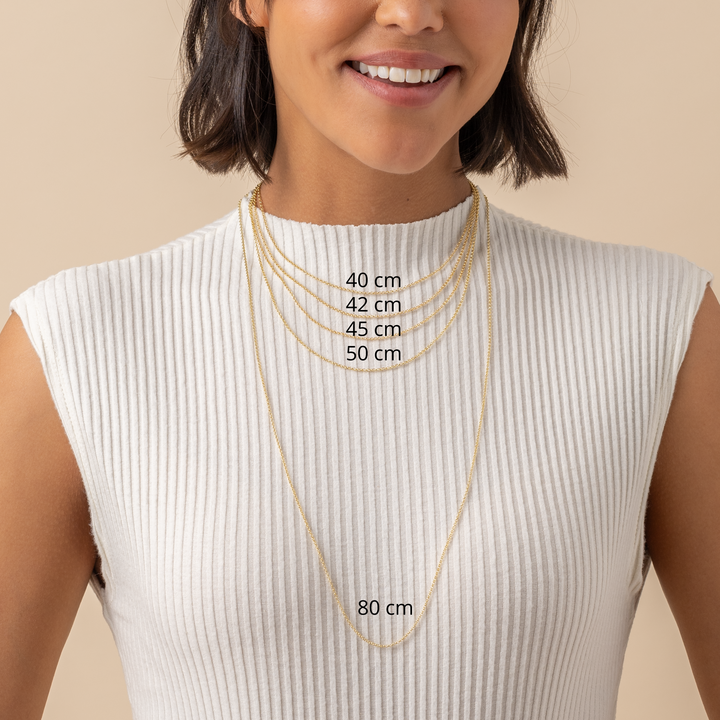
Necklace length guide