€ 150


Still questions? Contact us
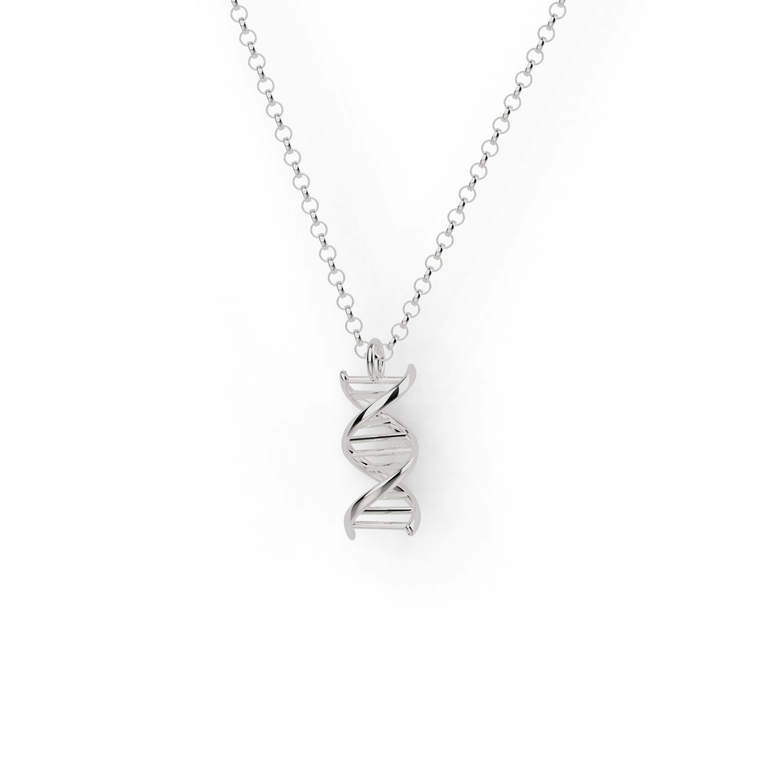
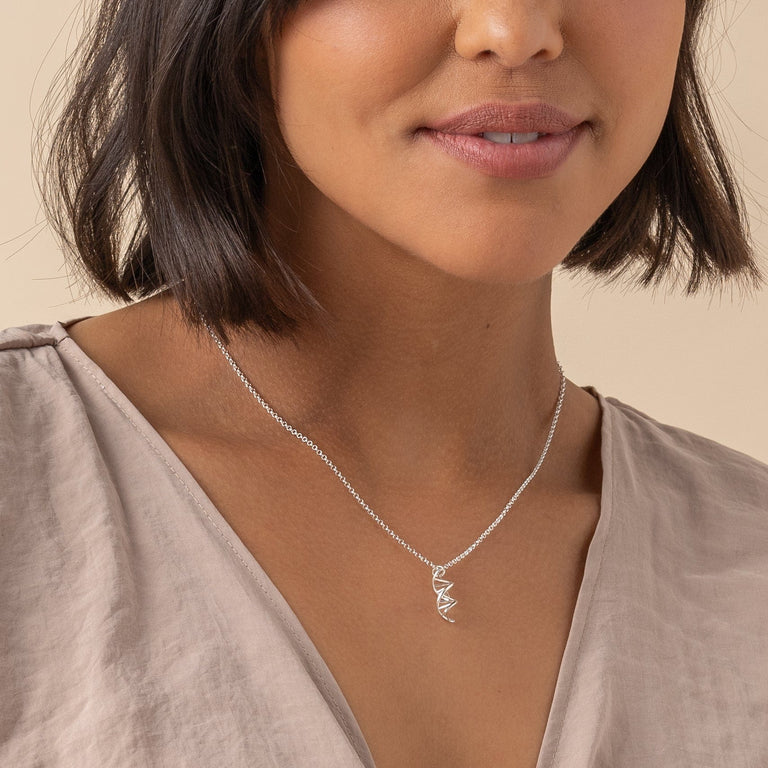
DNA necklace V | sterling silver
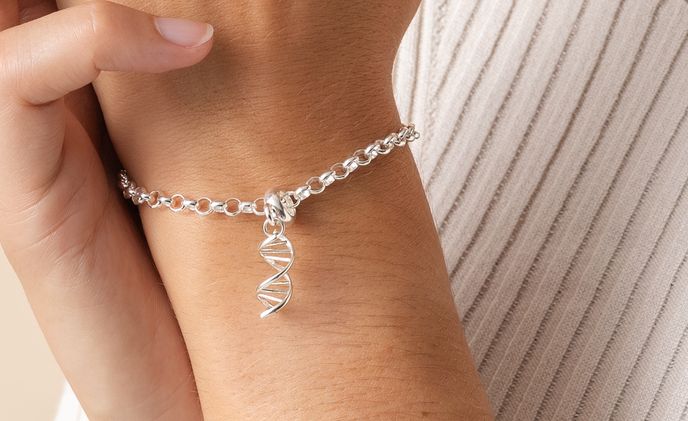
Every biology student learns to draw the double helix, and some never stop. A vertical DNA necklace, small enough to wear every day, suits a daughter starting her degree, a wife who has spent her career in research, or a friend turning 21 who loves genetics.
Who It's For
- a daughter starting a biology, biomedical or forensic science degree
- a granddaughter, for Christmas or a birthday
- a wife or partner who works in research
- a sister or friend on a milestone birthday, a 21st or a 50th
- a science teacher
- yourself, for every day at work
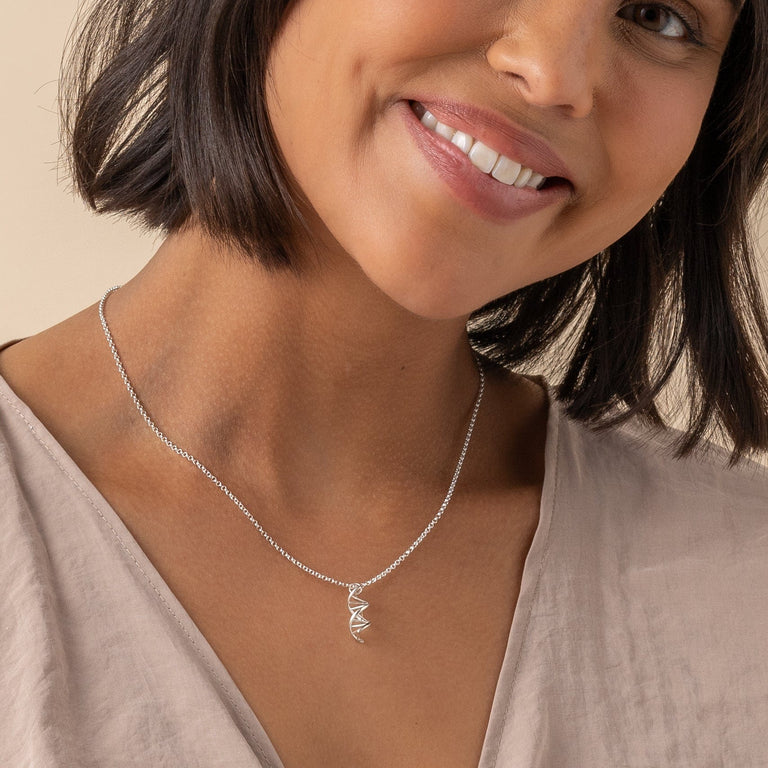
Stuart P. gave it to his wife: “This was a birthday present for my wife who has worked in DNA based research for over 25 years and she absolutely loved it.” Diane L., who teaches molecular biology, bought her own: “I am very picky about jewelry and I really love this. The charm is small but detailed, which is what I was looking for.”
The DNA Only Your Mother Gave You
Almost all of your DNA sits in the cell nucleus. A small part lives elsewhere. Mitochondria, the cell's power supply, carry their own tiny genome: a closed loop of 16,569 base pairs holding 37 genes. It is passed on almost only through the egg, so it came from your mother, and from hers before that. Follow that line back far enough and the mitochondrial DNA of every living person leads to one woman who lived in Africa, between about 100,000 and 200,000 years ago by most estimates.
Explore Related Genetics Jewelry
- DNA necklace V | gold vermeil
- DNA necklace H | silver
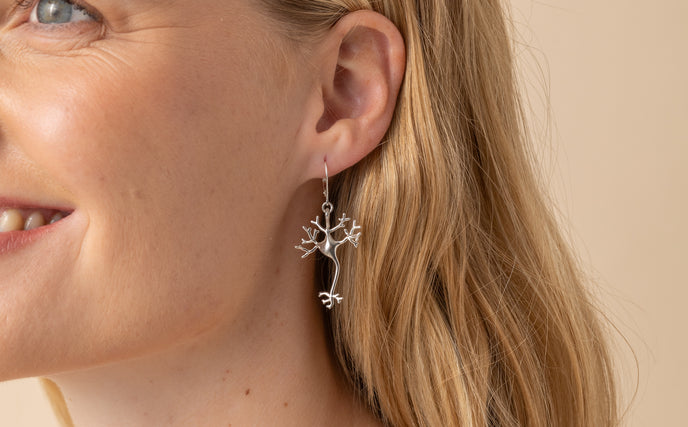
- DNA earrings | silver
- circular DNA necklace | silver
FAQ
How small is it, and how long is the chain?
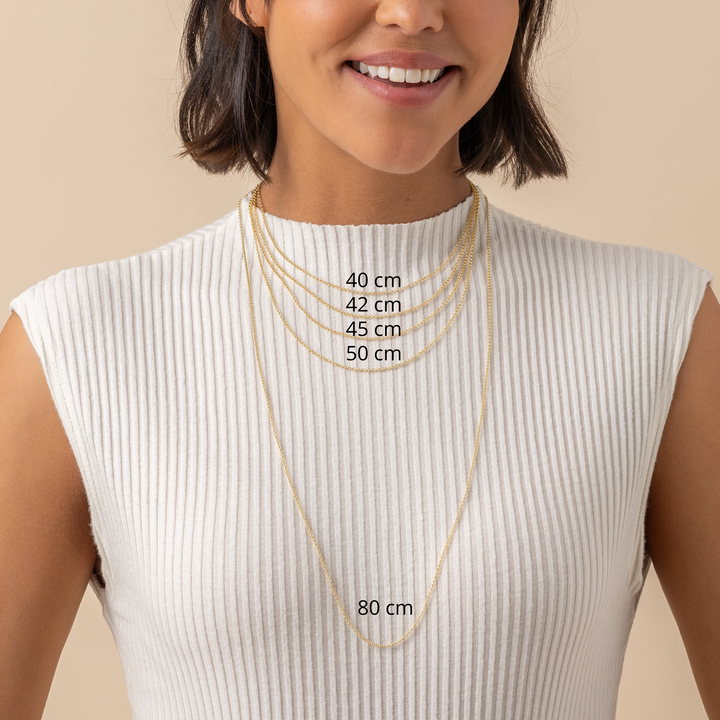
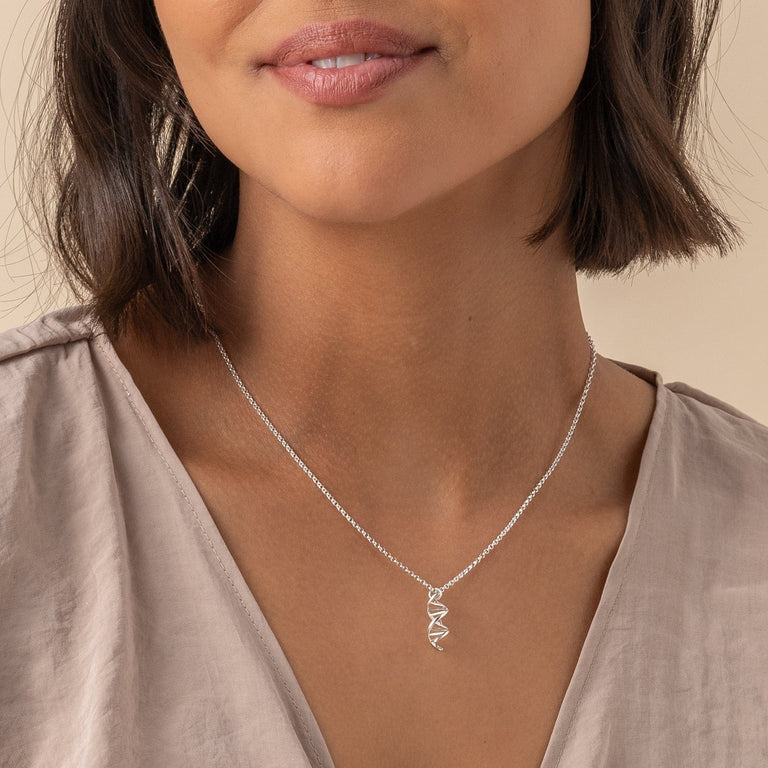
The pendant is 20 mm tall (about 0.8 inches), close to the size of a 10-euro-cent coin or a US penny. It hangs from a single loop at the top on a 45 cm (17.7 inch) sterling silver chain with a 5 cm (2 inch) extender, so the length adjusts from 45 to 50 cm. For a different length, an extra chain from 40 to 80 cm can be added on this page. It is 925 sterling silver, nickel-free and hypoallergenic.
Is there a larger version, a gold one, or matching earrings?
Yes. The horizontal DNA necklace is 30 mm wide and hangs from both ends, for a larger piece. This vertical design also comes in 18K gold vermeil at the same 20 mm. Choose the finish the recipient already wears: the design is identical in both. For a set, the DNA earrings in sterling silver are 20 mm too.
How quickly does it arrive, and what if she doesn't like it?
DHL Express delivers free in 1-5 business days worldwide, and we pay the import duties and taxes, so nothing is due at the door. It comes in a ready-to-gift jewelry box and festive envelope. If it isn't right, our 30-day “Love It or Return It” policy applies.
Who first discovered DNA?
Friedrich Miescher, a young Swiss doctor, in 1869. Working in a laboratory in the castle at Tübingen, he collected used bandages from the nearby surgical clinic and washed the white blood cells out of the pus. From their nuclei he isolated a substance rich in phosphorus that he called nuclein. His supervisor, Felix Hoppe-Seyler, checked the results himself before letting them appear in 1871. It took until 1944 before experiments showed that DNA carries genetic information.
Genetics
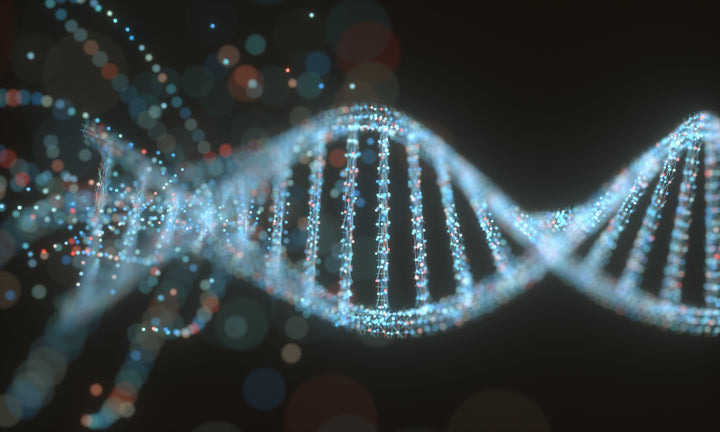
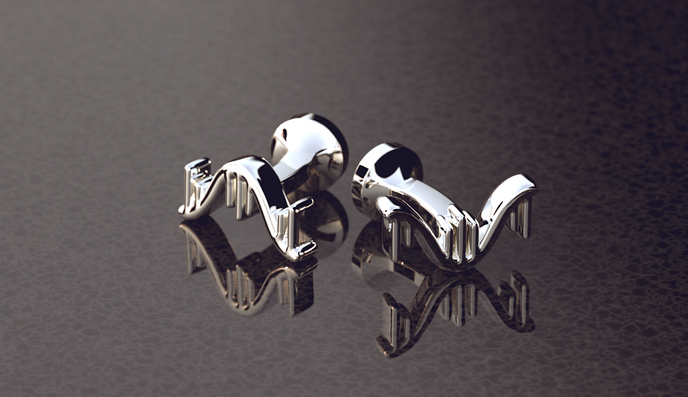
Our genetics-inspired jewelry captures the essence of life's code in striking detail. Crafted to mirror the DNA double helix, each piece is more than an aesthetic marvel—it's a tribute to the complexity of our genetic makeup. Far from ordinary, this collection combines scientific precision with artistic flair, making each item a captivating blend of form and function. It's not just an accessory; it's a meaningful representation of the miracle that is genetics.
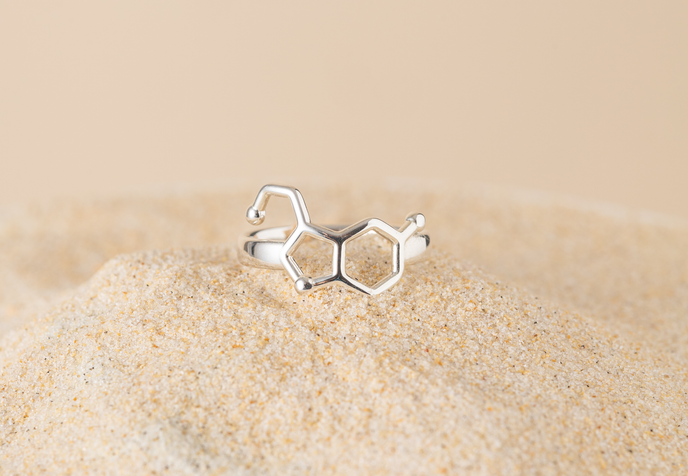
Find your perfect fit: measure an Existing Ring
Finding out your ring size at home is a simple process and can help you shop for jewelry online with confidence.
Necklace length guide