€ 175


Still questions? Contact us
DRG neuron necklace | sterling silver
Every sensation you have ever felt passes through one cell type before reaching the brain. Heat, cold, pressure, the position of your limbs in the dark, the precise location of pain. Dorsal root ganglion neurons. The cells that make a body legible to itself, mostly invisible until something goes wrong.
The Science of the DRG Neuron
Dorsal root ganglion neurons are sensory cells clustered in ganglia along the spinal cord. They have an unusual T-shaped morphology, sometimes called pseudo-unipolar: a single process leaves the cell body and splits into two branches, one running to the periphery (skin, muscle, viscera) and one projecting into the spinal cord. The peripheral branch carries the signal in. The central branch hands it to second-order neurons. This direct relay from receptor to central nervous system, without an intermediate synapse, is part of why DRG neurons are a major focus in neuropathic pain research. After injury, their hyperexcitability drives chronic pain.
Worn By
The audience is narrow and specific. Researchers who work directly on these cells, or clinicians who treat the patients whose pain comes from them.
- pain researchers and clinical neurologists
- physiologists and neuroscientists studying sensory transduction
- spinal cord injury and peripheral nerve specialists
- pain management physicians
Often given for a thesis defence on chronic pain, or for a clinician moving into a pain medicine fellowship.
Explore Related Neuroscience Jewelry
- neuron necklace | silver
- spindle neuron necklace | silver
- purkinje cell necklace | silver
- brain necklace | silver
FAQ
Would a pain researcher actually want this?
Yes. DRG neurons are central to the field. Anyone working on sensory transduction, neuropathic pain, peripheral nervous system biology, or spinal cord injury will recognise the cell type without explanation. The piece is specific enough that people outside neuroscience often need it pointed out, which is part of the appeal.
What makes the DRG neuron's shape unusual?
It is pseudo-unipolar. One process leaves the cell body and splits in two: one branch reaches into the periphery, the other projects into the spinal cord. Most neurons have many dendrites and one axon. DRG neurons compress that into a single bifurcating process, which is why their morphology is one of the most recognisable in histology slides.
Size, material, chain length?
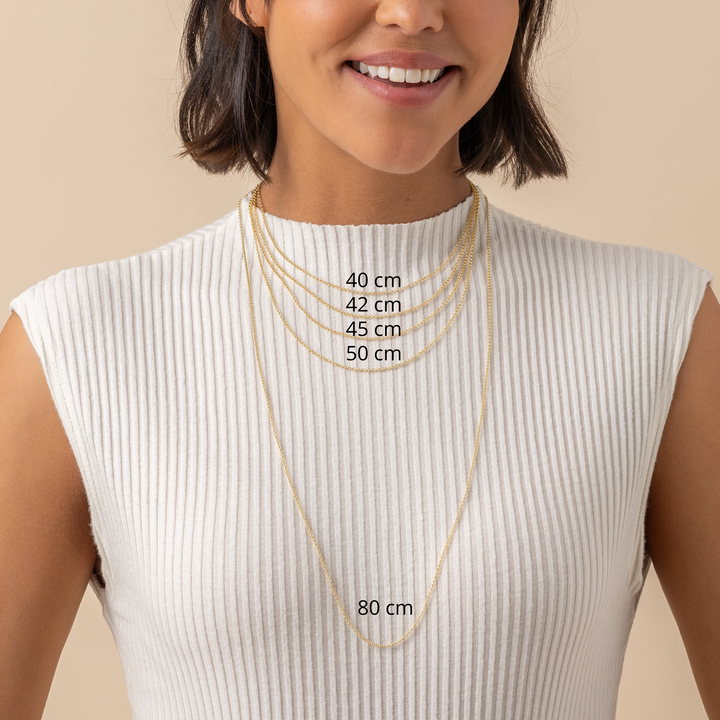
47 mm pendant in 925 polished sterling silver, nickel-free and hypoallergenic, on a 45 cm sterling silver chain (1.8 mm diameter) with lobster clasp and a 5 cm extender. Free DHL Express shipping worldwide in 1-5 business days, all duties and taxes covered, 30-day “Love It or Return It” policy.
Is there a gold version?
Yes. The DRG neuron necklace exists in 18k gold vermeil at the same 47 mm size. Same design, material is the only difference.
Neuroscience
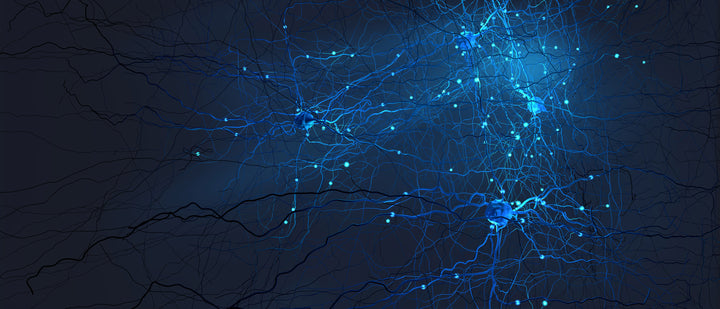
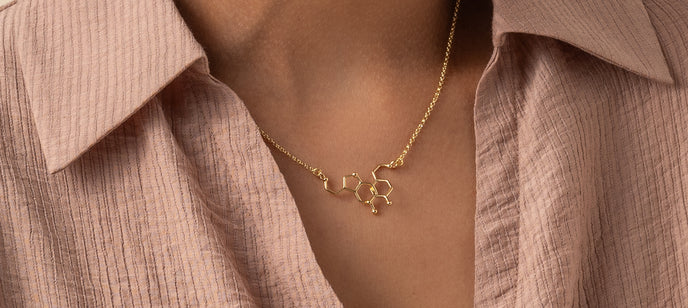
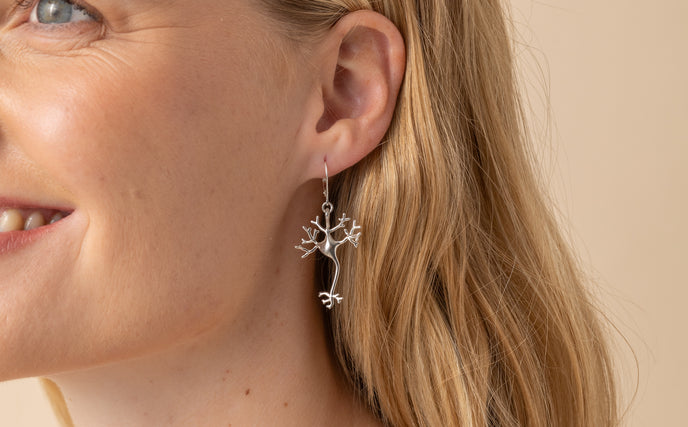
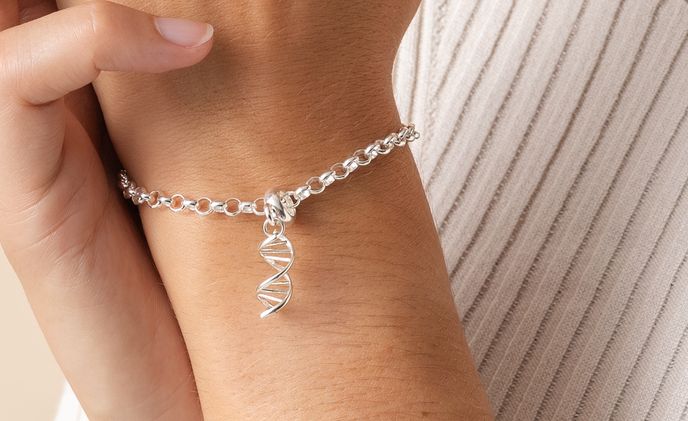
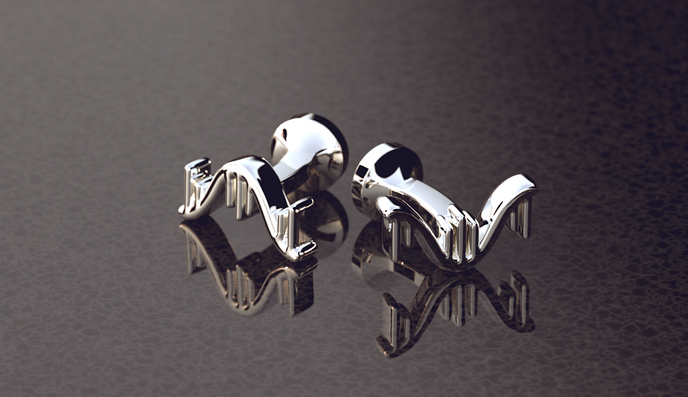
Dive into the intricacies of the human mind with our neuroscience-inspired jewelry collection. Each piece is a tactile ode to the neural networks that shape our thoughts, memories, and consciousness. Crafted with meticulous attention to detail, our designs mirror the dendritic branches and synaptic connections that form the basis of mental activity. With these elegant pieces, wear the enigma of cognition close to your skin, offering a subtle yet profound exploration of what it means to be sentient.
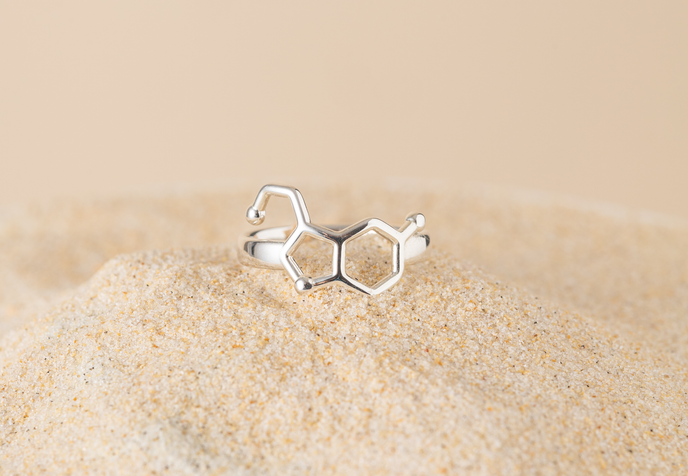
Find your perfect fit: measure an Existing Ring
Finding out your ring size at home is a simple process and can help you shop for jewelry online with confidence.
Necklace length guide