€ 150


Still questions? Contact us
nucleosome studs | sterling silver
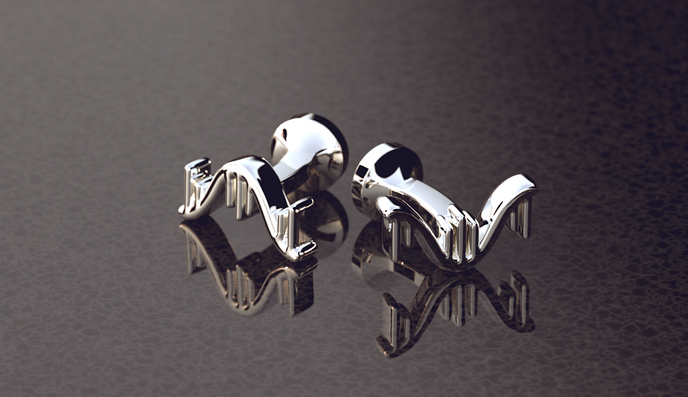
If you can sketch a nucleosome from memory, the histone octamer with DNA wrapped around it like thread on a spool, these studs live in the same recognition space. Subtle on the ear, immediately legible to anyone who teaches molecular biology, works on chromatin, or has ever drawn one on a board.
The Science Behind the Nucleosome
The nucleosome is the fundamental repeating unit of chromatin. Each one is built from eight histone proteins (two each of H2A, H2B, H3, and H4) wrapped by 147 base pairs of DNA in 1.65 left-handed superhelical turns. Linking nucleosomes together gives the "beads on a string" chromatin fibre that compacts further into the metaphase chromosome. The histone tails extending out of the core carry the post-translational modifications (acetylation, methylation, phosphorylation) that make up most of what's now called epigenetic regulation. Where nucleosomes sit, how tightly they pack, and which modifications they carry determines which genes can be transcribed in any given cell type at any given moment.
Who Tends to Wear This
Mostly molecular biologists who work on chromatin or epigenetics.
- chromatin and epigenetics researchers
- molecular biology educators
- biochemistry graduate students working on histone modifications
- structural biologists who solve nucleosome crystals
- cancer biologists studying epigenetic dysregulation
A common gift for someone defending a thesis on chromatin structure or histone modifications.
Explore Related Cellular Biology Jewelry
- nucleosomes necklace | silver
- DNA necklace H | silver
- circular DNA necklace | silver
- nuclear pore necklace | silver
FAQ
Are these subtle enough to wear to work?
Yes. At 7 mm they read as small geometric studs at any distance over a metre. The reference only becomes clear up close, which is part of what makes them work in clinical and academic settings. Worn daily by chromatin researchers without standing out as costume jewelry.
Why exactly 1.65 superhelical turns?
Because that's the length of DNA the histone octamer can wrap before the bending energy exceeds what the DNA-histone contacts can hold. 147 base pairs at 1.65 turns is the structurally stable solution. Slight variations exist in different organisms and chromatin states, but the canonical nucleosome has settled on this number across nearly all eukaryotic lineages.
Size, material, type?
7 mm in 925 polished sterling silver, nickel-free and hypoallergenic, with sterling silver core ear nuts. High-polish finish. Free DHL Express shipping worldwide in 1-5 business days, all duties and taxes covered, 30-day “Love It or Return It” policy.
Is there a necklace version?
Yes, separately. The catalog has a nucleosomes necklace in silver that shows multiple linked nucleosomes (the chromatin-fibre view), which is a different design from the single-nucleosome stud format.
Cellular Biology
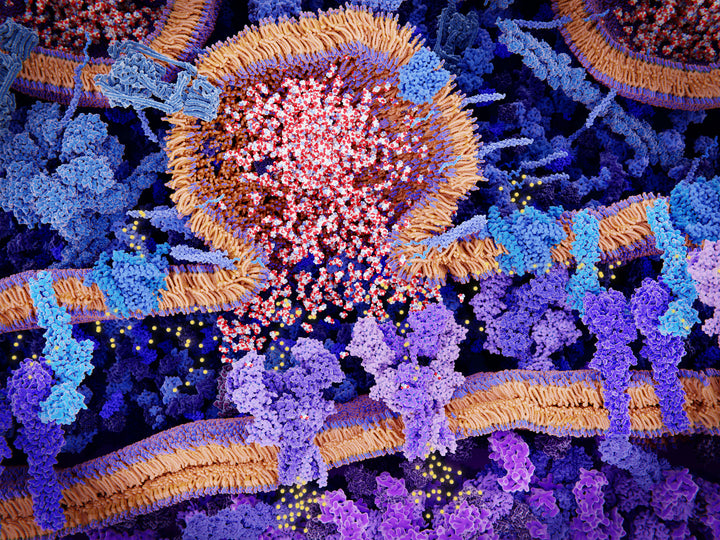
Step into the fascinating world of cellular biology through our unique jewelry designs. These pieces serve as wearable reflections of life's microscopic wonders, capturing the aesthetics of DNA strands, cellular formations, and more. Far from simple adornments, they spark dialogue and honor the captivating complexities found within biological research. Merging scientific accuracy with artistic flair, each creation offers a tactile experience that bridges the gap between scientific inquiry and aesthetic appreciation.
Find your perfect fit
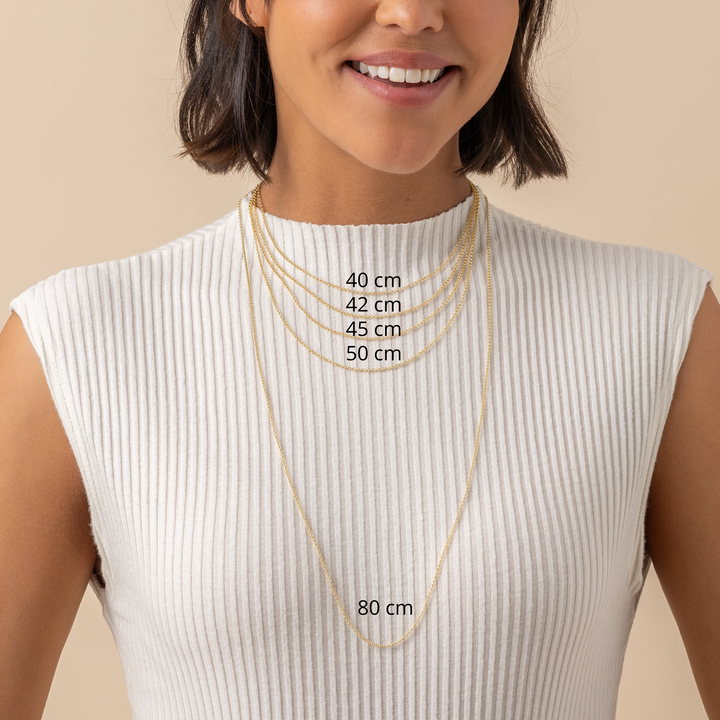
Necklace length guide