€ 155


Still questions? Contact us
Nuclear pore necklace | sterling silver
If you trained on the architecture of the nuclear pore complex (around 1,000 protein subunits per pore, eightfold rotational symmetry, FG-repeat hydrogel filling the channel), you already recognise what this is. The largest and most complex molecular machine in the cell, gating every transcript that leaves the nucleus.
The Science of the Nuclear Pore
The nuclear pore complex (NPC) is the protein machine that perforates the nuclear envelope and controls all transport between nucleus and cytoplasm. Each NPC is roughly 120 nanometres across and contains around 1,000 protein subunits drawn from about 30 nucleoporin (Nup) types, organised with eightfold rotational symmetry. The central channel is filled with intrinsically disordered FG-repeat domains that form a selective hydrogel. Small molecules diffuse through, but proteins and RNA above ~40 kDa require active transport via karyopherins (importins and exportins) and the Ran GTPase gradient. Every messenger RNA leaving the nucleus, every transcription factor entering it, every ribosomal subunit exporting from the nucleolus passes through this gate. Cryo-electron tomography over the last decade has resolved the structure to near-atomic detail, and the NPC is now understood as one of the most important and least understood organelles in cell biology.
The Audience
The audience clusters around nuclear transport and structural cell biology:
- cell biologists studying nuclear transport, mRNA export, or chromatin organisation
- structural biologists working on nucleoporins or the NPC itself
- biophysicists studying selective transport through disordered protein gels
- cancer researchers studying NPC alterations in malignancy
- graduate students and postdocs through their first nuclear-transport block
Explore Related Cellular Biology Jewelry
- Mammalian cell necklace | silver
- Nucleosomes necklace | silver
- Membrane necklace | silver
- Ribosomes necklace | silver
FAQ
Why is the nuclear pore considered the most complex molecular machine in the cell?
Three reasons. First, the protein count: ~1,000 subunits, more than any other single cellular machine including the ribosome and the spliceosome. Second, the architecture: eightfold rotational symmetry built from a small number of repeated nucleoporin types, an organisational principle most cellular machines do not share. Third, the function: selective transport via a hydrogel of disordered protein, a mechanism that biology rarely uses elsewhere and that physicists are still working out at the polymer-physics level.
Why does nuclear pore biology matter clinically?
Because nucleoporin mutations cause disease. NUP62 and other Nup mutations are linked to neurodegenerative conditions including amyotrophic lateral sclerosis (ALS) and frontotemporal dementia. NUP98 fusions drive specific leukaemias. Cancer cells frequently alter NPC composition to support rapid proliferation. Antiviral defence depends on NPC interactions with viral capsids (HIV, herpesviruses). The pore that started as basic cell biology has turned into a clinically relevant target across multiple fields.
What is the size, material, and chain?
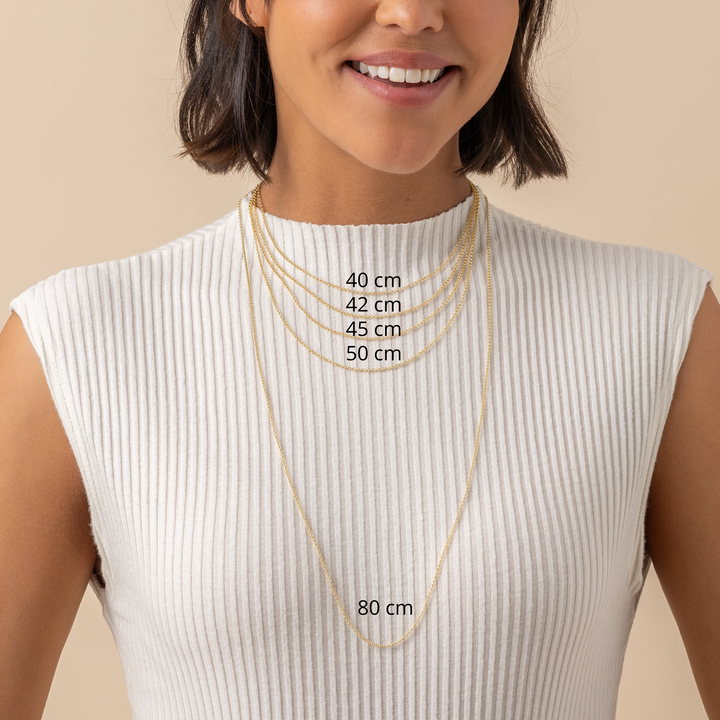
21 mm pendant in 925 sterling silver, nickel-free. 45 cm sterling silver chain with a 5 cm extender. Ships free worldwide via DHL Express in 1-5 business days, with all import duties prepaid. Comes in a ready-to-gift jewelry box with the 30-day “Love It or Return It” policy.
Is there a gold version?
Not currently. The nuclear pore is silver only. The catalog has gold versions of several other cell-biology pieces (mammalian cell, ribosomes, nucleosomes, membrane) but the nuclear pore is single-material for now.
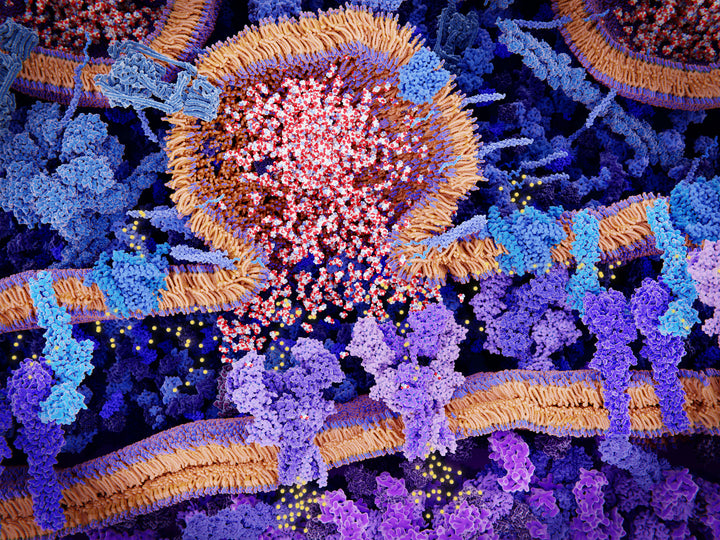
Cellular Biology
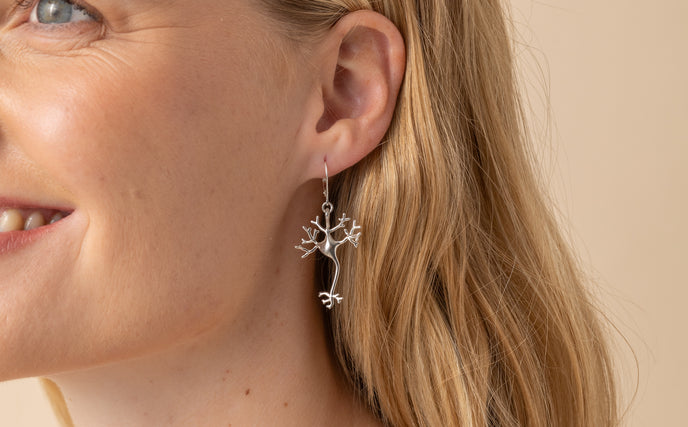
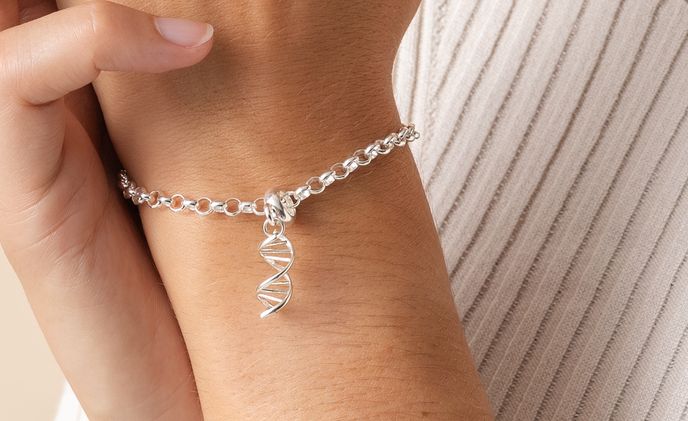
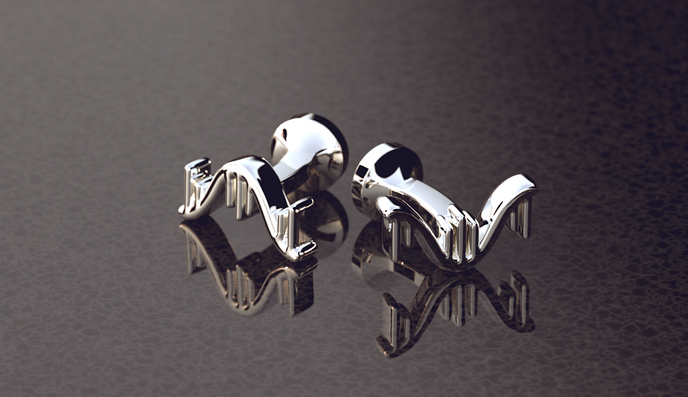
Step into the fascinating world of cellular biology through our unique jewelry designs. These pieces serve as wearable reflections of life's microscopic wonders, capturing the aesthetics of DNA strands, cellular formations, and more. Far from simple adornments, they spark dialogue and honor the captivating complexities found within biological research. Merging scientific accuracy with artistic flair, each creation offers a tactile experience that bridges the gap between scientific inquiry and aesthetic appreciation.
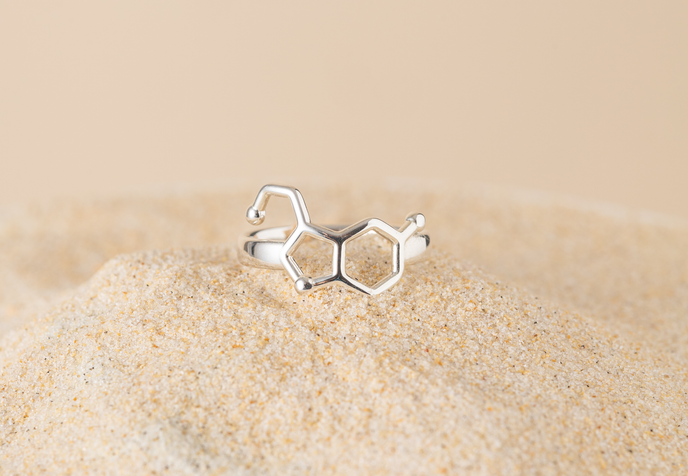
Find your perfect fit: measure an Existing Ring
Finding out your ring size at home is a simple process and can help you shop for jewelry online with confidence.
Necklace length guide