€ 180


Still questions? Contact us
Membrane necklace | sterling silver
If you have spent enough time looking at the lipid bilayer to know that the heads point out, the tails point in, and that almost every drug target in pharmacology lives inside this 5-nanometre slab, you already recognise what this is. The structure that makes a cell a cell.
The Science of the Lipid Bilayer
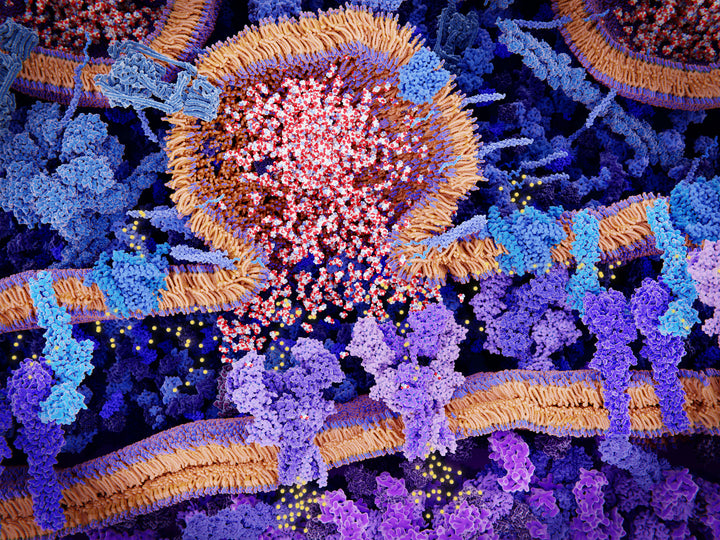
The plasma membrane is a self-assembled bilayer of phospholipids, roughly 5 nanometres thick. The hydrophilic phosphate heads orient outward toward the aqueous environment, the hydrophobic fatty-acid tails orient inward away from water. Cholesterol intercalates between the phospholipids and modulates fluidity. Membrane proteins (integral and peripheral) carry out everything from signal transduction to ion transport to vesicular traffic to cell-cell adhesion. Nearly 60% of all clinical drug targets are membrane proteins, with G-protein-coupled receptors (GPCRs) alone representing about a third of all approved drugs. The Singer-Nicolson fluid mosaic model of 1972 remains the working model, refined since by lipid-raft biology, membrane curvature studies, and structural biology of integral membrane proteins.
Who Tends to Wear This
The audience clusters around membrane biology and pharmacology:
- cell biologists and biochemists working on membrane biology
- structural biologists solving GPCR, ion-channel, or transporter structures
- pharmacologists working on membrane-targeted drugs
- biophysicists studying lipid-protein interactions or membrane mechanics
- graduate students and postdocs through their first cell-biology block
Explore Related Cellular Biology Jewelry
- Membrane necklace | gold vermeil
- Phospholipid necklace | silver
- Mammalian cell necklace | silver
- Nuclear pore necklace | silver
FAQ
Why does the lipid bilayer matter so much in pharmacology?
Because most drugs act on membrane proteins. Roughly 60% of all clinical drug targets sit in the lipid bilayer, with GPCRs alone accounting for about a third of all FDA-approved drugs (beta-blockers, antihistamines, opioids, antipsychotics, GLP-1 agonists like semaglutide). Ion channels, transporters, and tyrosine kinase receptors add to the count. Without the membrane, there is no compartmentalisation, no signal transduction, no electrochemical gradient. Pharmacology is membrane biology applied to disease.
What does the Singer-Nicolson fluid mosaic model still get right?
The basics. Singer and Nicolson proposed in 1972 that the membrane is a two-dimensional fluid in which proteins and lipids can diffuse laterally rather than a static lipid sheet with proteins fixed in place. That model has held up remarkably well. Modern refinements (lipid rafts as transient ordered microdomains, cytoskeletal corrals limiting diffusion, membrane curvature as a regulator of protein localisation) all build on the fluid-mosaic foundation rather than overturning it.
What is the size, material, and chain?
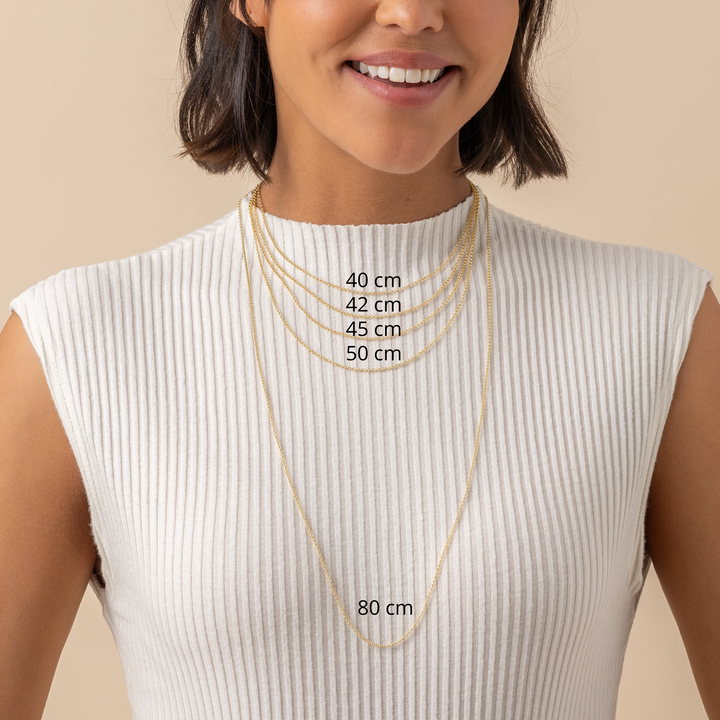
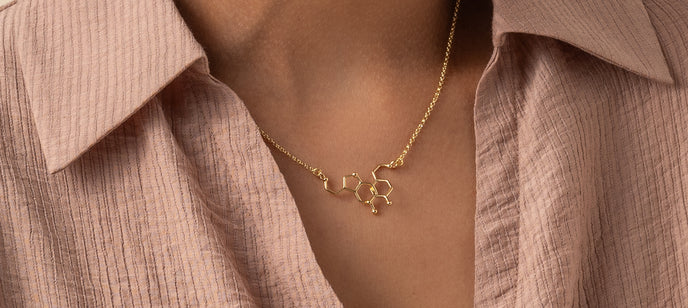
42 mm pendant in 925 sterling silver, nickel-free. 45 cm sterling silver chain with a 5 cm extender. Ships free worldwide via DHL Express in 1-5 business days, with all import duties prepaid. Comes in a ready-to-gift jewelry box with the 30-day “Love It or Return It” policy.
Same design as the gold membrane?
Yes. Same 42 mm pendant, identical bilayer geometry. Material is the only difference. Choose the finish the recipient already wears. Both versions carry the same design and the same meaning.
Cellular Biology
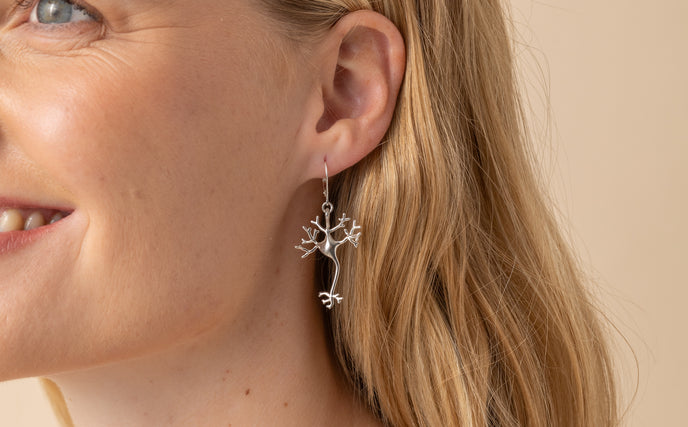
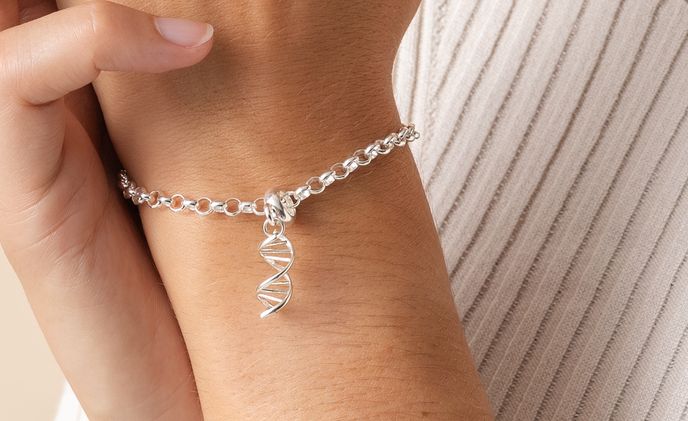
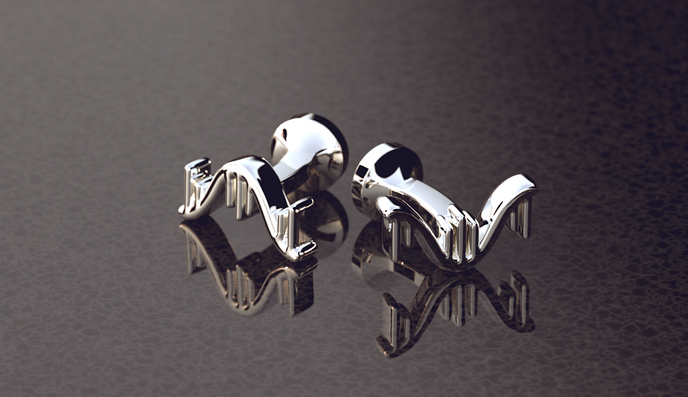
Step into the fascinating world of cellular biology through our unique jewelry designs. These pieces serve as wearable reflections of life's microscopic wonders, capturing the aesthetics of DNA strands, cellular formations, and more. Far from simple adornments, they spark dialogue and honor the captivating complexities found within biological research. Merging scientific accuracy with artistic flair, each creation offers a tactile experience that bridges the gap between scientific inquiry and aesthetic appreciation.
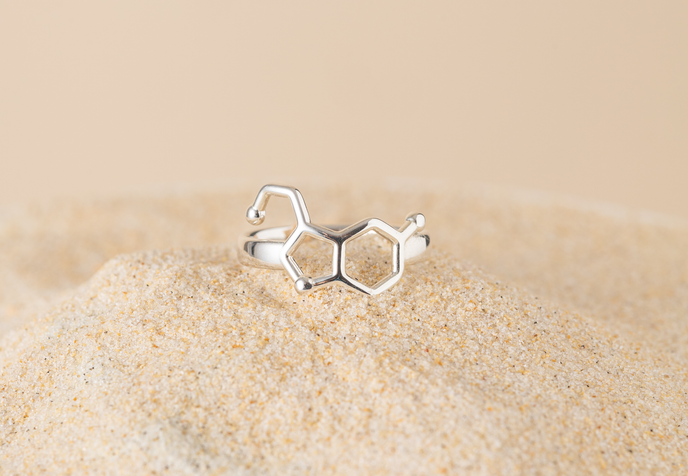
Find your perfect fit: measure an Existing Ring
Finding out your ring size at home is a simple process and can help you shop for jewelry online with confidence.
Necklace length guide