€ 150


Still questions? Contact us
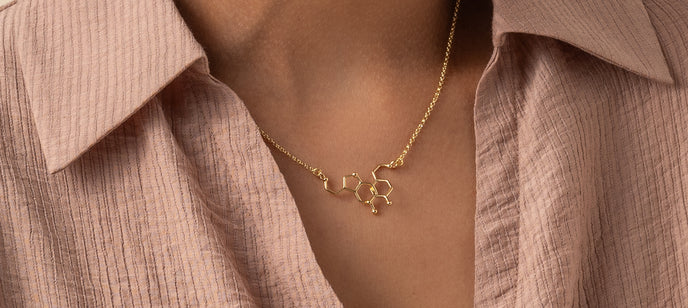
Phospholipid necklace | sterling silver
Phospholipids are the molecules that make membranes possible. Two hydrophobic tails, one hydrophilic head. In water, they sort themselves into bilayers without any instruction from anything else. That self-assembly is the chemistry that lets every cell on Earth keep its inside separate from its outside.
The Chemistry of the Phospholipid
A phospholipid carries a polar phosphate head group on one end and two long fatty acid tails on the other. The split makes the molecule amphipathic. In an aqueous environment, the tails are sequestered from water by clustering with each other while the head groups face outward into the surrounding solution. The result is a bilayer that is stable, self-sealing, and selectively permeable to small nonpolar molecules. Major membrane phospholipid classes include phosphatidylcholine, phosphatidylserine, and phosphatidylethanolamine, distributed asymmetrically between the two leaflets, with phosphatidylserine on the inner leaflet doing the signalling work for processes like apoptosis recognition.
Worn By
Researchers and students whose work runs through membranes:
- biochemists and biophysicists working with lipids, liposomes, or membrane proteins
- cell biologists and molecular biologists
- pharmacologists working in lipid-based drug delivery
- structural biologists who use detergents and nanodiscs daily
- chemistry students who first met the molecule in a sophomore lecture and never forgot it
Explore Related Cellular Biology Jewelry
- Membrane necklace | silver
- Membrane necklace | gold vermeil
- 7TMR necklace | silver
- Clathrin coated vesicle necklace | silver
FAQ
What do you give a biochemist who teaches the bilayer every year?
Something specific to what they actually teach, not a general lab piece. The phospholipid is the molecule the lecture is built on, and a pendant that names it specifically rather than gesturing at chemistry in general lands as a gift from someone who paid attention. Often given by partners or grad students who have heard the lecture too many times to count.
Why do phospholipids organise into bilayers without anything telling them to?
Because the bilayer is the lowest-energy state available to them in water. Hydrophobic tails are excluded from the aqueous environment, and the most efficient way to satisfy that exclusion is to cluster the tails together with their tails-in / heads-out neighbours. The bilayer falls out of basic thermodynamics. No enzyme assembles it. No instruction is needed. It is one of the cleanest examples of structure emerging from pure chemistry.
What's the size, material, and chain?
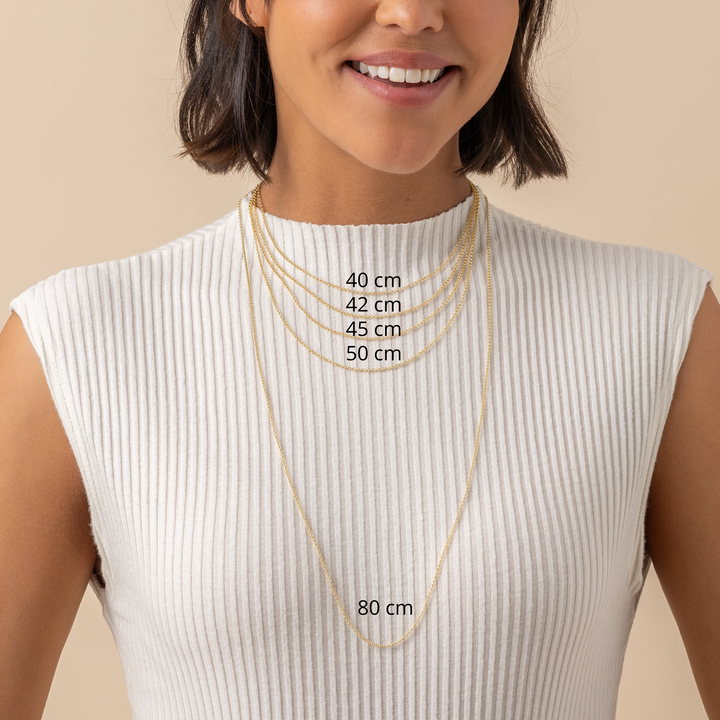
18 mm pendant in 925 sterling silver, nickel-free. 45 cm sterling silver chain with a 5 cm extender. Ships free worldwide via DHL Express in 1-5 business days, with all import duties prepaid. Comes in a ready-to-gift jewelry box with the 30-day “Love It or Return It” policy.
Is there a gold version?
Yes. The phospholipid is also available in 18k gold vermeil at the same 18 mm size. Same molecule, warmer finish, more formal register.
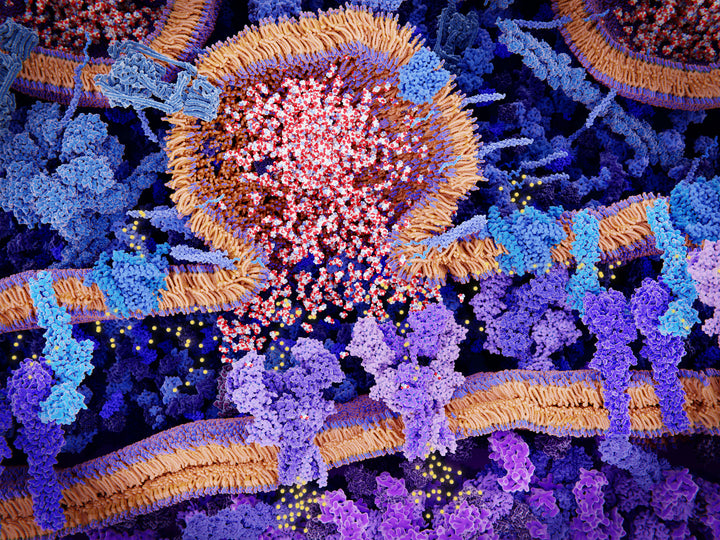
Cellular Biology
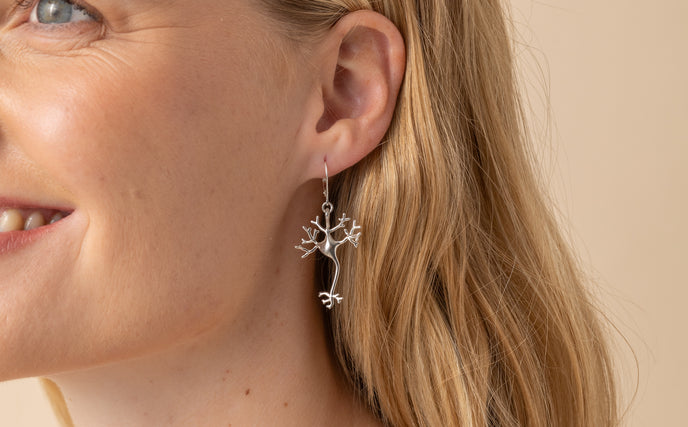
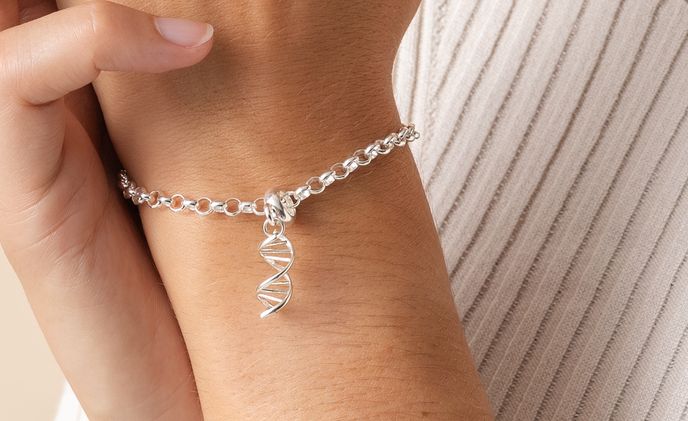
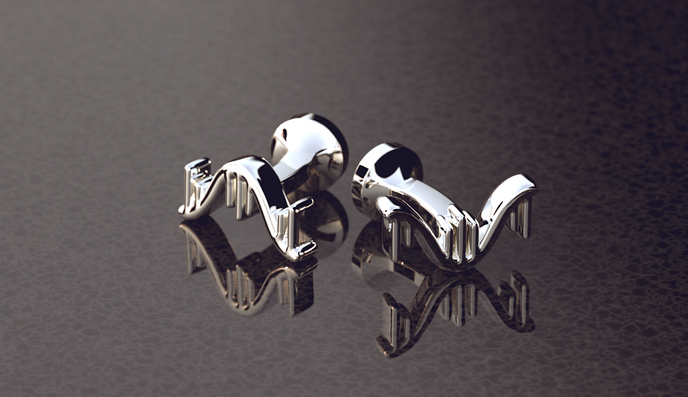
Step into the fascinating world of cellular biology through our unique jewelry designs. These pieces serve as wearable reflections of life's microscopic wonders, capturing the aesthetics of DNA strands, cellular formations, and more. Far from simple adornments, they spark dialogue and honor the captivating complexities found within biological research. Merging scientific accuracy with artistic flair, each creation offers a tactile experience that bridges the gap between scientific inquiry and aesthetic appreciation.
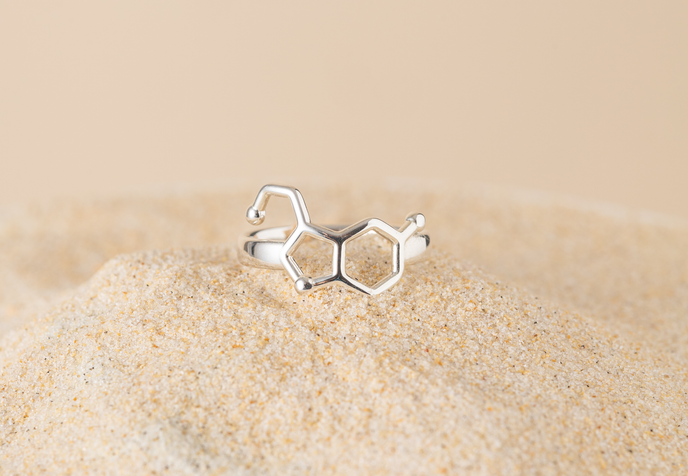
Find your perfect fit: measure an Existing Ring
Finding out your ring size at home is a simple process and can help you shop for jewelry online with confidence.
Necklace length guide