€ 170


Still questions? Contact us
7TMR necklace | sterling silver
A 7TMR necklace for pharmacologists, structural biologists, and anyone working on G-protein-coupled receptors. Seven alpha-helices spanning the membrane, the architecture behind roughly a third of all approved drugs, in sterling silver.
How the 7TMR Works
The 7TMR (seven-transmembrane receptor, also called GPCR) is a single protein chain that crosses the cell membrane seven times in an alpha-helical bundle. A ligand binds on the extracellular side, the helices shift, and a G protein on the inside activates a downstream cascade. Around 800 GPCRs are encoded in the human genome, more than any other receptor class. They handle smell, taste, light (rhodopsin is a 7TMR), most neurotransmission, hormone signalling, and immune chemotaxis. Roughly 35 percent of FDA-approved drugs act through GPCRs, including beta blockers, antihistamines, opioids, and most antipsychotics. The pendant shows the seven-helix bundle viewed from the side, the way it appears in a typical structural figure.
A Meaningful Gift for Science Lovers
For people whose work begins on the membrane.
- pharmacologists working on receptor binding, signalling, and drug discovery
- structural biologists working with cryo-EM or X-ray crystallography on GPCRs
- biochemists running receptor assays and ligand-screening campaigns
- PhD students and postdocs across pharmacology, neuroscience, and immunology
For the colleague whose entire research career has unfolded around a seven-pass membrane protein.
Explore Related Cellular Biology Jewelry
- 7TMR necklace | gold vermeil
- Cell membrane necklace | sterling silver
- Photoreceptor necklace | sterling silver
- Toll-like receptor necklace | sterling silver
FAQ
Will a pharmacologist or receptor biologist actually appreciate this?
Yes. GPCR people tend to recognise the seven-helix bundle on sight, and most science jewelry doesn't go into receptor detail at all. It tends to land with people who can name their favourite GPCR without thinking.
How important are GPCRs to pharmacology?
About 35 percent of all FDA-approved drugs target GPCRs, which is the highest of any receptor class. That includes beta blockers, antihistamines, opioids, most antipsychotics, antimigraine triptans, and many antinausea agents. Most of the hormone receptors, neurotransmitter receptors, and sensory receptors in the human body are also GPCRs. The 2012 Nobel Prize in Chemistry went to Robert Lefkowitz and Brian Kobilka for working out how they function.
What size is the pendant and what chain does it ship with?
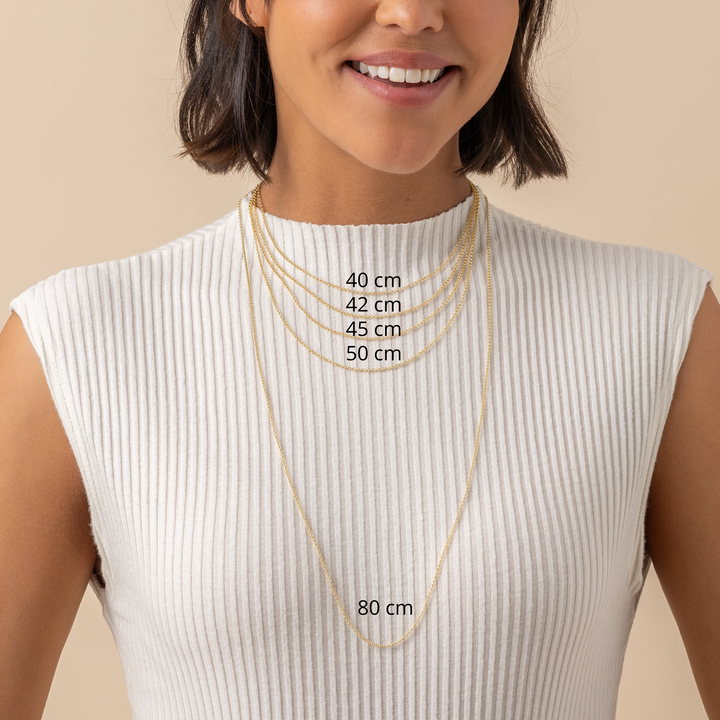
The pendant is 24 mm wide, sized to read as a defined seven-helix structure rather than a smudge. It ships on a 45 cm sterling silver chain (1.8 mm width, lobster clasp) with a 5 cm extender. Free worldwide DHL Express shipping in 1-5 business days, all import duties covered, in a gift-ready jewelry box.
Is this modelled on a specific GPCR or a generic one?
Generic. The pendant shows the canonical seven-helix bundle that defines the family, viewed from the side as if cut through the membrane. It is not modelled on a particular receptor (not the beta-2 adrenergic, not rhodopsin), and that is intentional. Roughly 800 GPCRs share this fold. The piece works for anyone whose favourite is in that group, regardless of which one.
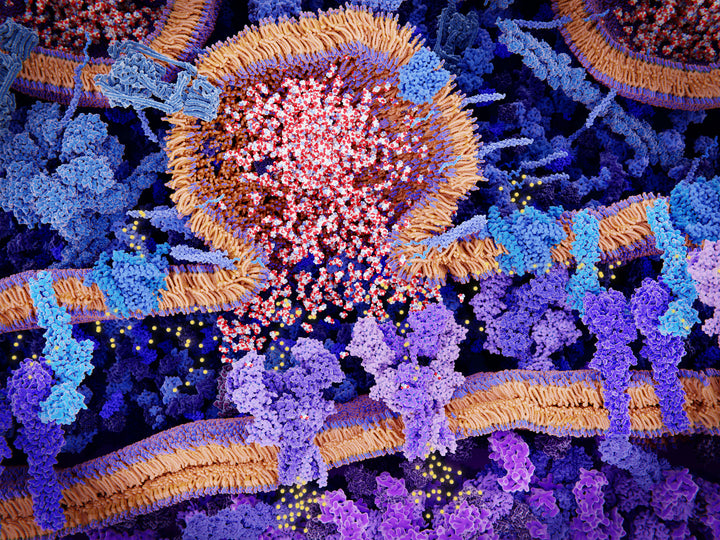
Cellular Biology
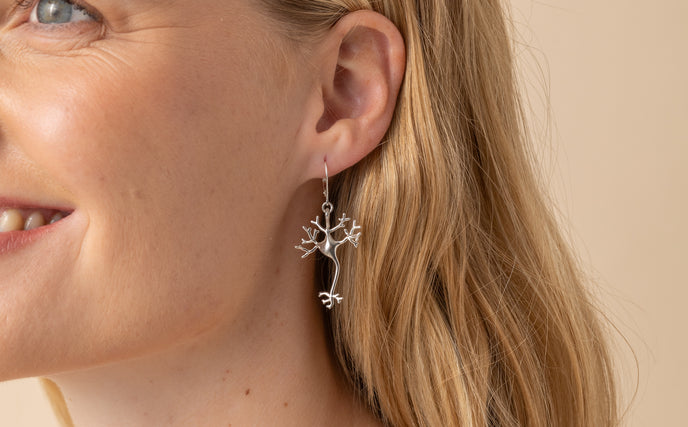
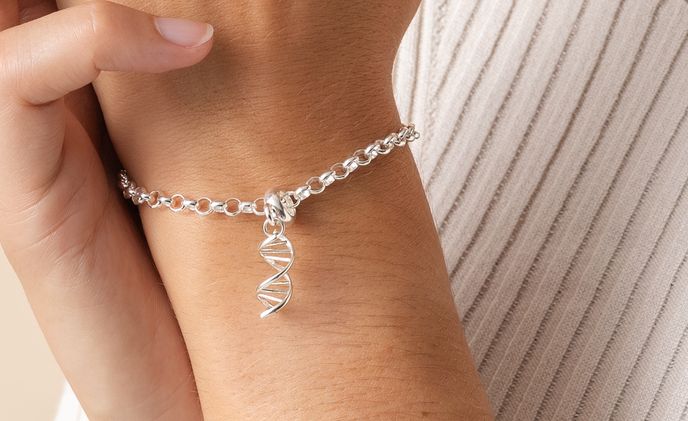
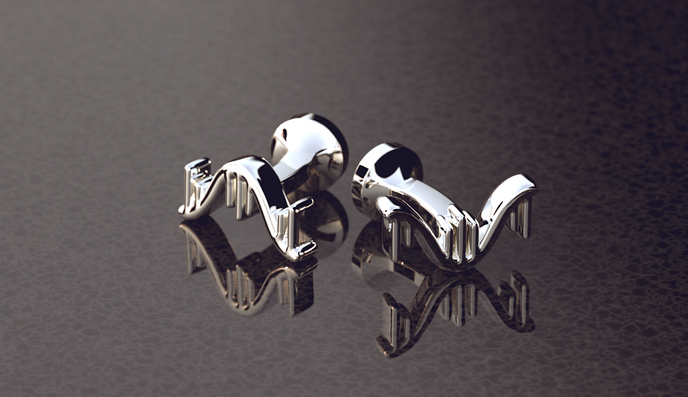
Step into the fascinating world of cellular biology through our unique jewelry designs. These pieces serve as wearable reflections of life's microscopic wonders, capturing the aesthetics of DNA strands, cellular formations, and more. Far from simple adornments, they spark dialogue and honor the captivating complexities found within biological research. Merging scientific accuracy with artistic flair, each creation offers a tactile experience that bridges the gap between scientific inquiry and aesthetic appreciation.
Find your perfect fit: measure an Existing Ring
Finding out your ring size at home is a simple process and can help you shop for jewelry online with confidence.
Necklace length guide