€ 215


Still questions? Contact us
Phylogenetic tree necklace | 18k gold vermeil
Linnaeus introduced binomial nomenclature in 1735. Darwin sketched the first explicitly evolutionary tree on a notebook page in 1837 and labelled it I think. Modern phylogenetic trees combine the Linnaean impulse to classify with the Darwinian impulse to map descent, and they are now a working tool of every biological field that asks how lineages relate.
The Science of the Phylogenetic Tree
Phylogenetic trees are calibrated against molecular sequence data and fossil dates to produce dated chronograms that show when lineages diverged. They reveal horizontal gene transfer events that shape microbial evolution, allow ancestral state reconstruction so the traits of extinct ancestors can be inferred, and form the working backbone of pathogen tracking during outbreaks. SARS-CoV-2 phylogenies underpinned vaccine strain decisions during the COVID-19 pandemic. Influenza vaccine composition is reset each year on the basis of phylogenetic surveillance. Antibiotic resistance gene origins are reconstructed from phylogenies of resistance genes carried across bacterial species. The tree of life is a working scientific tool, used daily.
A Meaningful Gift for Science Lovers
A piece for the people who think in branches:
- evolutionary biologists building or interpreting phylogenies
- bioinformaticians and computational biologists
- molecular evolution and population genetics researchers
- microbiology and pathogen-tracking specialists
- educators teaching common descent
Most often given alongside the silver phylogenetic tree as a paired gift across two career stages, or with Darwin's phylogenetic tree as a complementary piece referencing the original 1837 sketch.
Explore Related Evolutionary Biology Jewelry
- Phylogenetic tree necklace | silver
- Darwin's phylogenetic tree necklace | gold vermeil
- Arabidopsis necklace | gold vermeil
FAQ
Is this for a phylogeneticist or wider biology?
Wider biology. Phylogenetics now informs almost every life-science discipline, from genomics and microbiology to epidemiology and ecology. Anyone working with sequence data, taxonomic relationships, or the spread of pathogens reads the tree of life as a daily tool. The piece lands well with researchers across all of those fields, not just dedicated phylogeneticists.
What does a calibrated chronogram tell you?
When divergence happened along a tree. A calibrated chronogram uses molecular clock estimates anchored to fossil dates so the branch lengths represent millions of years rather than nucleotide substitutions. That lets researchers ask when two species shared a common ancestor, how fast a lineage radiated after a mass extinction, or how long ago a pathogen jumped into a new host.
What is the size, material, and chain?
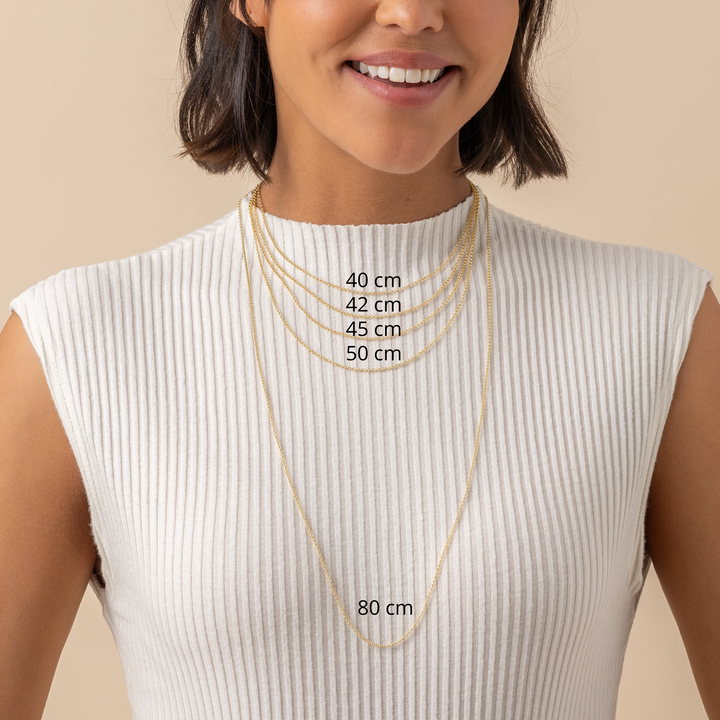
34 mm pendant in 18k gold vermeil (sterling silver core with 2.5 micron gold plating), nickel-free. 45 cm gold vermeil chain with a 5 cm extender. Ships free worldwide via DHL Express in 1-5 business days, with all import duties prepaid. Comes in a ready-to-gift jewelry box with the 30-day “Love It or Return It” policy.
Is the gold version the same size as the silver?
Yes. The same tree is available in sterling silver at the same 34 mm size. Material is the only difference. The pair works well as a his-and-hers, or as the silver-for-everyday plus gold-for-formal split that some buyers prefer.

Other
In a world where art and science often exist in separate realms, our "Curiosities" collection serves as a harmonious confluence. Drawing inspiration from an eclectic range of scientific phenomena not covered elsewhere. Each piece is meticulously crafted to evoke a sense of wonder. It's jewelry that doesn't just adorn; it educates and fascinates, sparking conversations about the lesser-explored but equally awe-inspiring facets of our universe.

Find your perfect fit: measure an Existing Ring
Finding out your ring size at home is a simple process and can help you shop for jewelry online with confidence.
Necklace length guide