€ 205


Still questions? Contact us
Scapula, clavicle and manubrium necklace | sterling silver
This scapula, clavicle and manubrium necklace is for the people who know the shoulder best: the physiotherapist rebuilding a patient's reach, the orthopaedic surgeon, the anatomy student who knows every muscle around it. Give it to her when she qualifies or wins her first post, or wear it yourself as a nod to the shoulder you know so well.
Who It's For
- a colleague in sports medicine, for her birthday
- an anatomy lecturer, to wear on dissection days
- a radiographer who looks at shoulders every working day
- yourself, if your own shoulder has a story to tell
The Anatomy of the Shoulder Girdle
Your arm is joined to your trunk by a single bony link. The clavicle runs from the manubrium, the top part of the breastbone, out to the scapula, the shoulder blade, which is otherwise held against the back of the ribs by muscle. That lets the shoulder blade glide over the ribs and adds to the arm's reach. The clavicle also has an unusual timeline. It is the first bone in the body to start hardening, around the fifth or sixth week of pregnancy, and its last growth centre is the last in the skeleton to fuse, usually in the early to mid twenties, sometimes later.
Explore Related Anatomy Jewelry
FAQ
How big is the pendant, and how does it sit?
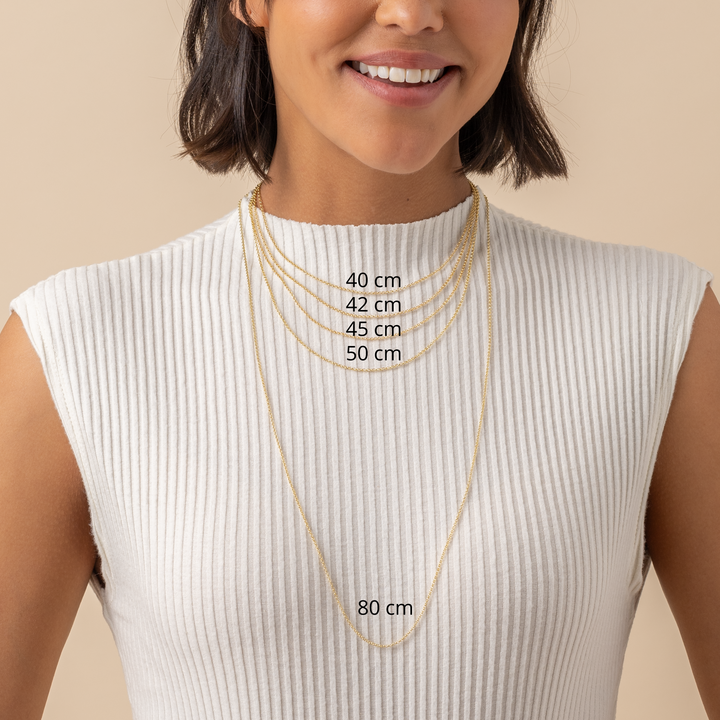
The pendant measures 33 mm, about 7 mm more than the width of a 2-euro coin (25.75 mm). It hangs sideways from both ends and sits just below the collarbone on a 45 cm (17.7 inch) sterling silver chain with a lobster clasp and a 5 cm (2 inch) extender. Extra chains of 40, 42, 45 or 50 cm with extender, or 80 cm, are sold on this page. It is 925 sterling silver, nickel-free and hypoallergenic. If it darkens, the included cleaning cloth brings back the shine.
Is there a gold version, or other bone jewelry?
This necklace comes in sterling silver only. Other pieces from the skeleton include the spine necklace (60 mm), the rib cage necklace (25 mm), the pelvis necklace (27 mm) and the atlas necklace (26 mm), the first vertebra of the neck. The spine, pelvis and atlas also come in 18K gold vermeil.
Will it arrive in time, and what if it isn't right?
It ships free worldwide with DHL Express and arrives in 1-5 business days. We pay the import duties and taxes, so there is nothing to pay on delivery. It comes in a ready-to-gift jewelry box and festive envelope. If it isn't right, our 30-day “Love It or Return It” policy applies.
What did the Shang kings do with shoulder blades?
They asked them questions. The Shang dynasty ruled central China from the sixteenth to the eleventh century BCE, and in its last two centuries the king's diviners used cattle shoulder blades and pieces of turtle shell. Heat was applied until the bone cracked, the cracks were read, and the question and answer were then carved beside them. These oracle bones hold the oldest known records of Chinese script, the ancestor of the characters written today.

Human Anatomy
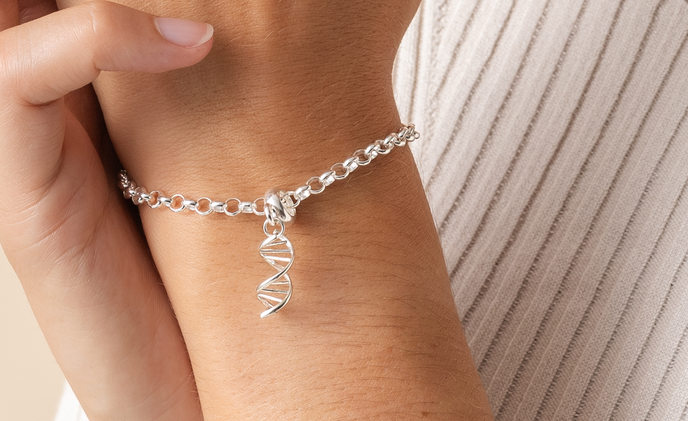
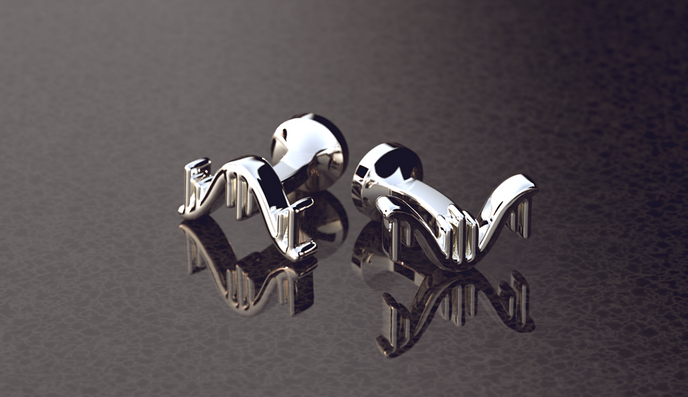
Anatomical wonders have never been so elegantly articulated. Our anatomical collection embodies the intricate and awe-inspiring structures that make us who we are. From DNA double helices to neuronal networks, our pieces don't merely imitate—they interpret. The collection serves as a tangible tribute to the hidden beauty within us all, elevating the realms of biology and medicine into wearable art. With exquisite attention to detail, each piece is a dialogue between form and function, revealing the enigmatic eloquence of the human body.
Find your perfect fit: measure an Existing Ring
Finding out your ring size at home is a simple process and can help you shop for jewelry online with confidence.
Necklace length guide