€ 210


Still questions? Contact us
Spine necklace | sterling silver
Having backbone means standing firm, which makes a spine necklace a quietly strong thing to give. It suits a woman who works with bones or backs every day, or anyone whose strength you want to mark.
Who It's For
- a partner who works with bones, from forensic archaeology to the anatomy lab
- a daughter, for her birthday
- a granddaughter or friend at her graduation
- a physiotherapist, chiropractor or spine surgeon, when she qualifies or as a thank-you
- yourself, to wear every day and study up close
And if your own spine has carried you through surgery or a long recovery, it is a way to keep that strength close.
Joanna T. bought it as a present: “Once my beautiful spine necklace arrived any concerns about price or quality I may have had disappeared.” Paul M., also buying a gift: “Lovely piece, with fantastic detail which I was not expecting.”
The Science Behind the Spine
A typical human spine has 33 vertebrae. The top 24 move against each other: seven in the neck, twelve that carry the ribs and five in the lower back. Below them, five fuse into the sacrum and a few more into the small coccyx. Seven neck vertebrae is a rule almost all mammals share. A giraffe has seven, each very long, and so does a mouse. Only sloths and manatees break it. A newborn's spine curves in one long C. The curve in the neck deepens as a baby learns to hold up its head, and the curve in the lower back as the child learns to sit, stand and walk.
Explore Related Anatomy Jewelry
- spine necklace | gold vermeil
- lumbar vertebra necklace | silver
- cervical vertebra necklace | silver
- atlas necklace | silver
FAQ
How big is it, and how does it sit?
The pendant measures 60 mm (about 2.4 inches), more than twice the width of a 2-euro coin. It is a large piece, so the photo on a model is the best guide to how it sits. It hangs upright from a small loop at the top on a 45 cm (17.7 inch) sterling silver chain with a 5 cm (2 inch) extender, and sits below the collarbone. Our 925 sterling silver is nickel-free and hypoallergenic. A polishing cloth brings back the shine as silver darkens with time.
Does it come in gold, or as a single vertebra?
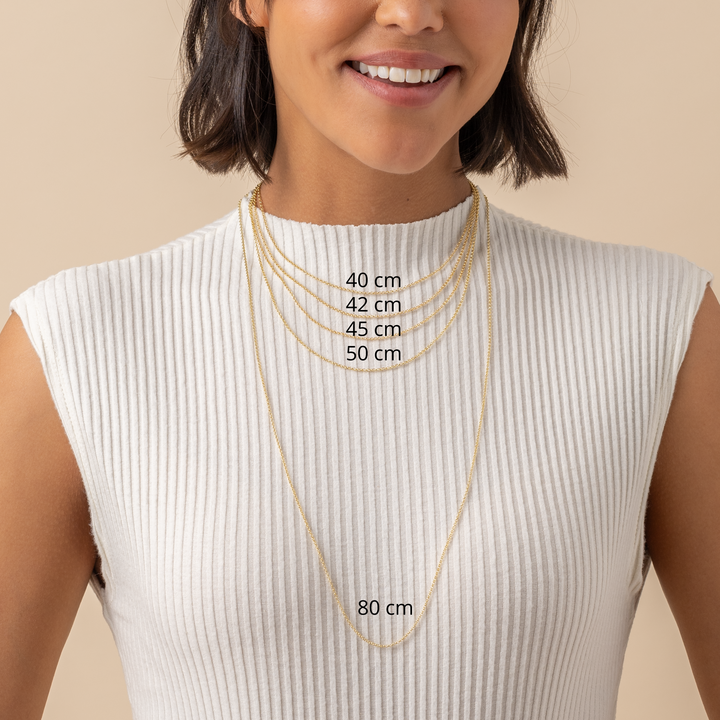
Yes to both. The same spine comes in 18K gold vermeil, also 60 mm, on a gold vermeil chain. Choose the finish the recipient already wears: the design is the same in both. For something smaller, single vertebrae come in silver and gold vermeil: the atlas (26 mm), a cervical vertebra (24 mm), a thoracic vertebra (24 mm) and a lumbar vertebra (27 mm). An extra chain is offered on this page in 40, 42, 45 or 50 cm, each with a 5 cm extender, or 80 cm.
Will it arrive in time, and what if it isn't right?
DHL Express delivers free in 1-5 business days worldwide, and we pay the import duties and taxes, so nothing is due at the door. It arrives in a ready-to-gift jewelry box and festive envelope. If it isn't right, our 30-day “Love It or Return It” policy applies.
Is a woman's spine different from a man's?
Yes. In a 2007 Nature study, Katherine Whitcome, Liza Shapiro and Daniel Lieberman found in 19 pregnant women that the lower-back curve deepened by as much as 60 percent by the end of term, keeping the body balanced over the hips. In women that curve tends to span three vertebrae, in men two, and the joints between them are relatively larger. Two fossils about two million years old suggest the same. In 2009 the work won an Ig Nobel Prize for explaining why pregnant women don't tip over.

Human Anatomy
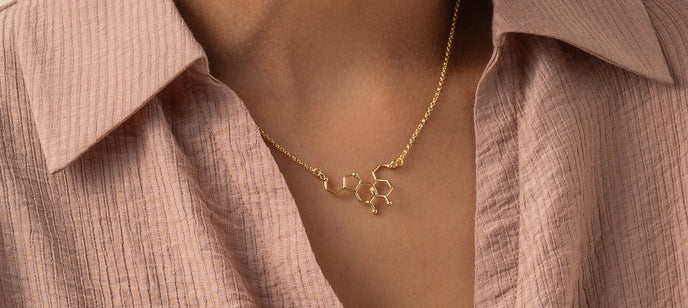
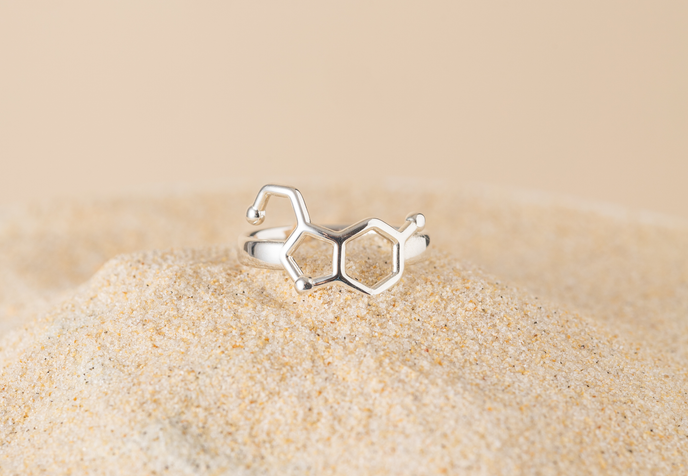
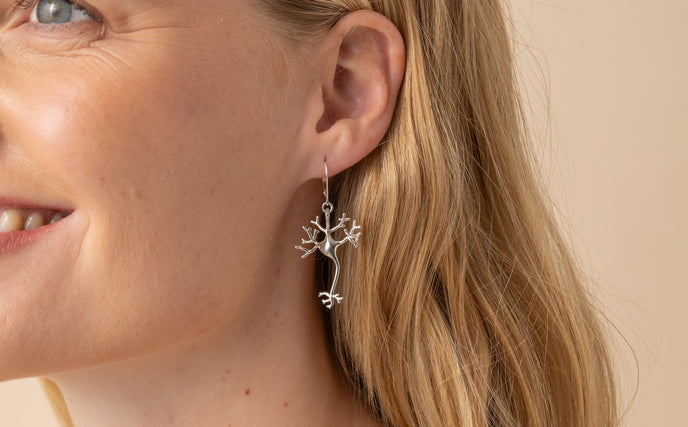
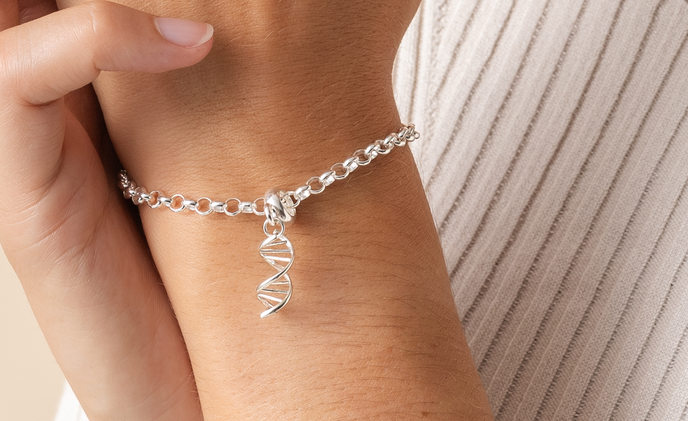
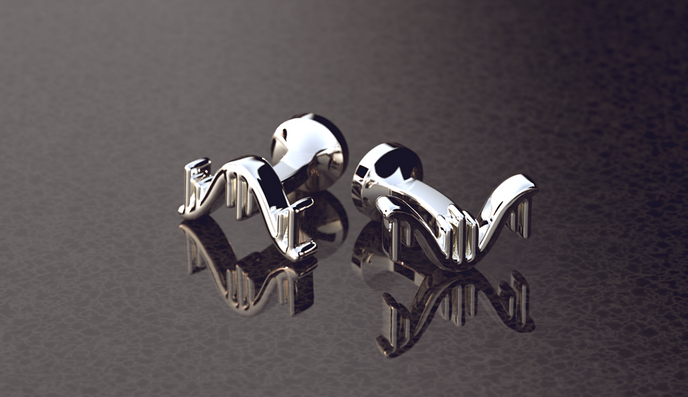
Anatomical wonders have never been so elegantly articulated. Our anatomical collection embodies the intricate and awe-inspiring structures that make us who we are. From DNA double helices to neuronal networks, our pieces don't merely imitate—they interpret. The collection serves as a tangible tribute to the hidden beauty within us all, elevating the realms of biology and medicine into wearable art. With exquisite attention to detail, each piece is a dialogue between form and function, revealing the enigmatic eloquence of the human body.
Find your perfect fit: measure an Existing Ring
Finding out your ring size at home is a simple process and can help you shop for jewelry online with confidence.
Necklace length guide