€ 160


Still questions? Contact us
Ethanol necklace | sterling silver
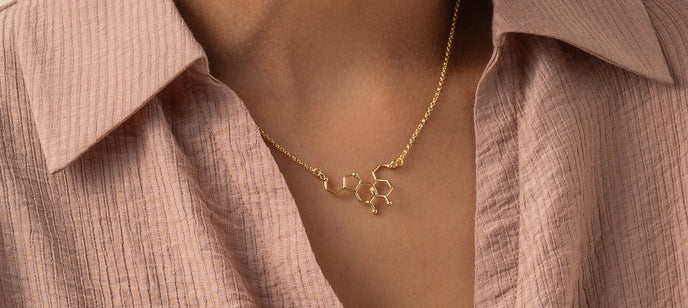
The squeeze bottle on a lab bench often holds 70 per cent ethanol, because alcohol kills bacteria better mixed with water: proteins denature faster with water there. A colleague in a lab can wear an ethanol necklace in sterling silver for the chemistry of her bench, down to the bottle she wipes it with before and after each procedure.
Who It's For
- your girlfriend
- a chemist, or a student of chemistry
- a winemaker, a brewer or a distiller
- a microbiologist who works with yeast
- yourself, if you work in a lab
How Ethanol Mixes, Boils and Freezes
Ethanol is a small molecule: two carbon atoms with a hydroxyl group, an oxygen bonded to a hydrogen, at one end. That group forms hydrogen bonds, so ethanol mixes with water in any proportion, and the mixture takes up less room than its parts. Stir 50 millilitres of ethanol into 50 of water and you get about 97, not 100, because the molecules pack more tightly together. Ethanol boils at about 78°C, well below water, and does not freeze until about minus 114°C. It is also one of the liquids in the spirit thermometers that weather stations have long used to record minimum temperatures.
Explore Related Molecules Jewelry
- ethanol necklace | gold vermeil
- ethanol earrings | silver
- glucose necklace | silver
- caffeine necklace | silver
FAQ
How big is the pendant, and how does it sit?
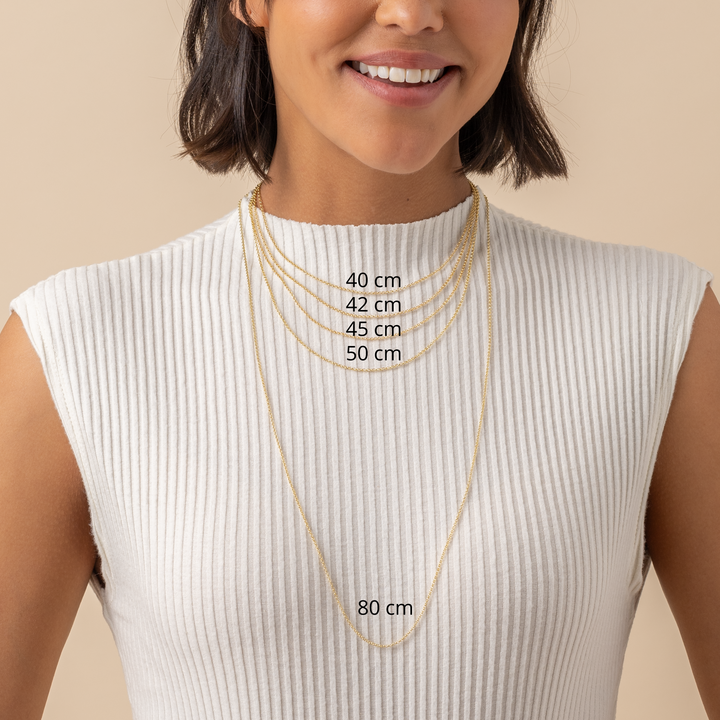
The pendant measures 26 mm (about 1 inch), almost exactly the width of a 2-euro coin (25.75 mm). It hangs from a small ring at its top and sits below the collarbone on a 45 cm (17.7 inch) sterling silver chain with a lobster clasp and a 5 cm (2 inch) extender. Our 925 sterling silver is nickel-free and hypoallergenic, and a soft cloth brings back the shine.
Does it come in gold vermeil, or as earrings?
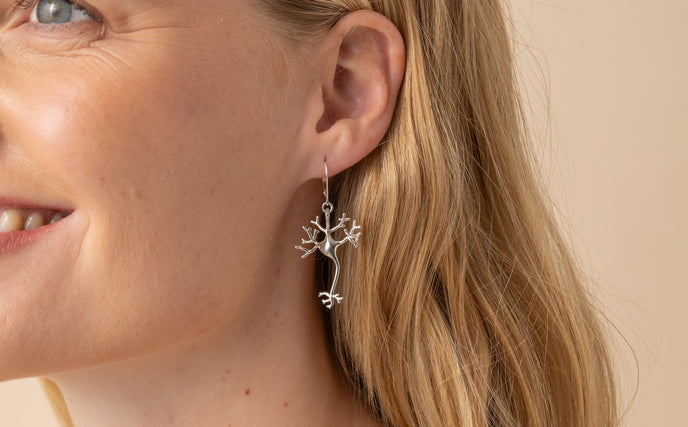
Yes to both. The ethanol necklace comes in sterling silver and in 18K gold vermeil, both with a 26 mm pendant on a 45 cm chain with a 5 cm extender. Choose the finish the recipient already wears. The design is the same in both finishes. The ethanol earrings, 19 mm each not counting the hook, on leverbacks, come in sterling silver only, so they go with this necklace for a set in one metal.
Will it arrive in time, and what if it isn't right?
DHL Express delivers it free worldwide in 1-5 business days, and we pay the import duties and taxes, so nothing is due at the door. It arrives in a ready-to-gift jewelry box and festive envelope. If it isn't right, our 30-day “Love It or Return It” policy applies.
Who showed that fermentation can work without living yeast?
Eduard Buchner, in a paper sent in January 1897. He ground brewer's yeast with quartz sand and kieselguhr, a diatom earth, then squeezed the paste in a press at 400 to 500 atmospheres. Mixed with a strong sugar solution, the juice that came out began giving off carbon dioxide within an hour and kept going for days. Buchner put the work down to a dissolved protein, which he called zymase. He won the 1907 Nobel Prize in Chemistry “for his biochemical researches and his discovery of cell-free fermentation”.
Molecules
Delve into the hidden elegance of science with our meticulously crafted jewelry, inspired by the intricate structures of chemical molecules. Each piece serves as a tactile tribute to the building blocks of life and matter, capturing the allure of atoms and bonds in precious metals. A harmonious fusion of art and science, these creations are more than mere accessories; they're a celebration of the enigmatic beauty that underpins our universe.
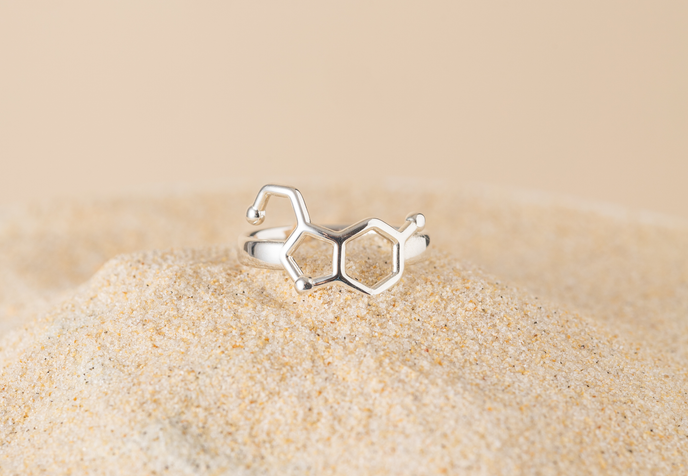
Find your perfect fit: measure an Existing Ring
Finding out your ring size at home is a simple process and can help you shop for jewelry online with confidence.
Necklace length guide