€ 160


Still questions? Contact us
Wishbone necklace | sterling silver
Tyrannosaurus rex had a wishbone. Velociraptor had a wishbone. Oviraptor had a wishbone. The furcula was a theropod-dinosaur invention millions of years before birds existed, and modern birds inherited it as a flexible spring that stores elastic energy in every wingbeat. Worn here as a 40 mm sterling silver pendant.
The Anatomy of the Wishbone
The furcula is formed from the fusion of the two clavicles during development. When intact furculas were recovered from theropod fossils including Tyrannosaurus rex, Velociraptor, and Oviraptor in the late 20th century, they gave hard skeletal evidence for the dinosaur-bird link Thomas Henry Huxley first proposed in 1868. In living birds, the furcula functions as a spring during flight. High-speed X-ray cinematography by Jenkins, Dial, and Goslow in 1988 showed that the bone flexes outward with each downstroke and springs back, storing and releasing elastic energy across the wingbeat cycle. The tradition of snapping the furcula for luck originates with the Etruscans, who considered the hen sacred and preserved its clavicles after the bird's death.
Who Reaches For This
- palaeontologists and evolutionary biologists
- ornithologists studying avian biomechanics
- biology students and educators teaching the dinosaur-bird transition
- anyone drawn to a piece of bone that carries 150 million years of evolutionary continuity
One bone, two evolutionary stories: from theropod to modern bird, and from sacred Etruscan clavicle to dinner-table luck ritual.
Explore Related Animal Skull and Skeleton Jewelry
- Scarab beetle necklace | silver
- Hummingbird skull necklace | silver
- Raven skull necklace | silver
- Seahorse skeleton necklace | silver
- T-Rex skull necklace | silver
FAQ
Is this a palaeontology gift or a luck-ritual gift?
Both, depending on who is buying. Palaeontologists and evolutionary biologists pick it up for the dinosaur-bird link, where the furcula is one of the cleanest pieces of skeletal evidence. People with a more cultural reference point pick it up for the wishbone tradition. The pendant carries both stories, because the same bone is responsible for both.
How does the wishbone work in a bird?
It springs. During each downstroke of the wing, the two arms of the furcula spread outward as the chest muscles contract. During the upstroke, the bone springs back. The cycle stores and returns elastic energy across thousands of wingbeats, which is part of why bird flight is energetically efficient. The same spring function is what made the furcula useful to dinosaurs that did not yet fly: it stiffened the chest and stabilised the forelimb.
What size is the pendant and what is the return policy?
925 sterling silver, 40 mm pendant on a 45 cm sterling silver chain with a 5 cm extender. Larger scale than most pieces in the catalogue. Nickel-free and hypoallergenic. Free worldwide DHL Express in 1-5 business days, with all import duties and taxes covered. 30-day “Love It or Return It” returns.
Is the wishbone a uniquely bird structure?
No. The furcula was already standard in theropod dinosaurs millions of years before birds evolved. Birds inherited it. That makes the wishbone one of the most evolutionarily continuous bones in any vertebrate, a single skeletal element that links the entire dinosaur-bird lineage from T. rex to the chicken on a Sunday roast.
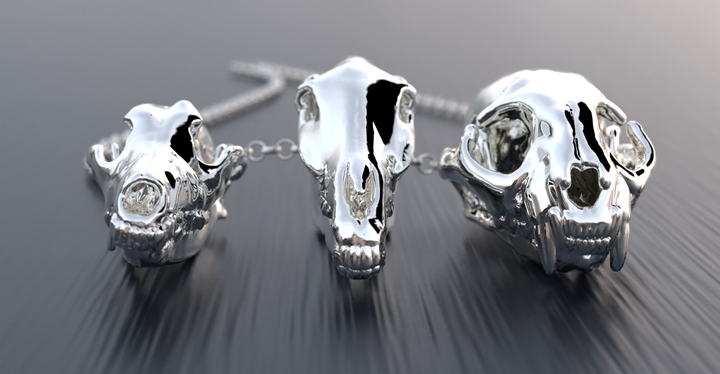
Animal skulls & bones
Drawing upon the intricate architecture of animal anatomy, our collection captures the haunting beauty of skulls and bones. Each piece serves as a tactile memento mori, reminding us of the delicate balance between life and death. Crafted with scientific accuracy, these masterpieces evoke a sense of awe and curiosity, offering a tribute to the intricacies of the natural world. Far more than mere adornments, they are conversation-starters that provoke intellectual dialogue.
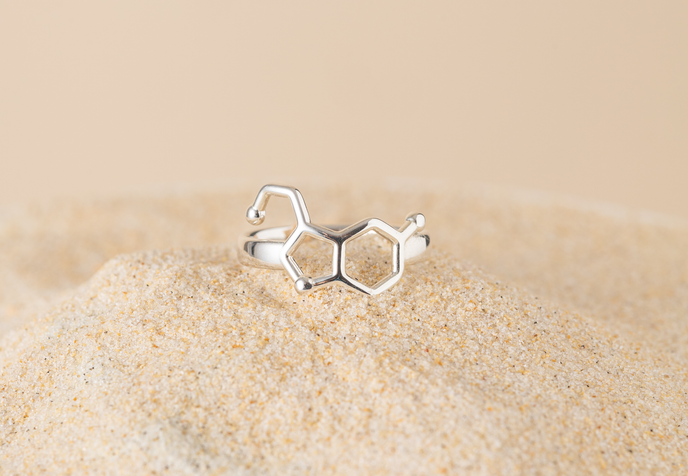
Find your perfect fit: measure an Existing Ring
Finding out your ring size at home is a simple process and can help you shop for jewelry online with confidence.
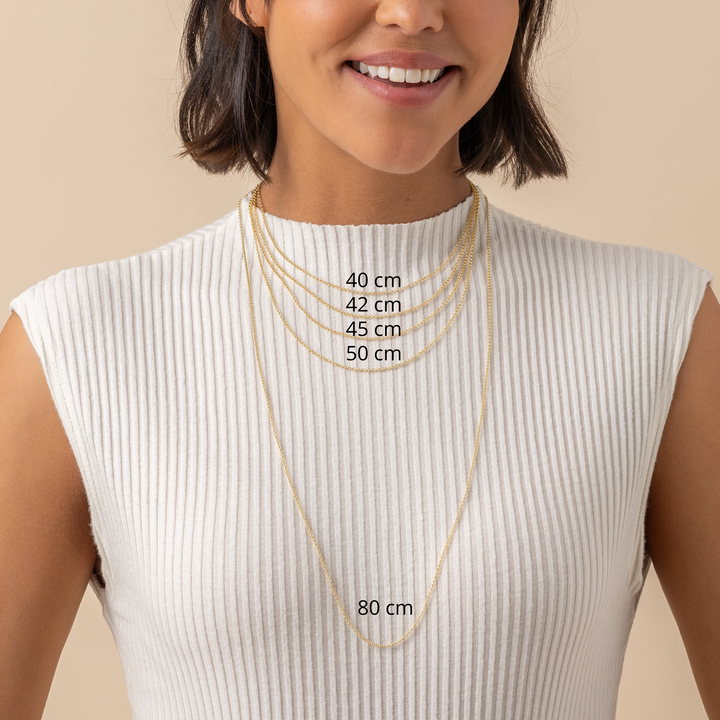
Necklace length guide