€ 200


Still questions? Contact us
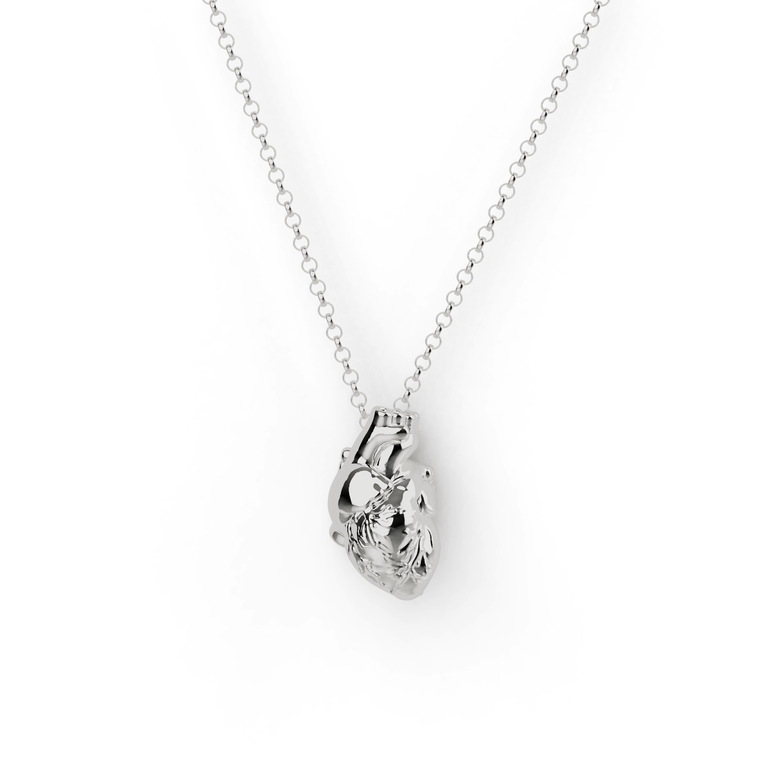
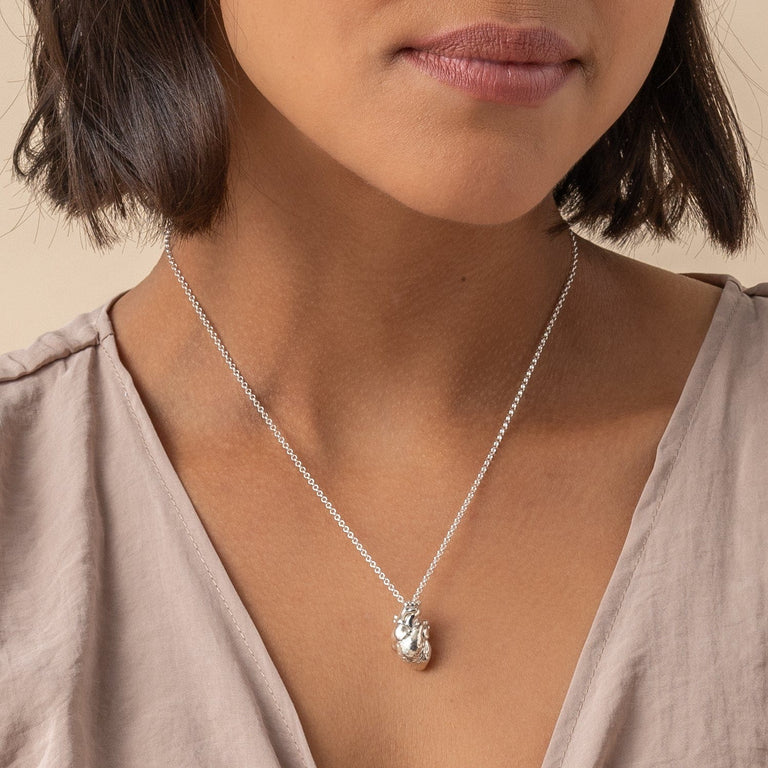
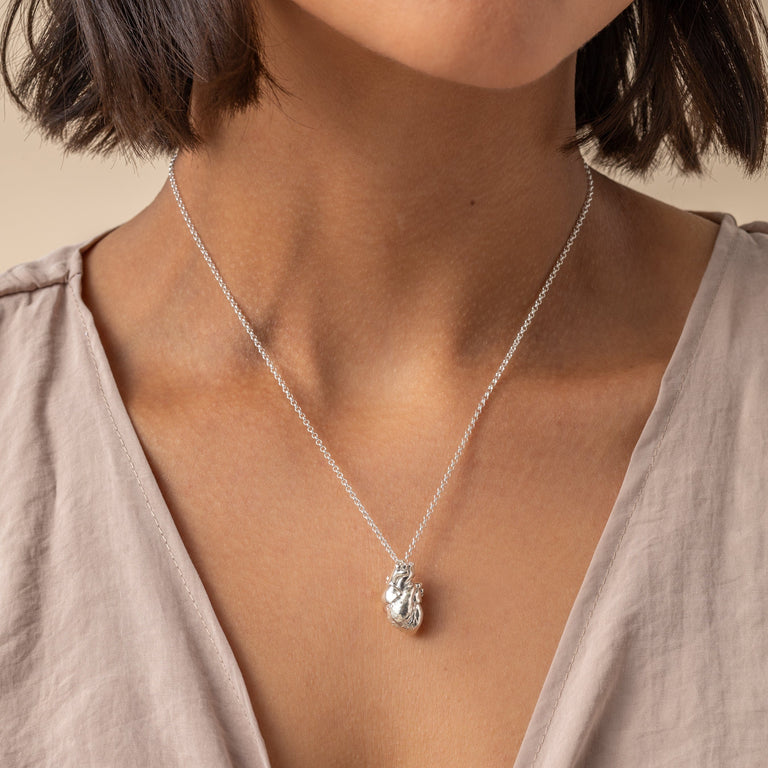
Anatomical heart necklace | sterling silver
The heart on a greeting card has little in common with the one beating in your chest. An anatomical heart necklace is a gift for a daughter set on becoming a doctor, a friend finishing medical school or a sister who loves biology, or for yourself, if your own heart has a story to tell.
Who It's For
- a daughter finishing school who wants to study medicine
- a best friend graduating from medical school
- a niece or younger sister who loves biology
- a partner, for her birthday
- a cardiac nurse, cardiologist or medical student
- yourself, to mark a milestone, or if the heart is part of your own story
Jennifer C. gave it to her daughter, who was graduating from a science program: “The pendant is detailed and perfect and the weight of it is dreamy!” Alexis H. bought her own: “I’m a congenital heart patient and have always wanted a realistic heart necklace. This is perfect and exceeded all expectations.”
The Heart's Own Pacemaker
Every heartbeat starts in a small patch of specialised muscle in the wall of the right atrium, the sinoatrial node. Its cells need no signal from the brain: they drift towards firing on their own, over and over. Each impulse spreads across both atria, pauses briefly at a second node so the atria can finish filling the ventricles, then races through the ventricle walls, which squeeze blood out to the lungs and the body. Nerves do not start the beat. They adjust it, faster or slower. A transplanted heart arrives with its nerves cut, yet it beats in its new body, usually noticeably faster at rest.
Explore Related Human Anatomy Jewelry
- anatomical heart necklace | gold vermeil
- heart section necklace | silver
- heartbeat necklace | silver
- origami heart necklace | silver
FAQ
How big is it, and how does it wear?
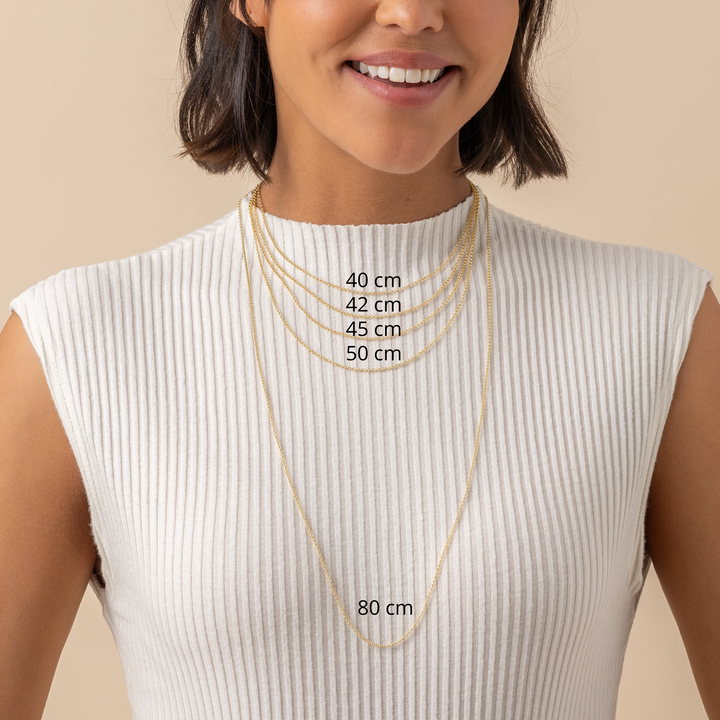
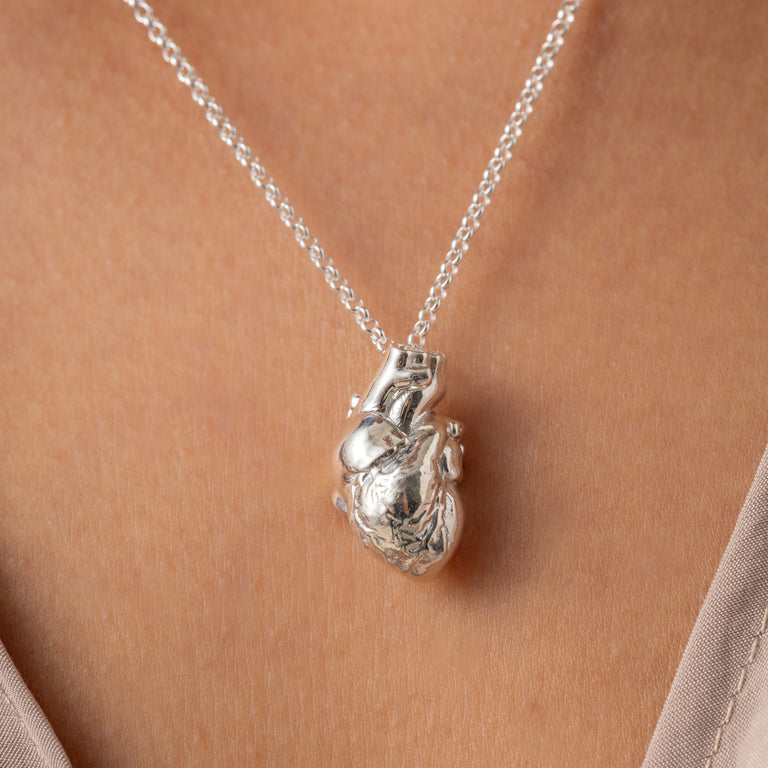
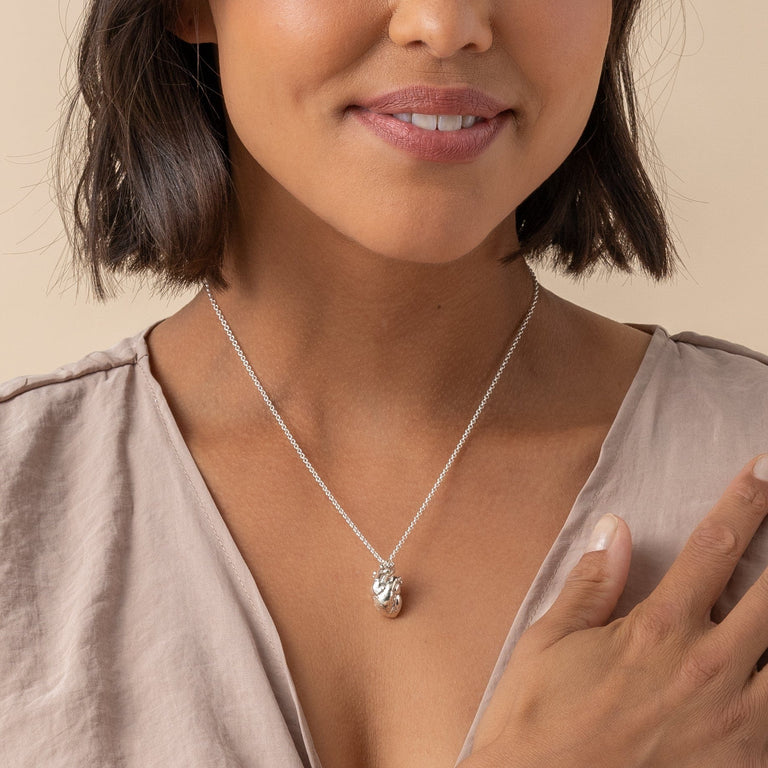
The pendant is 20 mm tall (about 0.8 inches), close to the size of a 10-euro-cent coin, and solid, with a noticeable weight for its size. It hangs from the top on a 45 cm (17.7 inch) sterling silver chain with a 5 cm (2 inch) extender, so the length adjusts from 45 to 50 cm. The chain is included. For a longer or shorter one, an extra chain from 40 to 80 cm can be added on this page. 925 sterling silver, nickel-free and hypoallergenic.
Is there a gold version, or another heart?
Yes. The same anatomical heart comes in 18K gold vermeil, also 20 mm, on a gold vermeil chain. Choose the finish she already wears: the design is identical in both. For a different take on the heart, there is a heart section necklace and a heartbeat necklace with the line of an ECG.
Will it arrive in time for her birthday or graduation?
DHL Express delivers free in 1-5 business days worldwide, and we pay the import duties and taxes, so nothing is due at the door. It comes in a ready-to-gift jewelry box and festive envelope. If it isn't right, our 30-day “Love It or Return It” policy applies.
Who was the first person to put a tube into a living human heart?
Werner Forssmann, a young trainee surgeon in Eberswalde, near Berlin, in 1929. His chief refused to let him try it on a patient, so he tried it on himself. He numbed his own arm, pushed a thin catheter up a vein, and walked to the X-ray room, where an image showed its tip inside his heart. The stunt cost him his post at the Charité in Berlin, and he later became a urologist. In 1956 he shared the Nobel Prize for it.

Human Anatomy
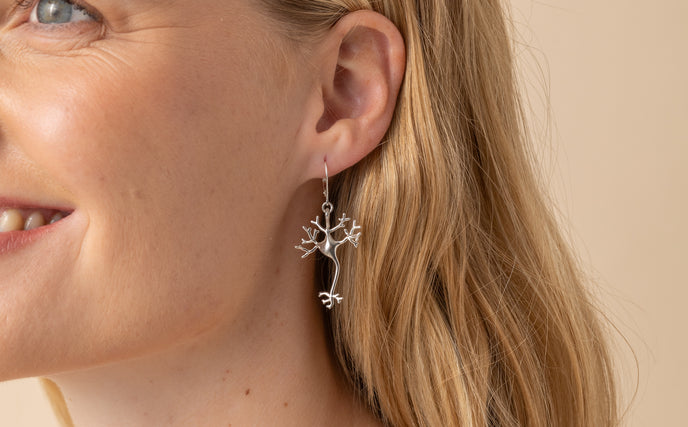
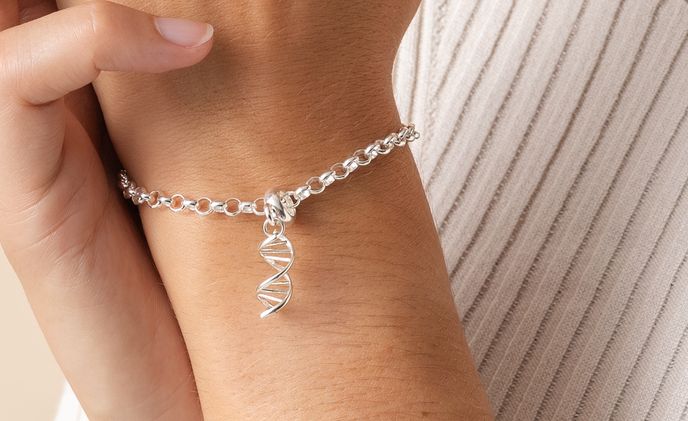
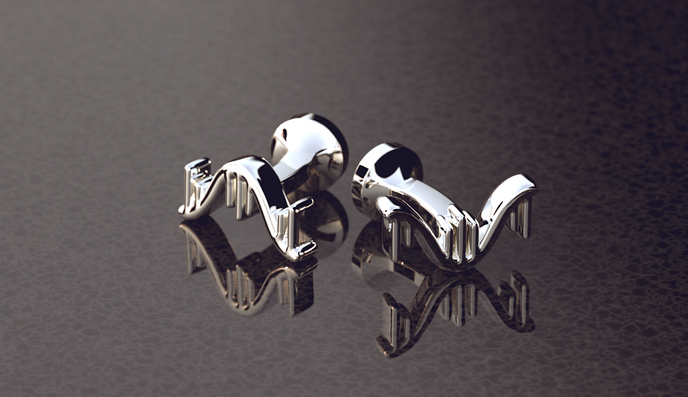
Anatomical wonders have never been so elegantly articulated. Our anatomical collection embodies the intricate and awe-inspiring structures that make us who we are. From DNA double helices to neuronal networks, our pieces don't merely imitate—they interpret. The collection serves as a tangible tribute to the hidden beauty within us all, elevating the realms of biology and medicine into wearable art. With exquisite attention to detail, each piece is a dialogue between form and function, revealing the enigmatic eloquence of the human body.
Find your perfect fit: measure an Existing Ring
Finding out your ring size at home is a simple process and can help you shop for jewelry online with confidence.
Necklace length guide