
€ 155


Still questions? Contact us
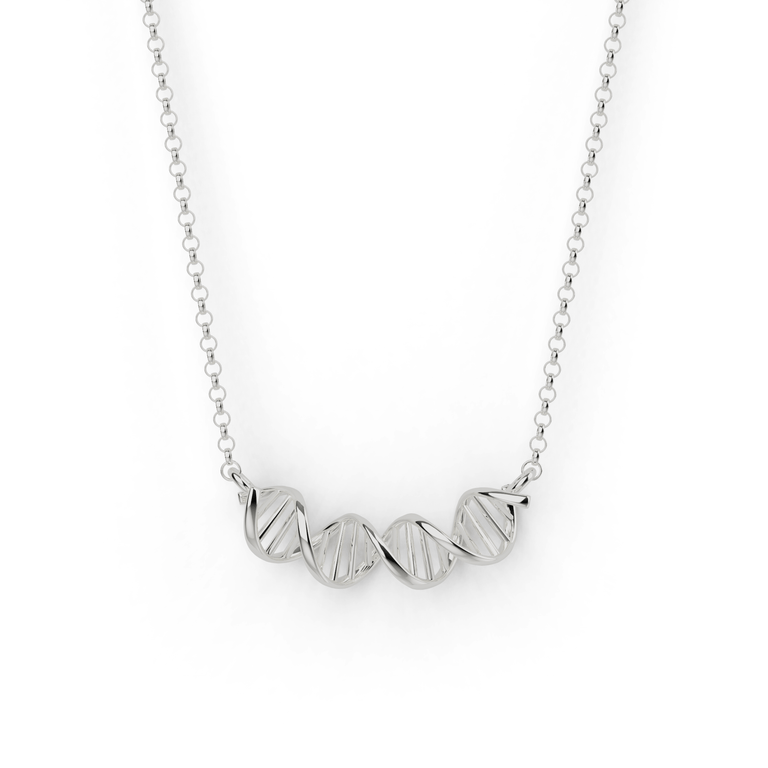
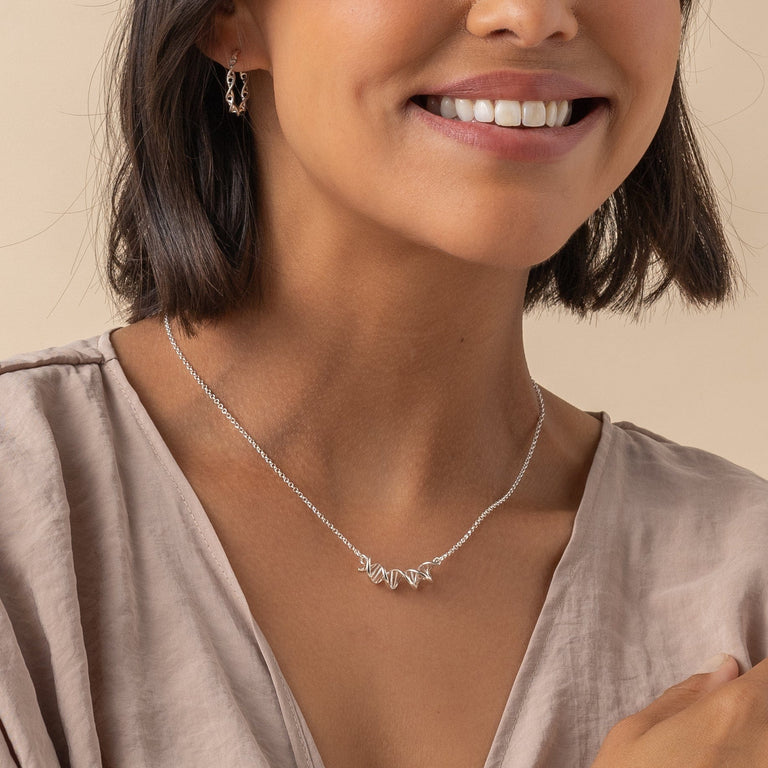
DNA necklace H | sterling silver
Half of your DNA came from your mother and half from your father, so a DNA necklace is a quietly personal thing to wear. It's a graduation gift for a daughter in biology, a present for her PhD defence, or something for the woman in your life who never stops talking about her lab.
Who It's For
- a graduate in biology, biochemistry, biotechnology or forensic science
- a PhD student on the day of the defence
- a partner or daughter who works in a lab
- a colleague leaving the lab, or retiring from it
- anyone who has traced their family roots with a DNA test
Brian H. gave it to his wife: “She doesn't wear jewelry normally but she absolutely loved this and has worn it several times already.” Erika O. bought her own: “I love showing off my love for science in an understated way.”
The Science Behind the Double Helix
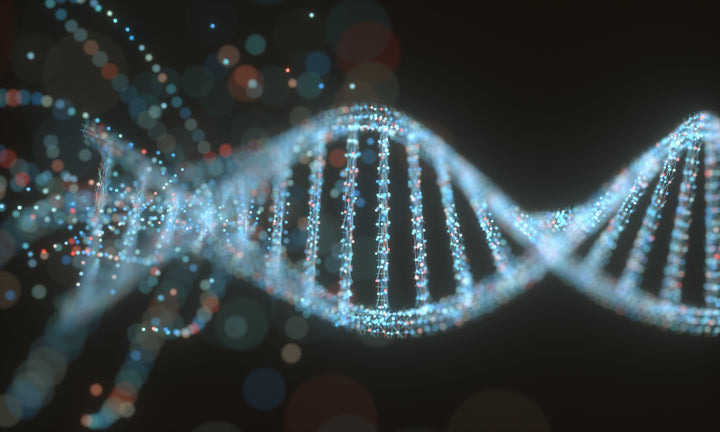
A DNA molecule is two strands running in opposite directions, held together by base pairs: A with T, G with C. In B-DNA, the form that dominates in living cells, the helix makes one full turn roughly every 10.5 base pairs. The winding leaves a wide major groove and a narrow minor groove, and most proteins that read a specific DNA sequence do it through the major groove, without pulling the strands apart. Unwound, the DNA in the nucleus of a single human cell would stretch to about two metres. Folded, it fits in a space a few thousandths of a millimetre across.
Explore Related Genetics Jewelry
- DNA necklace H | gold vermeil
- DNA necklace H | silver & gold vermeil
- DNA necklace V | silver
- DNA earrings | silver
FAQ
How big is the pendant, and how does it sit?
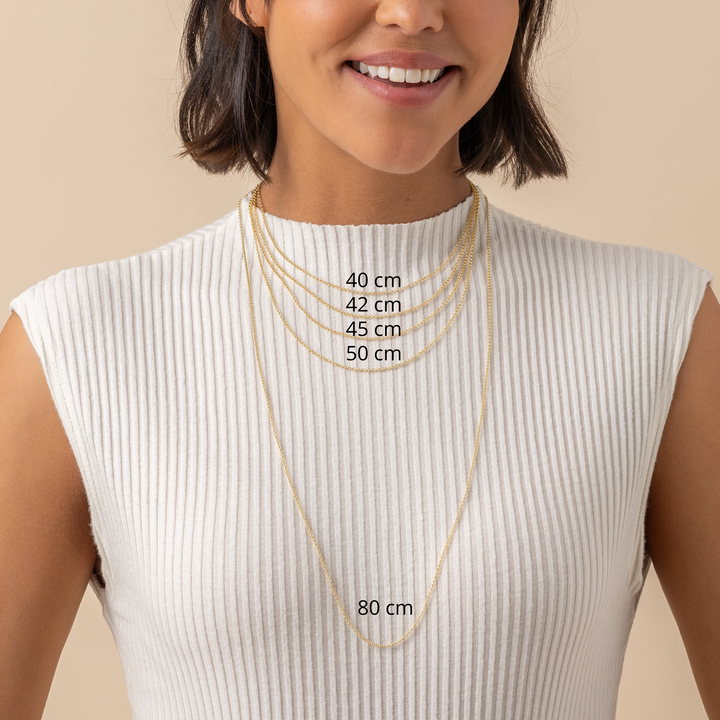
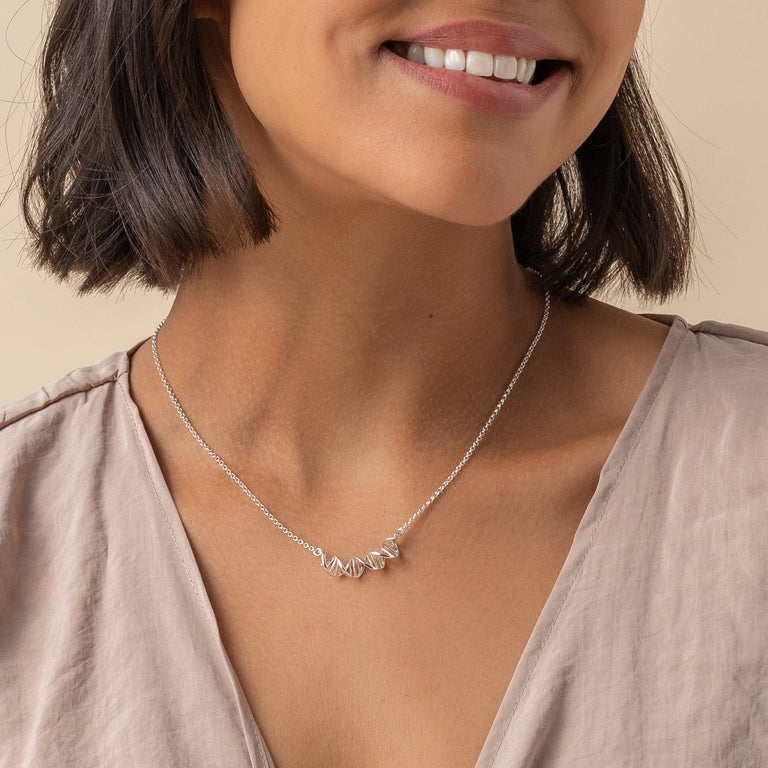
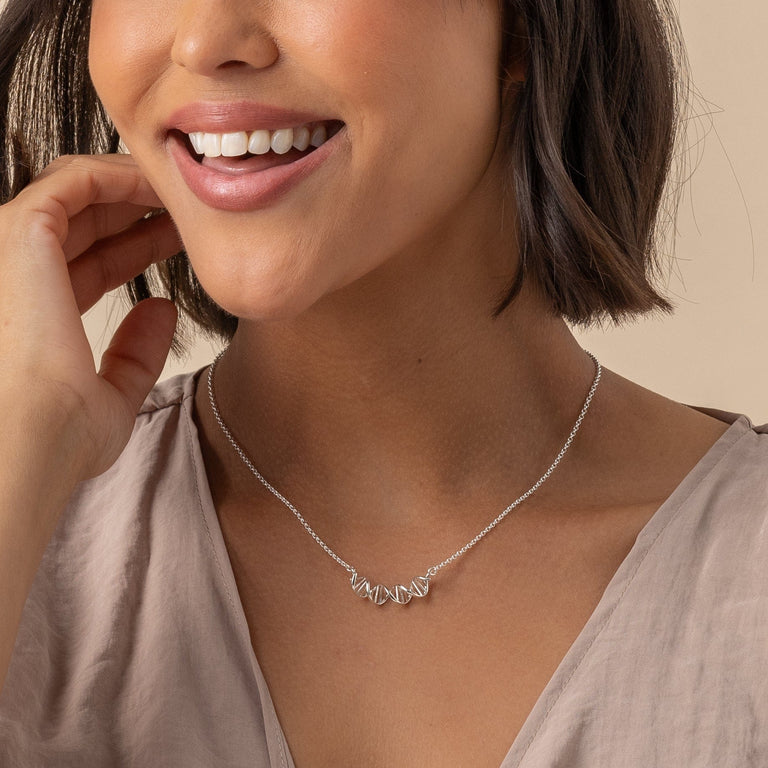
The pendant is 30 mm across (about 1.2 inches), a little wider than a 2-euro coin or a US quarter. It hangs on a 45 cm (17.7 inch) sterling silver chain with a 5 cm (2 inch) extender, so it sits at the collarbone or a little below. The chain attaches at both ends of the helix, which keeps the pendant level. It is 925 sterling silver, nickel-free and hypoallergenic.
Horizontal or vertical: which DNA necklace should I choose?
The molecule is the same. Only the size and the way it hangs differ. This horizontal version is 30 mm wide and hangs from both ends. The vertical version is 20 mm tall and hangs from a single loop at the top, so it is smaller and more discreet. The horizontal pendant also comes in gold vermeil and in a two-tone silver and gold vermeil version. Choose the finish the recipient already wears. The design is identical in all three.
Will it arrive in time, and what if it isn't right?
Shipping is free worldwide with DHL Express and takes 1-5 business days. Import duties and taxes are covered, so nothing extra is due at the door. The necklace arrives in a ready-to-gift jewelry box and festive envelope, and our 30-day “Love It or Return It” policy applies.
Who discovered the double helix?
Several people, within about a year. In May 1952, Raymond Gosling, a PhD student working with Rosalind Franklin at King's College London, took the X-ray image now known as Photo 51. In January 1953, Maurice Wilkins showed it to James Watson. Watson and Francis Crick published their model in Nature on 25 April 1953, and Franklin and Gosling's X-ray evidence ran in the same issue. Watson, Crick and Wilkins shared the 1962 Nobel Prize. Franklin had died in 1958, four years before the prize.
Genetics
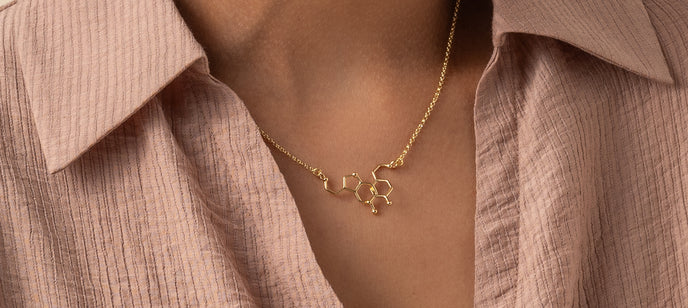
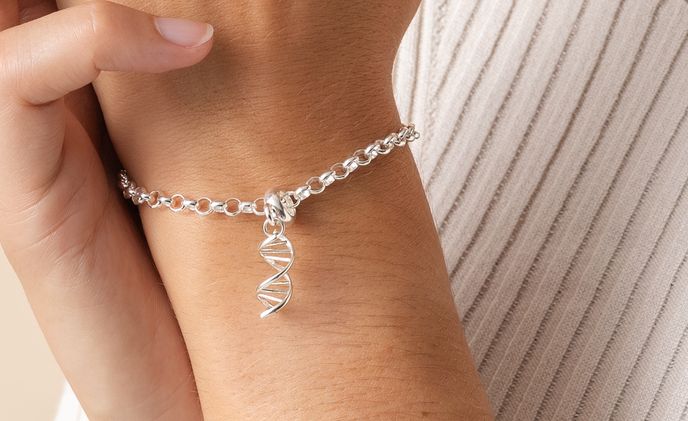
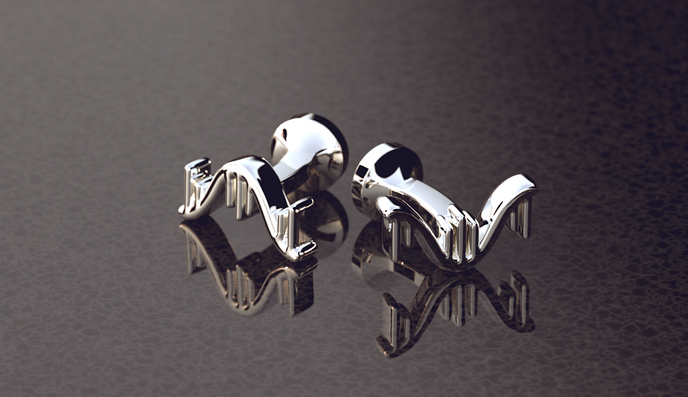
Our genetics-inspired jewelry captures the essence of life's code in striking detail. Crafted to mirror the DNA double helix, each piece is more than an aesthetic marvel—it's a tribute to the complexity of our genetic makeup. Far from ordinary, this collection combines scientific precision with artistic flair, making each item a captivating blend of form and function. It's not just an accessory; it's a meaningful representation of the miracle that is genetics.
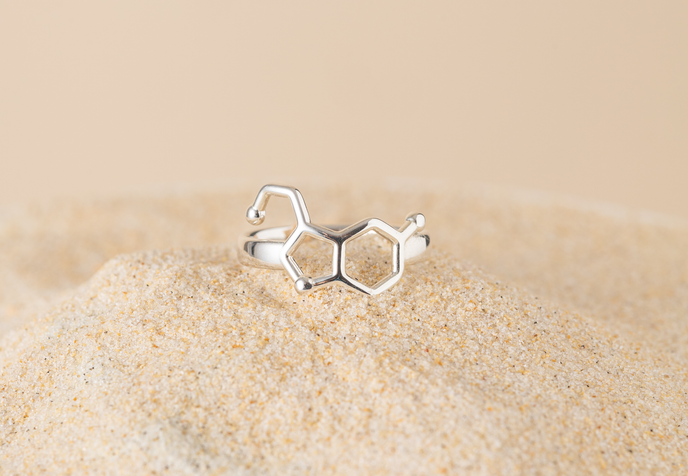
Find your perfect fit: measure an Existing Ring
Finding out your ring size at home is a simple process and can help you shop for jewelry online with confidence.
Necklace length guide