From € 145


Still questions? Contact us
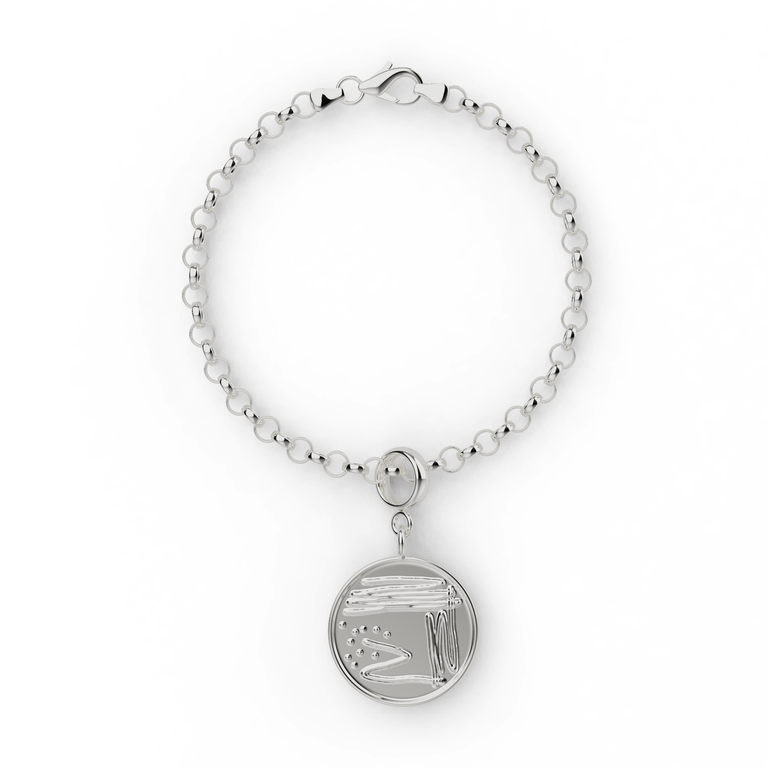
petri dish bracelet | sterling silver
In 1887, Julius Richard Petri was working as Robert Koch's assistant in Berlin. He took a flat glass dish, added a slightly larger glass lid, and published the design that became one of microbiology's most enabling tools. The container that made bacterial culture reproducible, contamination-controllable, and finally a working science.
The Science of the Petri Dish
The Petri dish solved a specific lab problem: how to grow a single bacterial culture in isolation without airborne contamination from neighbouring cultures or the room. Pour molten agar with nutrients into the dish, let it set, streak the bacterial sample across the surface with a sterile loop, and replace the lid. Single colonies grow at separate points on the agar, each colony a clone of one founding cell. The technique, called streak plating, remains the basic method for isolating pure bacterial strains 139 years later. Cell biology, molecular cloning, antibiotic susceptibility testing, and most of microbial ecology still depend on the same flat dish and its layer of agar.
The Audience
Buyers split into two groups: working microbiologists, and people who associate the dish with a specific lab or course that mattered to them.
- microbiologists and bacteriologists at any career stage
- microbiology and biology educators
- antibiotic-resistance researchers and clinical microbiologists
- food safety and water quality scientists
- molecular biology researchers (the dish is universal across most fields)
The strongest match cases: a microbiology PhD graduation, or a milestone marker for someone running an antibiotic-resistance lab.
Explore Related Lab Jewelry
- petri dish necklace | silver
- petri dish necklace | gold vermeil
- eppendorf necklace | silver
- microscope necklace | silver
FAQ
Will a real microbiologist actually want to wear this?
Yes, especially as a milestone gift. Microbiologists spend their entire careers handling Petri dishes, and the dish is one of the few tools where the scientific reference is also a personal one. PhD years are partly remembered as a sequence of plates that worked or didn't. The bracelet form makes the reference visible without being demonstrative.
Why does the lid sit slightly larger than the dish?
Petri's actual innovation. A lid the same size as the dish would seal tightly enough to trap moisture and create anaerobic pockets. A slightly larger lid lets air exchange happen at the rim while still blocking falling particulates from above. Simple geometry, but it's why streak plates work at all.
Size, material, chain length?
20 mm charm in 925 polished sterling silver, nickel-free and hypoallergenic, on a sterling silver chain (3.8 mm diameter, thicker than the necklace standard) with a lobster clasp. The charm attaches with a connector compatible with Pandora bracelets, which makes it easy to add to an existing bracelet collection. Length variants: 17 cm, 18 cm, 19 cm, plus a charm-only option. Free DHL Express shipping worldwide in 1-5 business days, all duties and taxes covered, 30-day “Love It or Return It” policy.
Is there a necklace version?
Yes, separately. The petri dish necklace exists in 925 sterling silver and in 18k gold vermeil at the same 20 mm size. The bracelet format is silver only.

Medical & Lab tools
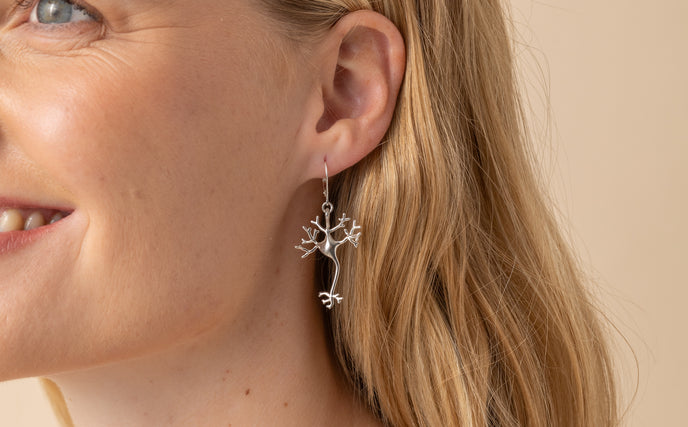
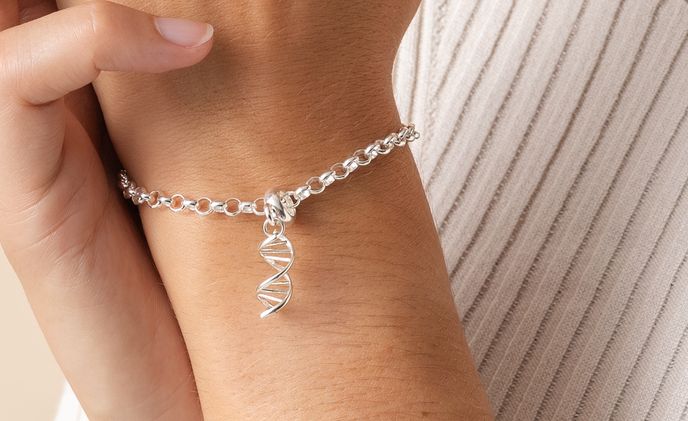
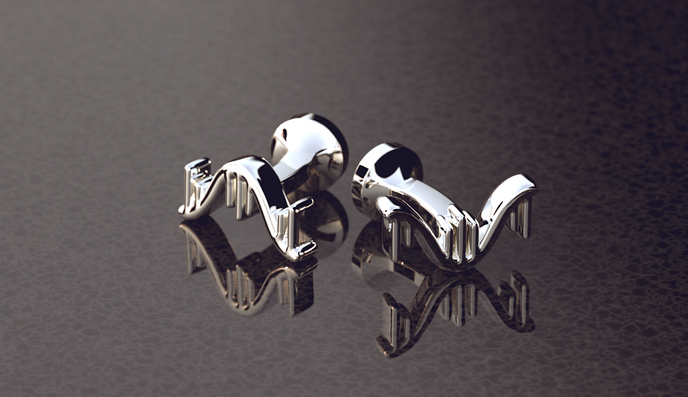
Dive into the captivating world of science-inspired jewelry, where intricate designs meet the essence of medical and laboratory tools. These masterfully crafted pieces act as subtle yet striking tributes to the instruments that have paved the way for scientific discovery. From DNA helices to microscope charms, each piece serves as a conversation starter, a talisman, and a small monument to human ingenuity. They're not just accessories; they're wearable artifacts that tell a story of scientific exploration and advancement.
Find your perfect fit
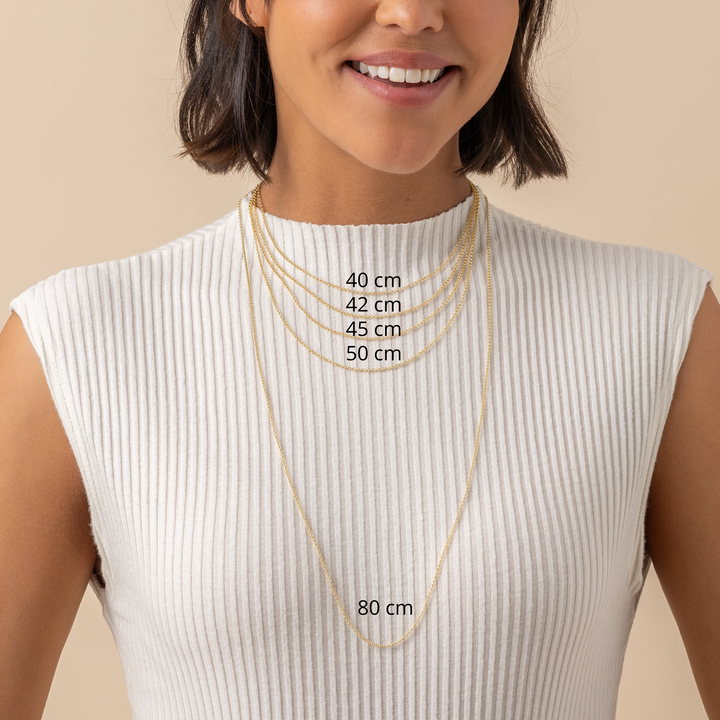
Necklace length guide