€ 160


Still questions? Contact us
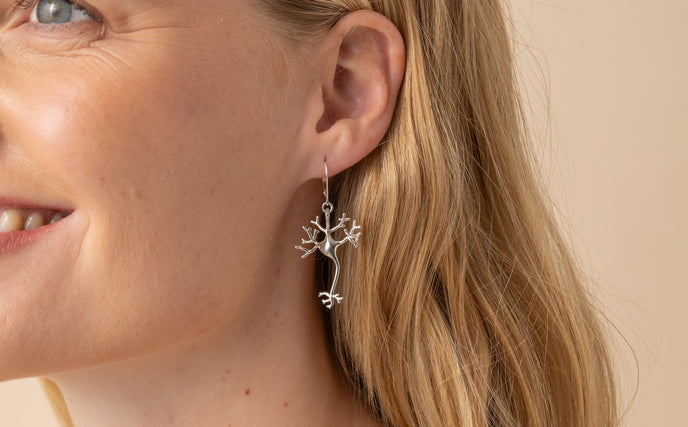
Caffeine earrings | sterling silver
Really into science, and just starting to drink coffee: that was the 17-year-old who was given these caffeine earrings, and she loves them. A first coffee habit and a love of science meet in one small molecule, and a pair worn every day says you noticed both.
Who It's For
- a science-minded teenager who is discovering coffee
- your sister, as a gift
- a present when you want something tasteful in size
- yourself, as a new pair of your own
Teresa R.: “I bought these as a gift for my sister. They look amazing, are very light and close pretty well.”
Why Caffeine Tastes Bitter
Our taste cells carry about 25 kinds of bitter receptor, and in cell tests caffeine switches on five of them. Bitter taste is thought to have evolved as a warning, since many plant toxins taste bitter. Yet caffeine is not the main source of the bitterness in a cup of coffee. Food chemists at the Technical University of Munich estimate its share at only about 15 per cent. Most of the bitter taste comes from compounds formed as the beans roast: chlorogenic acid lactones in light and medium roasts, and phenylindanes, which they break down into, in darker ones. That helps explain why decaf can still taste bitter.
Explore Related Molecules Jewelry
- caffeine earrings | gold vermeil
- caffeine studs | silver
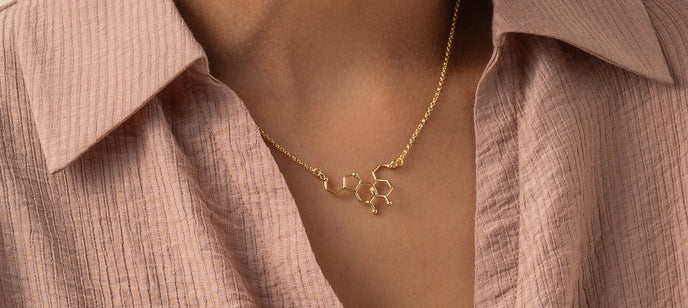
- caffeine necklace | silver
- theobromine earrings | silver
FAQ
How big are they, and how do they fasten?
Each earring measures 14 mm (about 0.55 inch), not counting the hoop, about 2 mm smaller than a 1-cent euro coin (16.25 mm). Each one hangs from a thin 17.5 mm sterling silver hoop, just under the width of a US dime (17.91 mm). The hoop opens, passes through the piercing and closes again, and the earring sits just below the earlobe. Our sterling silver is nickel-free and hypoallergenic.
Is there a gold pair, or a matching necklace?
Yes. The same caffeine earrings come in 18K gold vermeil, also 14 mm, on 17.5 mm gold vermeil hoops. Choose the finish the recipient already wears: the design is the same in both. For a set, the caffeine necklace comes in sterling silver and gold vermeil with a 25 mm pendant. For a closer fit on the earlobe, the caffeine studs (11 by 14 mm, on posts with ear nuts) also come in both finishes.
Will they arrive in time, and what if they aren't right?
DHL Express delivers free in 1-5 business days worldwide, and we pay the import duties and taxes, so nothing is due at the door. They arrive in a ready-to-gift jewelry box and festive envelope. If they aren't right, our 30-day “Love It or Return It” policy applies to unworn earrings.
How did decaf coffee begin?
With Ludwig Roselius, a Bremen coffee merchant, whose decaf was the first sold in shops. He and colleagues used benzene to draw caffeine out of unroasted beans, and in 1906 he founded Kaffee HAG to sell it. Early decaf still carried traces of benzene. The cleaner route came from Kurt Zosel at the Max Planck Institute for Coal Research, who noticed in 1967 that caffeine dissolves in carbon dioxide heated and held under very high pressure. He filed a patent in 1970, and the method is still used today.

Molecules
Delve into the hidden elegance of science with our meticulously crafted jewelry, inspired by the intricate structures of chemical molecules. Each piece serves as a tactile tribute to the building blocks of life and matter, capturing the allure of atoms and bonds in precious metals. A harmonious fusion of art and science, these creations are more than mere accessories; they're a celebration of the enigmatic beauty that underpins our universe.
Find your perfect fit
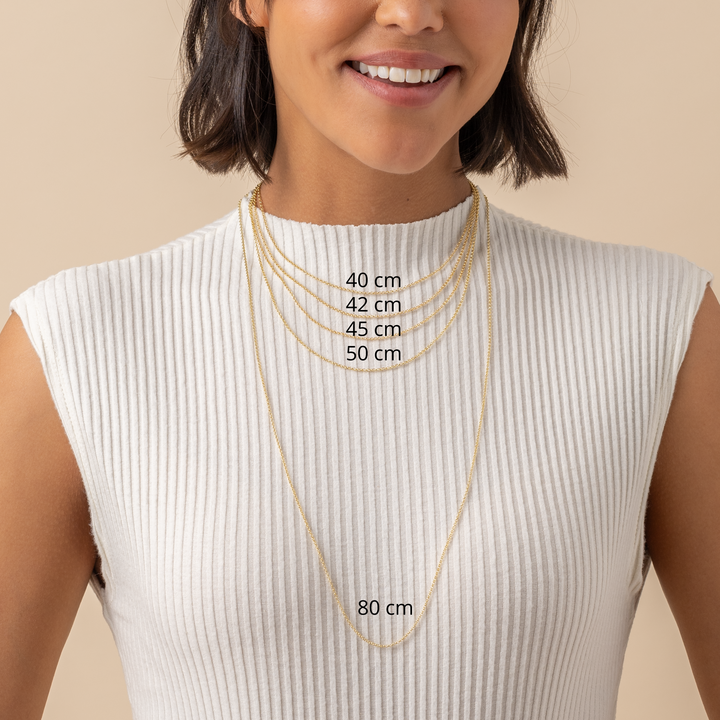
Necklace length guide