$252


Still questions? Contact us
Adrenaline necklace | sterling silver
Adrenaline seemed the right choice for a sister who gives bootcamp training, so this adrenaline necklace became her birthday present. Also called epinephrine, it is the hormone the body releases under physical and mental strain, the push behind a hard session or a big day.
Who It's For
- your daughter, as a present
- a best friend who works as a stunt performer, with a second one for yourself
- yourself, if you're a bit of a science maniac
If you or someone you love lives with a severe allergy, epinephrine already has a place in your story.
From Shuen L.: “Lovely and delicate. Suitable to wear as a daily necklace”. Zoé B. wrote: “The chain and the molecule are perfect! Very nice and shiny!”
Where Adrenaline Is Made
An adrenal gland is two glands in one. Its outer layer, the cortex, makes cortisol. Its core, the medulla, makes adrenaline (epinephrine), and in people adrenaline is most of what the core releases, with a smaller share of noradrenaline. The core relies on the outer layer. Much of the blood that reaches the core has first passed through the cortex, so the medulla is bathed in cortisol, and cortisol boosts the enzyme that finishes the job, the one that adds a methyl group to noradrenaline and turns it into adrenaline. The body's two classic stress hormones are, in that sense, made one inside the other.
Explore Related Molecules Jewelry
- adrenaline necklace | gold vermeil
- adrenaline earrings | silver
- adrenaline ring | silver
- cortisol necklace | silver
FAQ
How big is the pendant, and where does it sit?
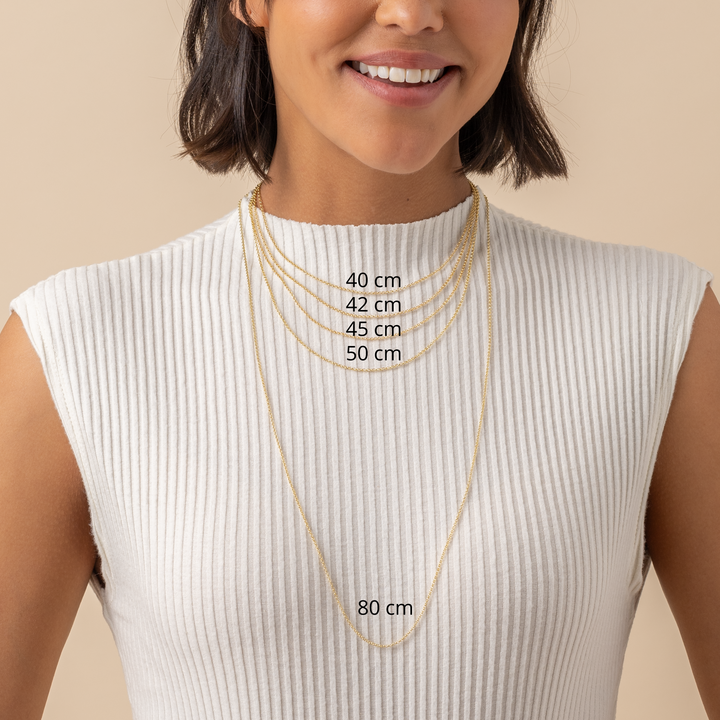
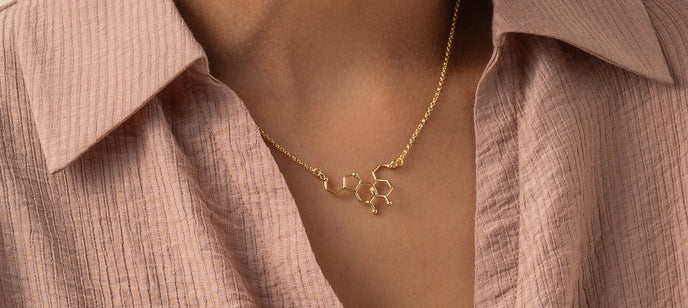
The pendant measures 28 mm (about 1.1 inches), about 2 mm bigger than a 2-euro coin and 4 mm bigger than a US quarter. It hangs from a small ring on a 45 cm (17.7 inch) sterling silver chain with a 5 cm (2 inch) extender, and sits below the collarbone. Extra chains of 40, 42, 45 and 50 cm (each with the extender) or 80 cm can be added here for layering. Our 925 sterling silver is nickel-free and hypoallergenic, and a soft cloth keeps the shine.
Is there a gold adrenaline necklace?
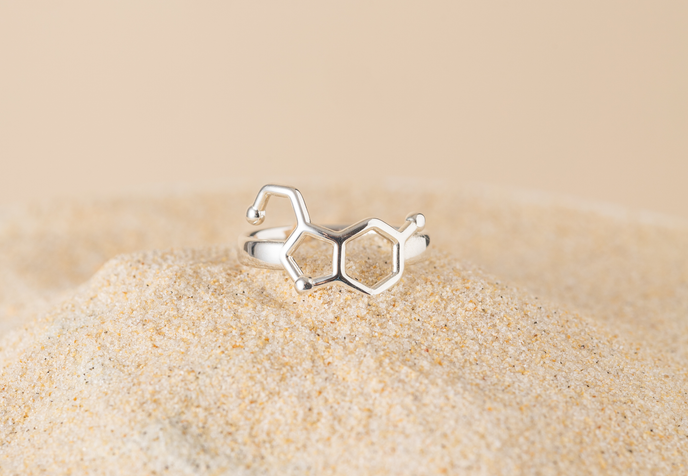
Yes. The adrenaline necklace comes in sterling silver and in 18K gold vermeil, both with a 28 mm pendant on a 45 cm chain with a 5 cm extender. Choose the finish the recipient already wears. The design is the same in both finishes. To go with it, there are adrenaline earrings (a 19 mm molecule on 17.5 mm hoops) in both finishes, and 20 mm studs and a ring in sterling silver.
Will it arrive in time, and what if it isn't right?
DHL Express delivers it free worldwide in 1-5 business days, and we pay the import duties and taxes, so nothing is due at the door. It arrives in a ready-to-gift jewelry box and festive envelope. If it isn't right, our 30-day “Love It or Return It” policy applies.
How was adrenaline's effect on blood pressure discovered?
Through a Harrogate physician and a London physiologist. George Oliver, who devised his own instruments for measuring the pulse and arteries, believed several animal organ extracts changed the circulation in people. In the autumn of 1893 he called on the physiologist Edward Schäfer at University College London to test them. There most of the extracts did nothing. The adrenal extract raised blood pressure sharply. They presented it to the Physiological Society on 10 March 1894. In Kraków, Napoleon Cybulski and Władysław Szymonowicz reached the same result independently a year later.
Molecules
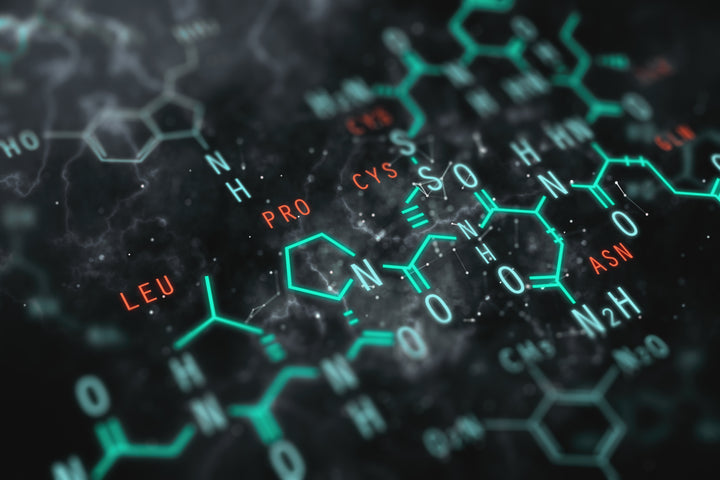
Delve into the hidden elegance of science with our meticulously crafted jewelry, inspired by the intricate structures of chemical molecules. Each piece serves as a tactile tribute to the building blocks of life and matter, capturing the allure of atoms and bonds in precious metals. A harmonious fusion of art and science, these creations are more than mere accessories; they're a celebration of the enigmatic beauty that underpins our universe.
Find your perfect fit: measure an Existing Ring
Finding out your ring size at home is a simple process and can help you shop for jewelry online with confidence.
Necklace length guide