$268


Still questions? Contact us
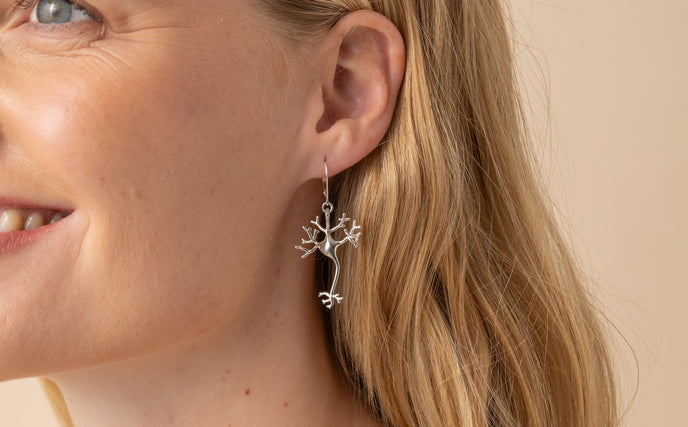
Adrenaline earrings | sterling silver
In rats, adrenaline released in a scary moment helps fix the memory of it, yet very little crosses from the blood into the brain. For a neuroscientist in her adrenaline earrings, how that signal reaches the brain is an open question. Some rodent studies point to the vagus nerve, others to a rise in blood sugar.
Who It's For
- a partner who works in emergency medicine
- a daughter studying physiology
- a mother who works in critical care
- a friend who loves an adrenaline sport
- yourself, as a pair light enough to forget you're wearing
Marie G., on an earlier listing of these earrings: “It's even more beautiful in nature.”
How Chromaffin Cells Got Their Name
Adrenaline gives away electrons easily, and that bit of chemistry gave the cells that make it their name. In the 1850s and 1860s, anatomists found that the inner part of the adrenal gland turned brown in chromium salts. In 1902 Alfred Kohn named cells that react this way chromaffin. In 1917 Tomosaburo Ogata and Akira Ogata, working in Tokyo, showed that the brown deposit forms because adrenaline itself reduces the chromium salt, and they proposed calling them adrenalin cells instead. The older name stuck, and it is still the one biologists use.
Explore More Adrenaline Jewelry
- adrenaline earrings | gold vermeil
- adrenaline studs | silver
- adrenaline necklace | silver
- adrenaline necklace | gold vermeil
FAQ
How big are the earrings, and how do they hang?
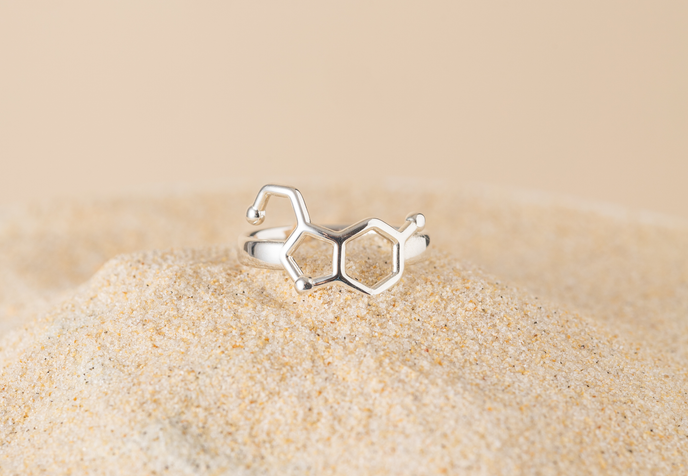
Each earring measures 19 mm (about 0.75 inch), not counting the hoop, about 1 mm more than a US dime (17.91 mm). It hangs from a thin 17.5 mm sterling silver hoop that passes through the piercing, so it sits just below the earlobe. They come as a pair. Our 925 sterling silver is nickel-free and hypoallergenic.
Do the adrenaline earrings come in gold vermeil?
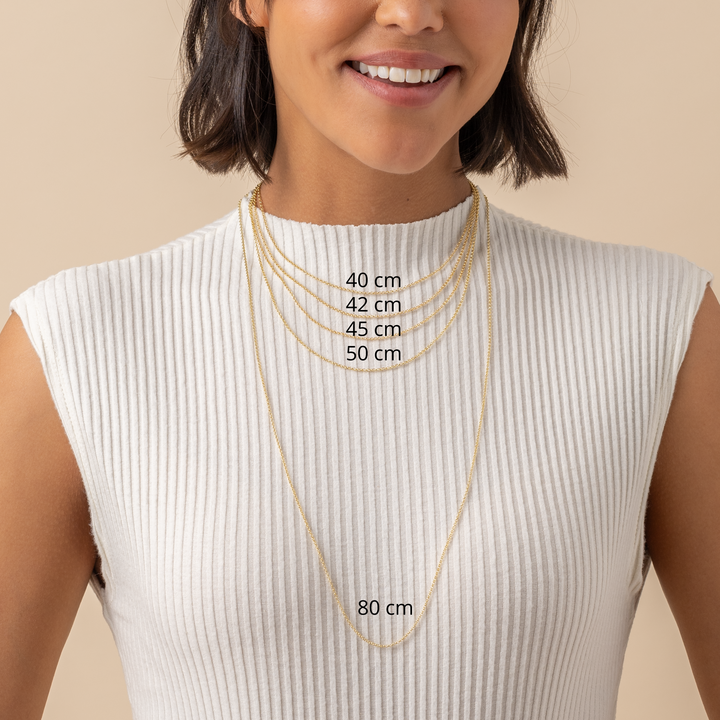
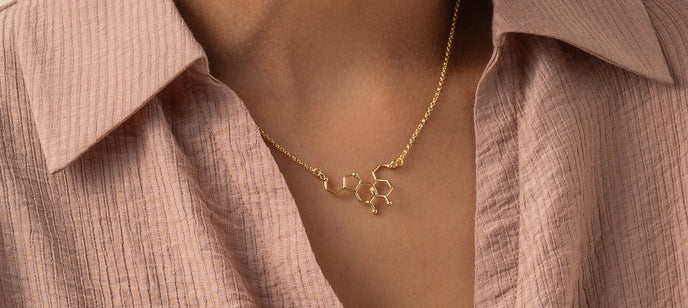
Yes. The adrenaline earrings come in sterling silver and in 18K gold vermeil, each 19 mm on a 17.5 mm hoop in the same metal. Choose the finish the recipient already wears. The design is the same in both finishes. The adrenaline necklace, a 28 mm pendant on a 45 cm chain with a 5 cm extender, also comes in both, and the adrenaline studs, 20 mm on ear nuts, come in sterling silver only.
Will they arrive in time, and what if they aren't right?
DHL Express delivers them free worldwide in 1-5 business days, and we pay the import duties and taxes, so nothing is due at the door. They arrive in a ready-to-gift jewelry box and festive envelope. If they aren't right, our 30-day “Love It or Return It” policy applies to unworn earrings.
What did Banks and Helle find leaving the adrenal gland with adrenaline?
A protein from inside its storage granules. In 1965 Banks and Karen Helle stimulated the adrenal medulla, the gland's core, and found that the soluble protein stored in its granules was released along with the catecholamines, adrenaline and noradrenaline. A protein that large could not slip out of the cell on its own. The granules had to be opening to the outside and emptying their contents, the process called exocytosis.
Molecules
Delve into the hidden elegance of science with our meticulously crafted jewelry, inspired by the intricate structures of chemical molecules. Each piece serves as a tactile tribute to the building blocks of life and matter, capturing the allure of atoms and bonds in precious metals. A harmonious fusion of art and science, these creations are more than mere accessories; they're a celebration of the enigmatic beauty that underpins our universe.
Find your perfect fit
Necklace length guide