€ 160


Still questions? Contact us
Antibody earrings | sterling silver
Antibodies find and tag invading germs so the rest of the immune system can clear them, and an immunologist can spend a whole career working out how. These antibody earrings make a birthday present for a wife who is an immunologist.
Who It's For
- a best friend who has just passed her doctoral thesis defence
- a granddaughter in immunology, for her birthday
- someone who already has the antibody necklace, to make a set
- yourself, to wear to the lab or the clinic
Pieter S. on a gift: “i gave them as a present for my girlfriend when she did her phd ceremony. Her research was about antibodies.” Margaret G., who gave a pair as a gift: “Buy someone you love who is in the Science world some of this beautiful well made jewellery.”
How Antibodies Get Better
The first antibodies made against a new germ or vaccine usually bind it only loosely. Over the following weeks they improve. In lymph nodes and other immune tissue, B cells gather in small hubs called germinal centres and divide quickly, while an enzyme called AID sets off mutations in their antibody genes at about a million times the rate seen in the rest of their DNA. Each cell ends up making a slightly different antibody. Cells whose antibodies grip the target more tightly get the signals to survive and divide again, and many of the others die. Round after round, the antibodies bind more tightly. Immunologists call this affinity maturation.
Explore Related Immunology Jewelry
- antibody earrings | gold vermeil
- antibody studs | silver
- antibody necklace | silver
- IgM necklace | silver
FAQ
How big are they, and how do they fasten?
Each earring measures 15 mm (about 0.6 inches), not counting the hook, a little smaller than a 1-euro-cent coin (16.25 mm) and smaller than a US dime. They hang from sterling silver leverback hooks, which clip closed behind the earlobe. Our sterling silver is 925, nickel-free and hypoallergenic, with a high-polish finish. If the silver darkens over time, a soft polishing cloth brings it back.
Is there a gold pair, or a matching necklace?
Yes to both. The same 15 mm antibody earrings come in 18K gold vermeil, on gold vermeil leverback hooks. Choose the finish she already wears. The design is the same in silver and gold vermeil. For a set, the antibody necklace comes in both finishes too, with a 15 mm pendant on a 45 cm chain and 5 cm extender. For a post instead of a hook, there are antibody studs (15 × 12 mm) with ear nuts, also in both finishes.
Will they arrive in time, and what if they aren't right?
DHL Express delivers free in 1-5 business days worldwide, and we pay the import duties and taxes, so nothing is due at the door. They arrive in a ready-to-gift jewelry box and festive envelope. If they aren't right, our 30-day “Love It or Return It” policy applies to unworn earrings.
Who found a way to make monoclonal antibodies?
Georges Köhler and César Milstein, at the MRC Laboratory of Molecular Biology in Cambridge. Köhler, a German postdoc in Milstein's lab, fused antibody-making cells from an immunised mouse with myeloma cells, which divide without end. The hybrid cells kept making one antibody. The method appeared in Nature on 7 August 1975. Milstein offered it to a UK government body for patenting, which saw no immediate commercial use and declined. In 2021 the FDA approved its 100th monoclonal antibody medicine. Köhler and Milstein shared the 1984 Nobel Prize with Niels Jerne.
Cellular Biology
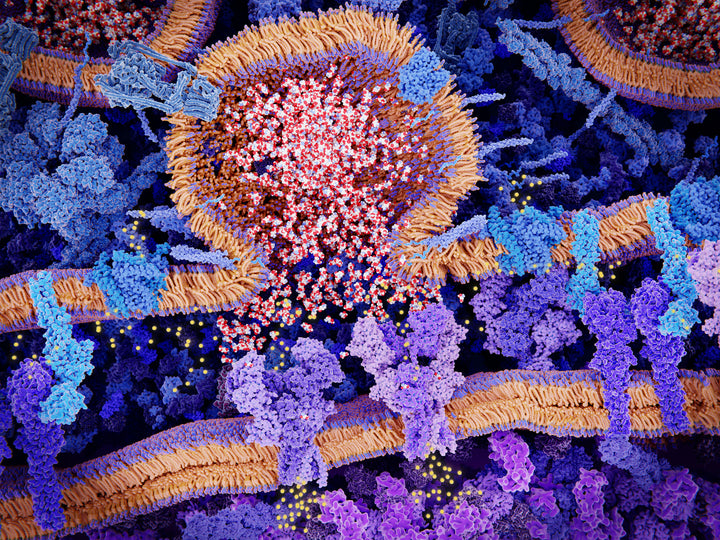
Step into the fascinating world of cellular biology through our unique jewelry designs. These pieces serve as wearable reflections of life's microscopic wonders, capturing the aesthetics of DNA strands, cellular formations, and more. Far from simple adornments, they spark dialogue and honor the captivating complexities found within biological research. Merging scientific accuracy with artistic flair, each creation offers a tactile experience that bridges the gap between scientific inquiry and aesthetic appreciation.
Find your perfect fit
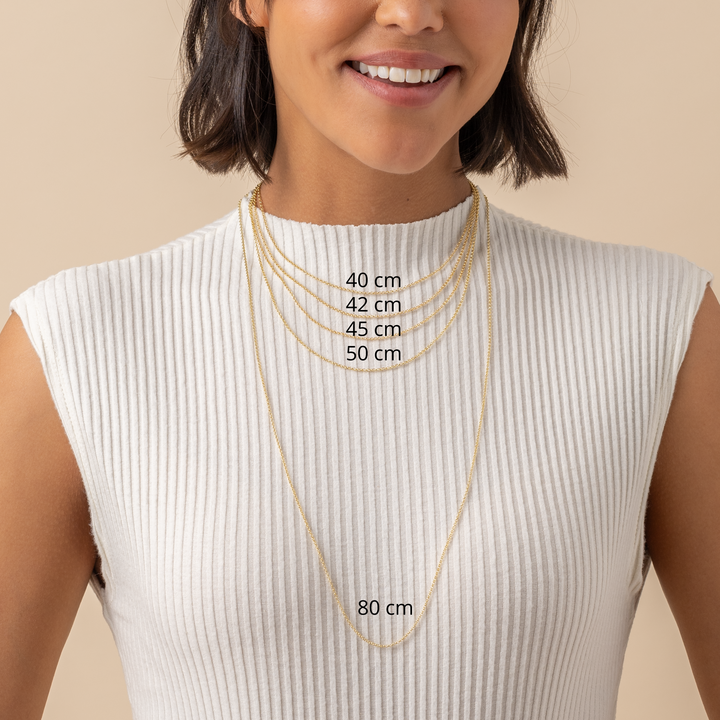
Necklace length guide