€ 210


Still questions? Contact us
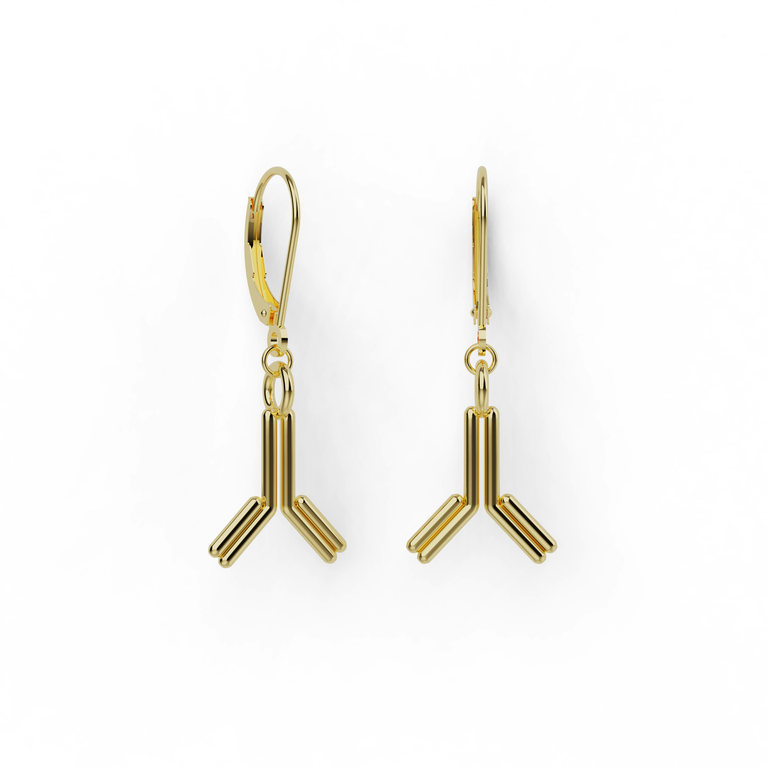
Antibody earrings | 18k gold vermeil
If you teach immunology, you have probably drawn the Y-shape of an antibody enough times to do it without looking down. Two heavy chains, two light chains, two antigen-binding sites, one effector tail. This is the structure that runs adaptive immunity and a sizeable share of modern oncology drugs.
The Science of Antibodies
An antibody is an immunoglobulin (Ig), a Y-shaped glycoprotein produced by plasma cells. Two heavy chains and two light chains, joined by disulfide bonds, fold into two antigen-binding fragments (Fab) and one crystallisable fragment (Fc). The Fab tip carries the variable regions where somatic hypermutation in the germinal centre tunes binding affinity to a specific antigen. The Fc tail engages effector functions: complement activation, Fc-receptor binding on phagocytes and NK cells, neonatal Fc receptor recycling. Five isotypes (IgG, IgM, IgA, IgD, IgE) cover different anatomical and functional niches. Köhler and Milstein's 1975 hybridoma method (Nobel Prize 1984) opened the door to monoclonal antibody therapy. Trastuzumab, rituximab, adalimumab, pembrolizumab, and ipilimumab are some of the most consequential drugs in oncology and rheumatology, and all are monoclonal antibodies.
Worn By
The audience clusters around immunology and antibody therapeutics:
- immunologists and clinical immunology fellows
- oncologists working with monoclonal antibody therapeutics and checkpoint inhibitors
- rheumatologists and gastroenterologists treating with biologics
- antibody-engineering and biotech researchers
- educators teaching adaptive immunity and the germinal centre
The most common pairing is alongside the silver counterpart for partnered immunology lab heads, or with the antibody necklace for someone who works with antibodies as both reagent and therapeutic.
Explore Related Cellular Biology Jewelry
- Antibody earrings | silver
- Antibody necklace | gold vermeil
- Antibody necklace | silver
- Antibody studs | silver
FAQ
Will an immunologist actually wear these?
Often. The Y-shape is the most recognisable molecular silhouette in the field, and the earring format keeps it daily-wearable rather than statement-style. Immunology educators are an unusually strong cluster, since the structure is one they redraw on a whiteboard every term. Oncologists working with checkpoint inhibitors and rheumatologists using biologics are the next strongest groups.
What is the difference between the five antibody isotypes?
Each isotype has a different heavy chain constant region, which sets where it goes and what it does. IgG is the dominant serum antibody and the workhorse of the secondary immune response. IgM is the first to appear in a response and forms a pentamer for high avidity. IgA is the dominant antibody in mucosal secretions. IgE drives allergic responses through mast cell and basophil activation. IgD sits mostly on naive B-cell surfaces with a less defined effector role. Most therapeutic monoclonals are IgG.
What is the size, material, and earring type?
15 mm charm in 18k gold vermeil (sterling silver core with 2.5 micron gold plating), nickel-free, on 18k gold vermeil leverback hooks. Ships free worldwide via DHL Express in 1-5 business days, with all import duties prepaid. Comes in a ready-to-gift jewelry box with the 30-day “Love It or Return It” policy.
Is there a silver version?
Yes. The silver antibody earrings are the same 15 mm charm on sterling silver leverback hooks. Same design, same size. Material is the only difference.
Cellular Biology
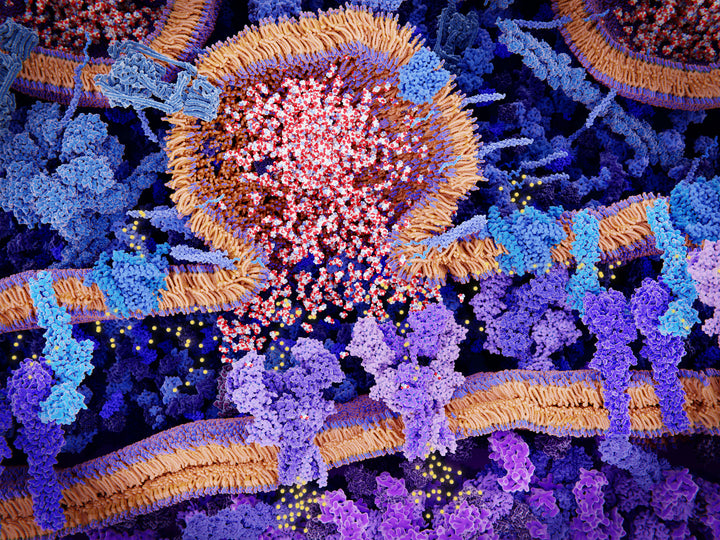
Step into the fascinating world of cellular biology through our unique jewelry designs. These pieces serve as wearable reflections of life's microscopic wonders, capturing the aesthetics of DNA strands, cellular formations, and more. Far from simple adornments, they spark dialogue and honor the captivating complexities found within biological research. Merging scientific accuracy with artistic flair, each creation offers a tactile experience that bridges the gap between scientific inquiry and aesthetic appreciation.
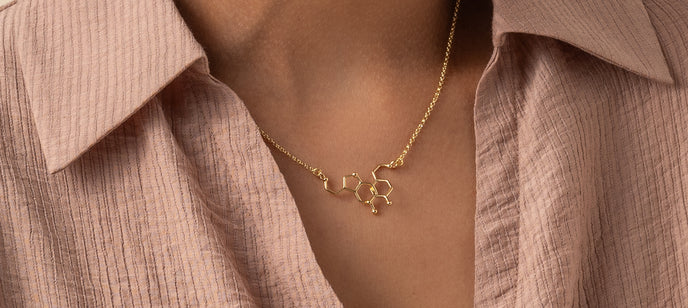
Find your perfect fit
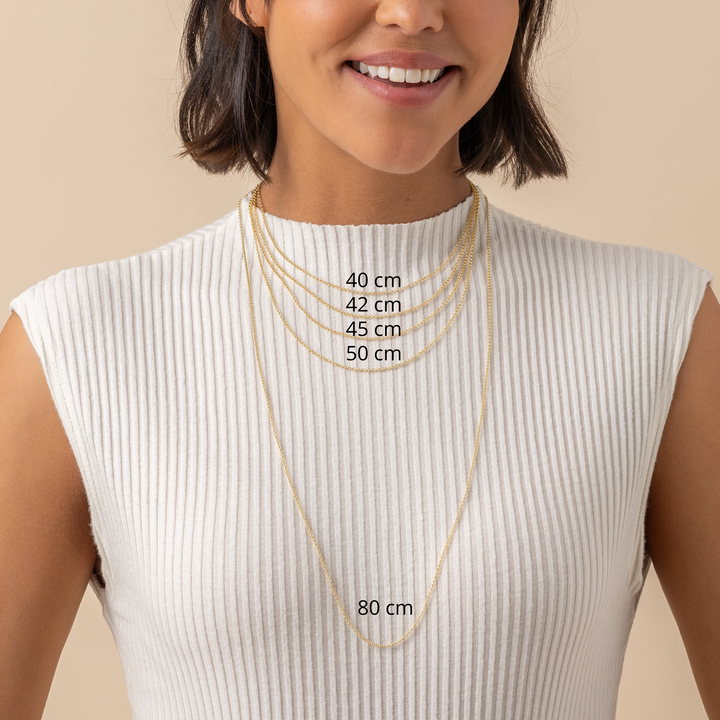
Necklace length guide