
€ 160


Still questions? Contact us
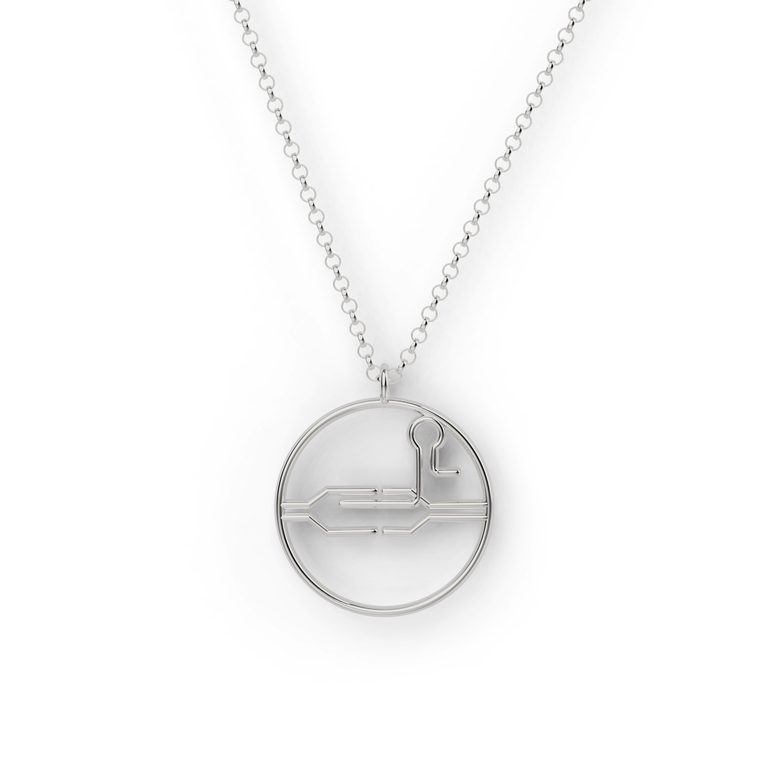
CRISPR necklace | sterling silver
For a generation of molecular biologists, CRISPR is the tool they learned to edit genes with, and for some the subject of their thesis. A CRISPR necklace is a present from a proud parent or friend for a graduate who knows it from the bench, to wear long after the lab coat comes off.
Who It's For
- a daughter working on her PhD in molecular biology
- a best friend celebrating her degree in genetics
- a friend who wrote her degree thesis on CRISPR
- a daughter on her graduation day
- yourself, if CRISPR is part of your own work
Joel W., who bought it for a daughter doing her PhD in molecular biology: “She absolutely loves it.” Arianna E., who gave it to a friend whose degree thesis was on CRISPR: “She hasn't stopped wearing it since we gave it to her.”
How CRISPR Works in Bacteria
CRISPR began as an immune system in bacteria. When a bacterium survives a virus attack, it can cut out a short piece of the virus's DNA and store it in its own genome, between repeated sequences. Those stored pieces work as a memory, and they are passed on to its descendants. The bacterium copies them into short RNA guides, and Cas proteins, Cas9 among them, use the guides to find and cut a matching virus if it returns. CRISPR systems turn up in about 40 per cent of bacterial genomes and in most archaea. In 2012 researchers showed that Cas9 could be given a guide RNA of their own design, which opened the way to editing genes.
Explore Related Molecular Biology Jewelry
- CRISPR necklace | gold vermeil
- bacteriophage necklace | silver
- RNA necklace | silver
- DNA necklace H | silver
FAQ
How big is it, and how does it sit?
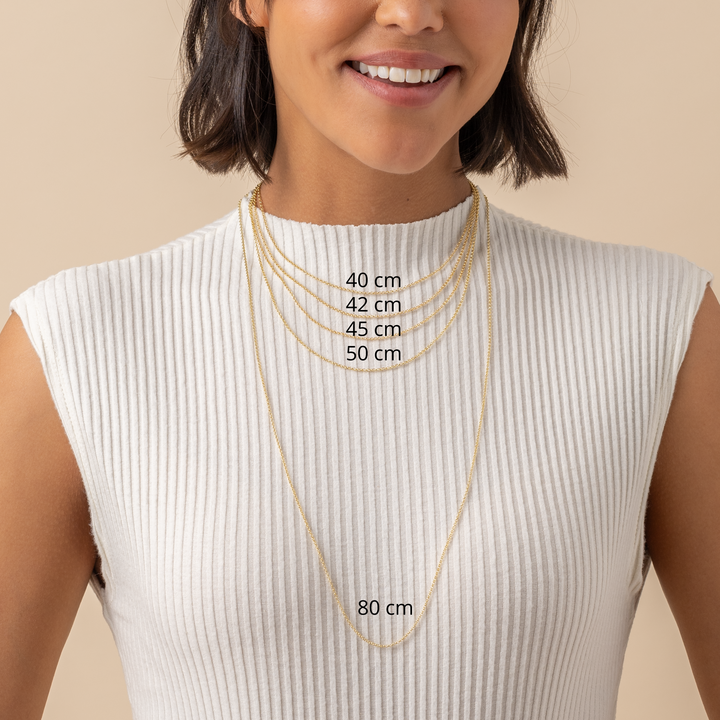
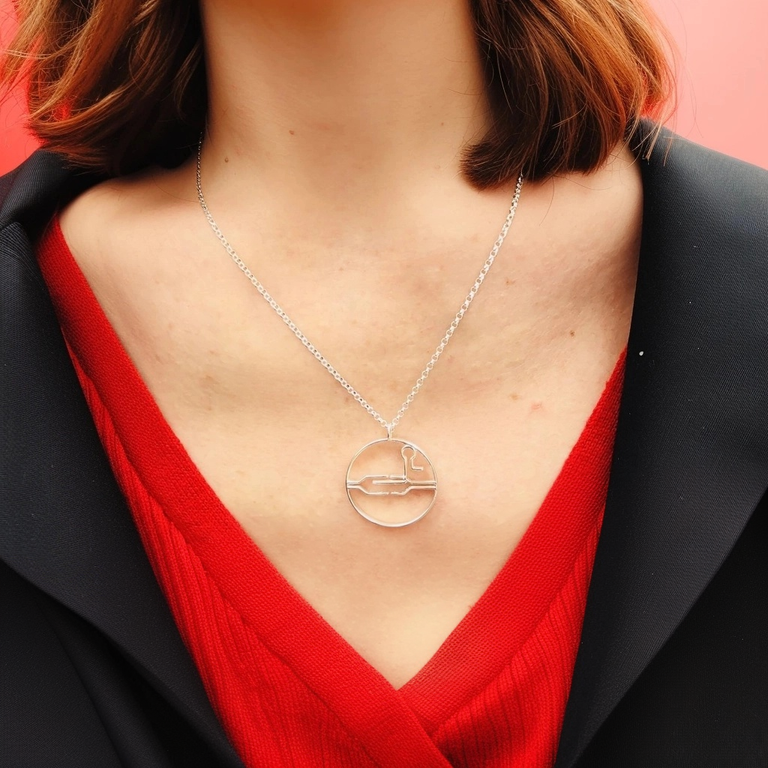
The pendant is 24 mm (about 0.9 inch), close to a US quarter and a little smaller than a 2-euro coin. It hangs from a single point on a 45 cm (17.7 inch) sterling silver chain with a 5 cm (2 inch) extender, and at that length it sits below the collarbone. For another length, an extra chain is offered on this page in 40, 42, 45 or 50 cm, each with the 5 cm extender, or 80 cm without one. It is 925 sterling silver, nickel-free and hypoallergenic.
Is there a gold version?
Yes. The same 24 mm CRISPR pendant comes in 18K gold vermeil, on a 45 cm gold vermeil chain with a 5 cm extender. Choose the finish she already wears. The design is the same in silver and gold vermeil.
Will it arrive in time, and what if it isn't right?
DHL Express delivers free in 1-5 business days worldwide, and we pay the import duties and taxes, so nothing is due at the door. It arrives in a ready-to-gift jewelry box and festive envelope. If it isn't right, our 30-day “Love It or Return It” policy applies.
Who named CRISPR?
Francisco Mojica, of the University of Alicante. Yoshizumi Ishino's team had spotted odd repeats in E. coli in 1987, and Mojica found similar ones in a salt-loving microbe from Santa Pola's saltern ponds. In 2001 he proposed the name CRISPR to Ruud Jansen's group in Utrecht, who used it in print first. In 2003 he noticed that a stored piece in an E. coli strain matched phage P1, a virus it resisted, and argued CRISPR was an immune memory. Nature and other journals turned it down. It appeared in 2005.

Medical & Lab tools
Dive into the captivating world of science-inspired jewelry, where intricate designs meet the essence of medical and laboratory tools. These masterfully crafted pieces act as subtle yet striking tributes to the instruments that have paved the way for scientific discovery. From DNA helices to microscope charms, each piece serves as a conversation starter, a talisman, and a small monument to human ingenuity. They're not just accessories; they're wearable artifacts that tell a story of scientific exploration and advancement.
Find your perfect fit: measure an Existing Ring
Finding out your ring size at home is a simple process and can help you shop for jewelry online with confidence.
Necklace length guide