From € 140


Still questions? Contact us
Microscope bracelet | sterling silver
A bracelet is the one piece she can see herself, on her wrist through the day. This microscope charm bracelet in sterling silver keeps a small reminder of the instrument behind her work in view, a gift for a colleague, or one to keep.
Who It's For
- someone who loves an unusual science idea
- a medical student whose first steps in science were in research and imaging
- someone who has spent many happy hours at a light microscope
- yourself, as the charm alone, for a Pandora bracelet you already wear
Timarah W., who gave it as a present: “What a wonderful gift to give and it was just perfect for the person.” Rosario A., who bought the bracelet to keep: “The bracelet is awesome, it is really well made.”
How a Confocal Microscope Sees One Layer at a Time
A thick sample is hard to see sharply under an ordinary light microscope: light from the layers above and below the focus blurs the layer you want. In a confocal microscope the light is focused onto one point, and a pinhole in front of the detector passes the light from that point and blocks most of the light from above and below it. Scanning point by point builds a sharp image of one thin layer, an optical section, and a stack of sections can be combined in three dimensions. Marvin Minsky, who later co-founded MIT's artificial intelligence laboratory, built a confocal scanning microscope in 1955 to look into tightly packed brain tissue, and patented it in 1957.
Explore Related Lab Jewelry
- microscope necklace | silver
- microscope necklace | gold vermeil
- microscope earrings | silver
- petri dish bracelet | silver
FAQ
Which length should I order, and how does the charm hang?
The bracelet comes in 17, 18 or 19 cm (6.7, 7.1 or 7.5 inches). Measure her wrist just above the wrist bone, add 1.5 to 2 cm and choose the closest length. The 18 mm (0.7 inch) charm is about the size of a US dime. It hangs from a ring under a round connector on a 3.8 mm sterling silver chain with a lobster clasp. The connector is compatible with Pandora bracelets, and the no-chain option is the charm and connector alone. Our sterling silver is nickel-free and hypoallergenic.
Can I match it with a necklace or earrings?
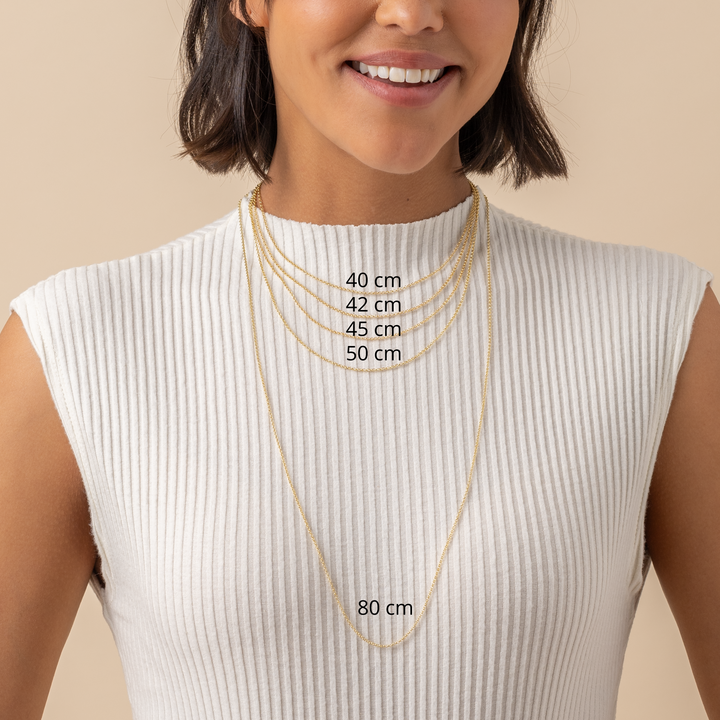
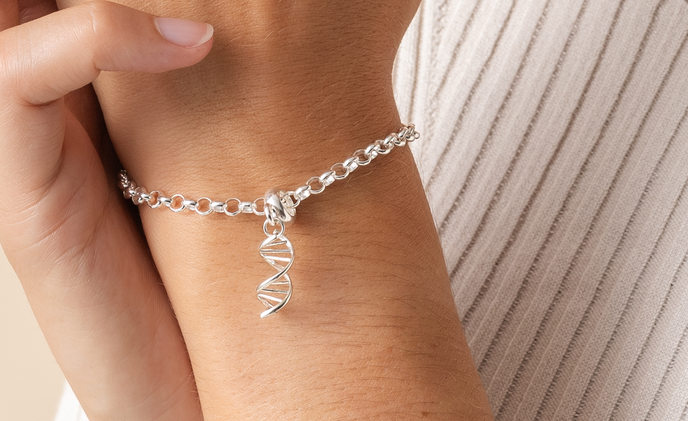
The microscope bracelet comes in sterling silver only. For a silver set, the microscope necklace has the same 18 mm design on a 45 cm chain with a 5 cm extender, and the microscope earrings measure 18 mm each, not counting the leverback hook. If she wears gold, the necklace also comes in 18K gold vermeil, with the same design, as a separate piece. Our DNA, antibody, dopamine, serotonin and petri dish bracelets use the same chain and connector.
Will it arrive in time, and what if it isn't right?
DHL Express delivers free in 1-5 business days worldwide, and we pay the import duties and taxes, so nothing is due at the door. It arrives in a ready-to-gift jewelry box and festive envelope. If it isn't right, our 30-day “Love It or Return It” policy applies.
Who gave the microscope its name?
Johann Faber, a German-born physician in Rome and a member of the Accademia dei Lincei. In September 1624 Galileo had sent the academy's founder, Federico Cesi, an occhialino “to see minute things close up”. On 13 April 1625 Faber wrote to Cesi proposing the name microscope, from the Greek for small and to look: the Lincei had named the telescope, so this instrument should have a name from them. The same year the academy printed Stelluti's bee observations, usually counted as the first printed image made with a microscope.

Medical & Lab tools
Dive into the captivating world of science-inspired jewelry, where intricate designs meet the essence of medical and laboratory tools. These masterfully crafted pieces act as subtle yet striking tributes to the instruments that have paved the way for scientific discovery. From DNA helices to microscope charms, each piece serves as a conversation starter, a talisman, and a small monument to human ingenuity. They're not just accessories; they're wearable artifacts that tell a story of scientific exploration and advancement.
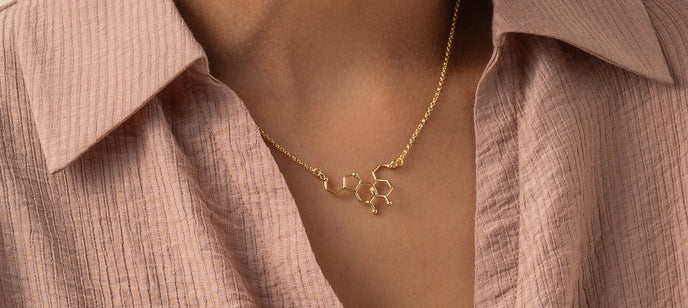
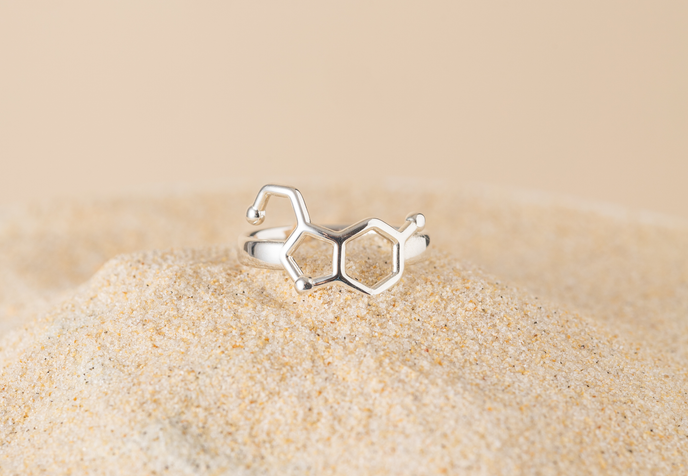
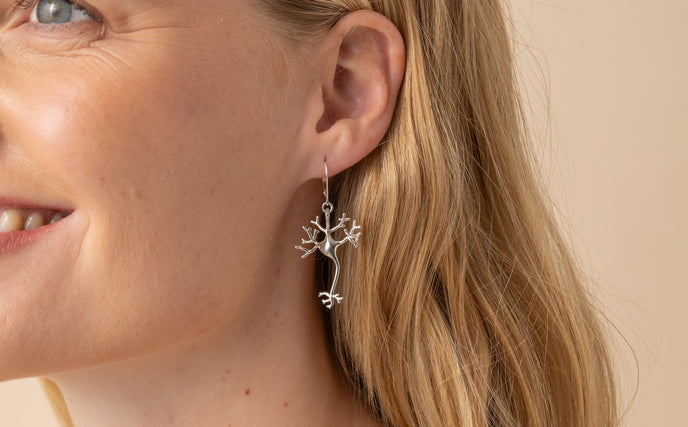
Find your perfect fit
Necklace length guide