€ 160


Still questions? Contact us
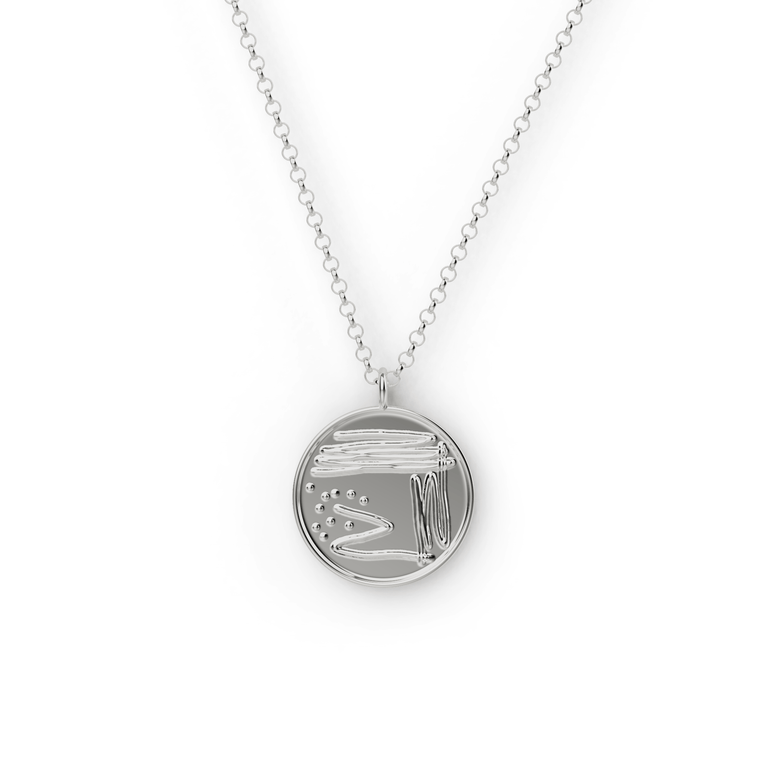
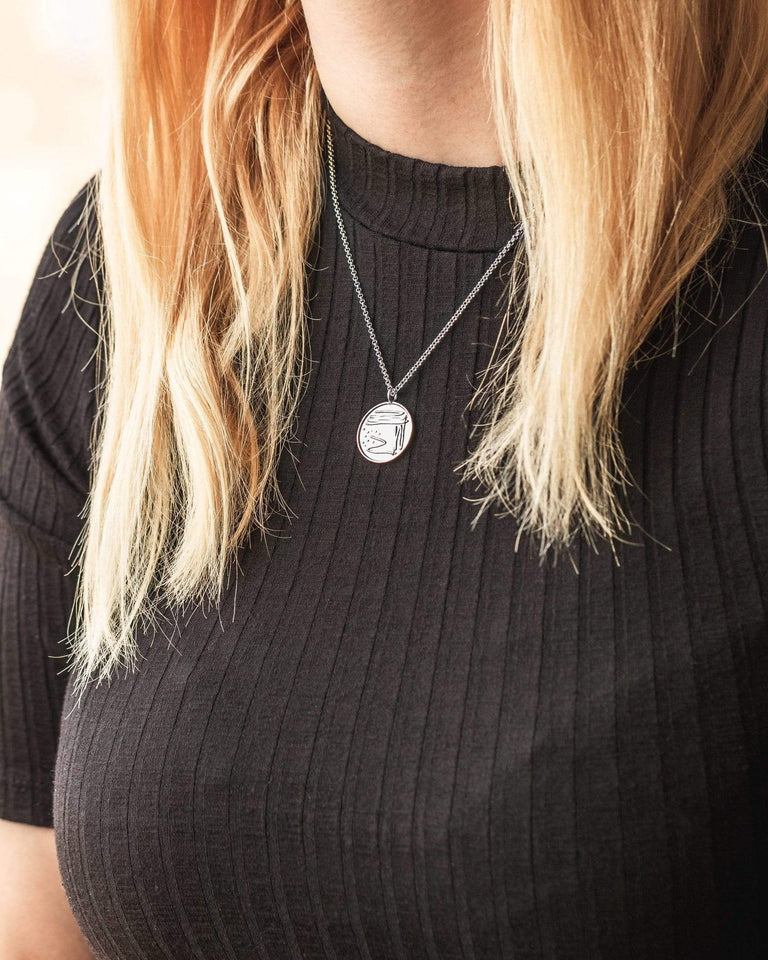
Petri dish necklace | sterling silver
Anyone who has streaked a plate knows the small thrill of opening the incubator the next morning to see what grew. This petri dish necklace is for the woman who still feels it, whatever stage of her career she is at. It's also an easy gift for anyone who knows how much the lab means to her.
Who It's For
- a friend and colleague retiring from the lab
- a granddaughter graduating in biology, or a daughter who is a biologist
- a microbiology teacher, as a Christmas thank-you
- an intern or student finishing her master's in biology
- a wife, girlfriend or mother who works in a lab
- yourself, when you start a PhD in microbiology or antibiotics research
Leslie M. gave it to a teacher: “My microbiology teacher loved her gift so much. She now wears it everyday!” Victoria B. bought one for herself: “I could not be happier, it's the cutest little streak plate, perfect for a microbiologist. I have gotten many compliments since wearing it.”
How a Plate Grows
A Petri dish holds a thin layer of agar, a jelly made from red seaweed, mixed with nutrients. Agar melts above 85 °C and only sets again as it cools to between about 32 and 42 °C, so it stays firm at 37 °C, the temperature many bacteria are grown at. Gelatin, used before it, turns liquid at that warmth, and some bacteria digest it. To get a pure culture, a microbiologist draws a sample across the surface in a zigzag streak, thinning it with each pass. Where cells land apart, each grows into a colony, a visible dot that usually starts from a single cell.
Explore Related Microbiology Jewelry
- petri dish necklace | gold vermeil
- petri dish earrings | silver
- petri dish bracelet | silver
- bacteriophage necklace | silver
FAQ
How big is it, and how does it hang?
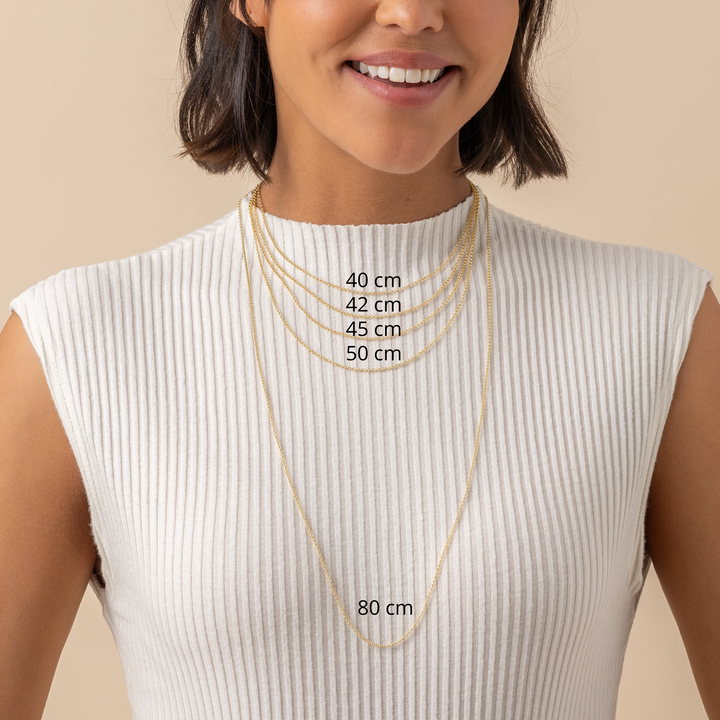
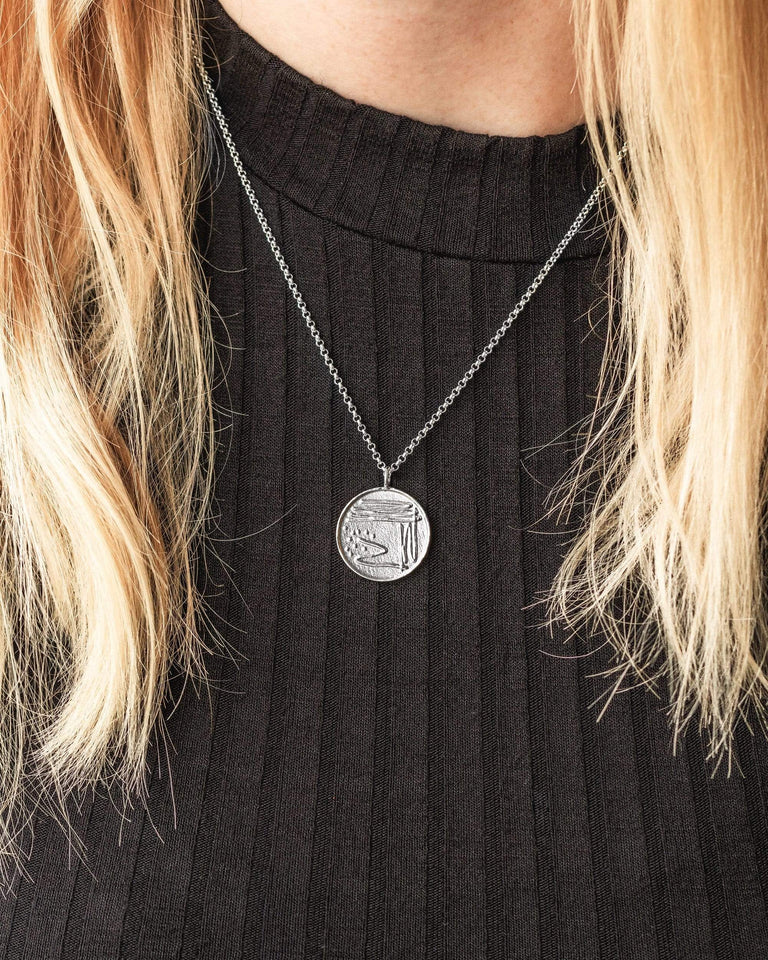
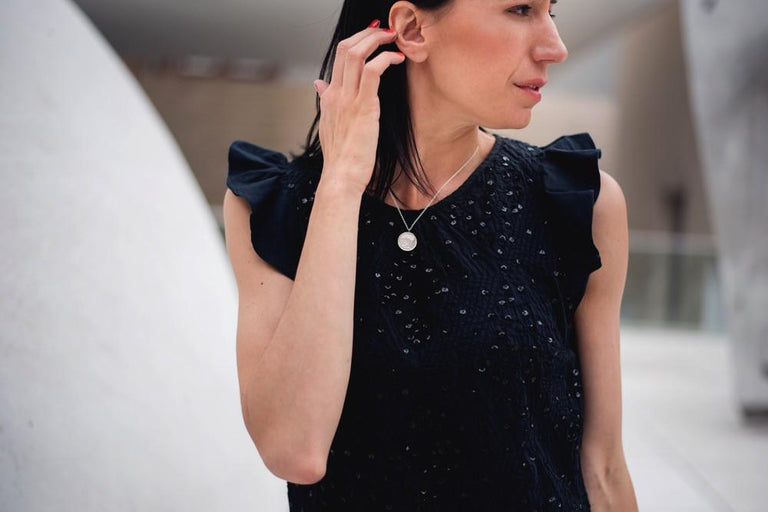
The round pendant is 20 mm across (about 0.8 inch), close to a 10-euro-cent coin or a US penny. It hangs from a small loop at the top on a 45 cm (17.7 inch) sterling silver chain with a 5 cm (2 inch) extender. Extra chains of 40, 42, 45 or 50 cm with extender, or 80 cm without, can be added in silver or gold vermeil. It is 925 sterling silver, nickel-free and hypoallergenic. Silver darkens over time, and a polishing cloth brings the shine back.
Is there a gold version, or matching earrings?
Yes. The same 20 mm pendant comes in 18K gold vermeil. Choose the finish she already wears: the design is the same in both. For a set, the petri dish earrings in sterling silver measure 20 mm each, not counting the hook, and fasten with leverbacks. There is also a silver bracelet with the 20 mm charm on a 17, 18 or 19 cm chain. The charm has a connector compatible with Pandora bracelets, and you can also buy the charm on its own, without the chain.
How quickly does it arrive, and can it be returned?
DHL Express delivers it free worldwide in 1-5 business days, and we pay the import duties and taxes, so nothing is due at the door. It comes in a ready-to-gift jewelry box and festive envelope. If it isn't right, our 30-day “Love It or Return It” policy applies.
Who invented the Petri dish?
Julius Richard Petri, a German bacteriologist, trained as an army doctor, who had worked as Robert Koch's assistant in Berlin. In 1887 he published a two-page note with a modest title: “A small modification of Koch's plate method”. Koch's team grew bacteria on flat glass plates kept under glass covers. Petri poured the medium into a shallow round dish with a slightly larger lid, which kept out dust, stacked easily and fitted under a microscope. Labs still use his design, now mostly in plastic.

Medical & Lab tools
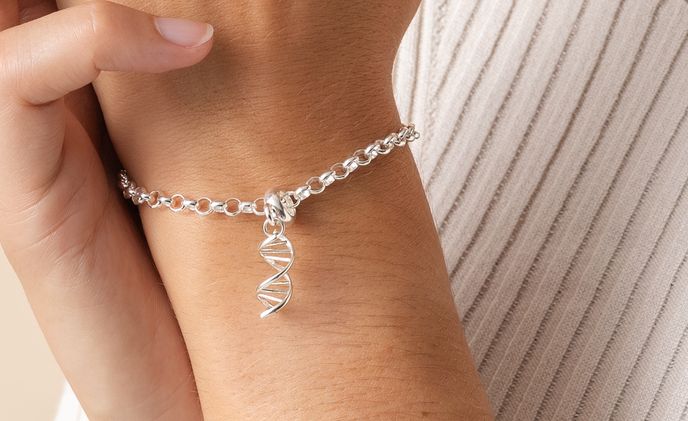
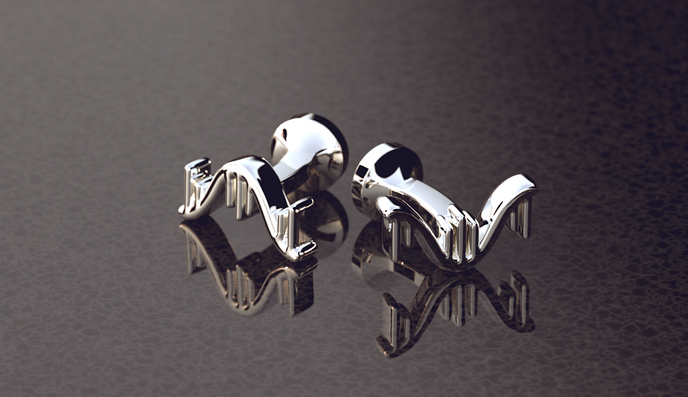
Dive into the captivating world of science-inspired jewelry, where intricate designs meet the essence of medical and laboratory tools. These masterfully crafted pieces act as subtle yet striking tributes to the instruments that have paved the way for scientific discovery. From DNA helices to microscope charms, each piece serves as a conversation starter, a talisman, and a small monument to human ingenuity. They're not just accessories; they're wearable artifacts that tell a story of scientific exploration and advancement.
Find your perfect fit: measure an Existing Ring
Finding out your ring size at home is a simple process and can help you shop for jewelry online with confidence.
Necklace length guide