€ 150


Still questions? Contact us
syringe necklace | sterling silver
In 1853, two physicians independently realised the same possibility: that a hollow needle and barrel could deliver medicine directly into tissue, bypassing the stomach. Charles Pravaz in Lyon and Alexander Wood in Edinburgh grasped what this meant. Speed. Precision. The ability to target pain and illness with doses previously impossible. The syringe made modern medicine possible.
The Science Behind the Syringe
The hypodermic syringe was invented independently in 1853 by Charles Pravaz in Lyon and Alexander Wood in Edinburgh. Wood used his to inject morphine directly into nerve tissue for neuralgia, demonstrating for the first time that subcutaneous drug delivery could achieve rapid and precise effects unavailable through oral dosing. The disposable plastic syringe was introduced in 1956, which dramatically reduced needle-stick injuries and cross-infection risks in clinical settings. The Luer-slip and Luer-lock needle connection systems, named after instrument maker Hermann Wülfing Luer, standardised the interface between syringe and needle in the early 20th century and remain the global standard. Modern syringes are used for injection, aspiration, blood sampling, and drug compounding across every branch of medicine.
Who Tends to Wear This
A direct piece for anyone whose daily work depends on this instrument.
- nurses, paramedics, and phlebotomists
- doctors, clinical pharmacists, and anaesthetists
- medical and nursing students
- public health professionals and epidemiologists
For a clinician who reaches for a syringe every shift, this necklace is a direct acknowledgment of the work.
Explore Related Medical Jewelry
- Syringe necklace | gold vermeil
- Scalpel necklace in sterling silver
- Stethoscope necklace in sterling silver
- Rod of Asclepius necklace in sterling silver
FAQ
Would a researcher or epidemiologist value this?
Absolutely. The syringe is iconic in public health and vaccine research, making this meaningful for anyone working in infectious disease, immunology, or vaccine development.
What makes the syringe's design so revolutionary?
The innovation was deceptively simple: a barrel with a piston and a hollow needle that could hold medication precisely and deliver it into tissue. That concept, unchanged since 1853, is why this single instrument appears in every medical setting on Earth.
What are the size, material, and chain?
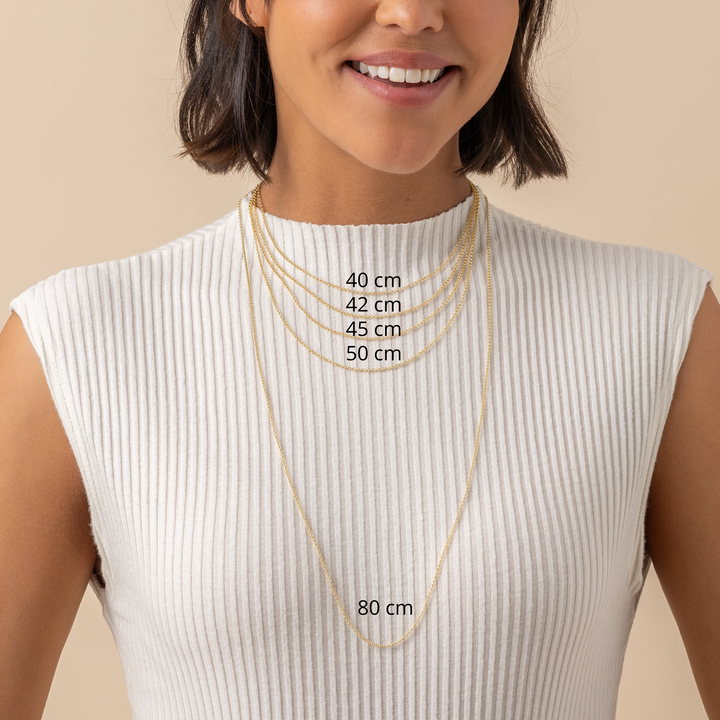
Sterling silver pendant at 34 mm, nickel-free and hypoallergenic. 45 cm sterling silver chain with a 5 cm extender and lobster clasp. Ships free worldwide via DHL Express in 1-5 business days. Comes in a ready-to-gift jewelry box with the 30-day “Love It or Return It” policy.
Is there a gold version?
Yes. The same syringe pendant is available in 18K gold vermeil. Same instrument, different metal.

Medical & Lab tools
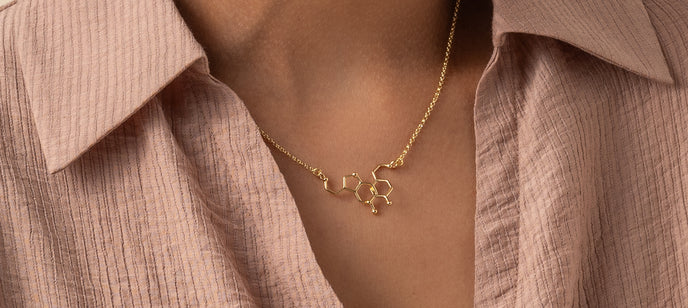
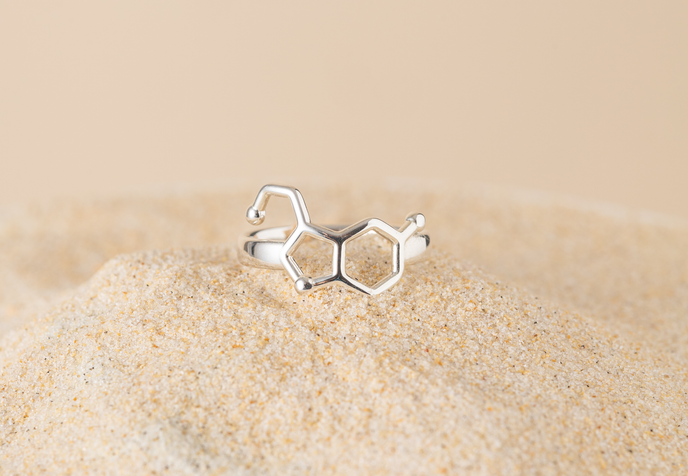
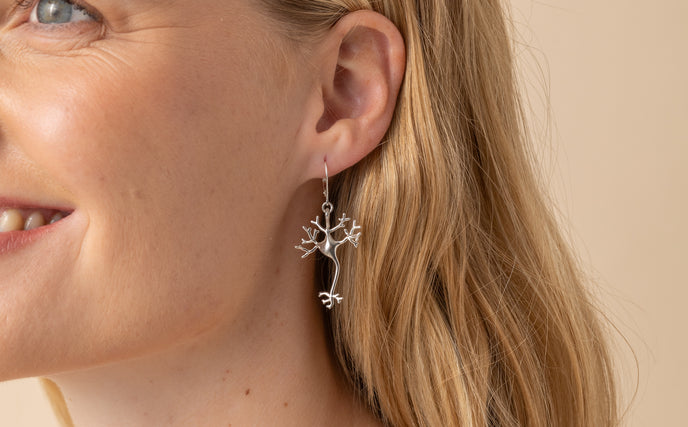
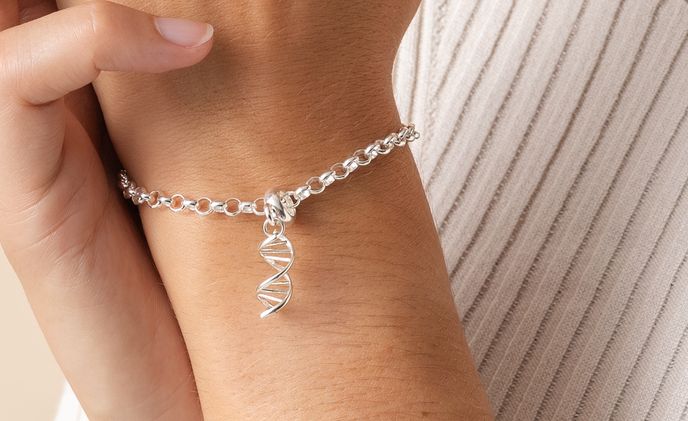
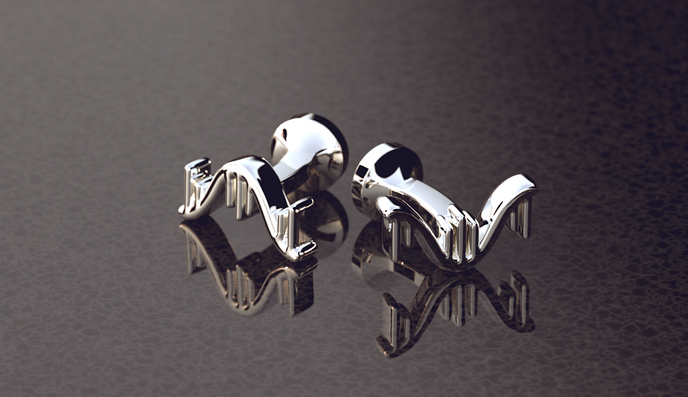
Dive into the captivating world of science-inspired jewelry, where intricate designs meet the essence of medical and laboratory tools. These masterfully crafted pieces act as subtle yet striking tributes to the instruments that have paved the way for scientific discovery. From DNA helices to microscope charms, each piece serves as a conversation starter, a talisman, and a small monument to human ingenuity. They're not just accessories; they're wearable artifacts that tell a story of scientific exploration and advancement.
Find your perfect fit: measure an Existing Ring
Finding out your ring size at home is a simple process and can help you shop for jewelry online with confidence.
Necklace length guide