€ 145


Still questions? Contact us
Flat chromosome necklace | sterling silver
The banded chromosome is the working chromosome. The shape a cytogeneticist photographs, bands, and reads to detect the abnormality that drives a disease. Karyotyping is more than a hundred years old and still in daily clinical use, because the banding pattern is one of the cleanest first looks at a genome. Worn here as a 21 mm sterling silver pendant.
The Science Behind Chromosome Banding
The Philadelphia chromosome, the first chromosomal abnormality linked to a specific cancer, was identified in 1960 by Peter Nowell and David Hungerford at the University of Pennsylvania. It is a translocation between chromosomes 9 and 22, written t(9;22), which fuses the BCR gene on chromosome 22 to the ABL1 gene on chromosome 9. The resulting BCR-ABL fusion protein drives the uncontrolled cell division of chronic myeloid leukaemia. The discovery established that cancer can have a specific, identifiable chromosomal basis, and led directly to imatinib (Gleevec), a targeted therapy designed to inhibit BCR-ABL. Imatinib turned CML from a fatal diagnosis into a manageable condition. None of it would have been possible without chromosome banding.
A Quiet Symbol For
- cytogeneticists and clinical laboratory scientists
- oncologists and haematologists with a genetics background
- genetic counsellors and prenatal diagnosticians
- genetics students and cell biology researchers
For someone who has read a karyotype report and understood every line of it.
Explore Related Genetics Jewelry
- Flat chromosome necklace | gold vermeil
- Flat chromosome studs | silver
- Round chromosome necklace | silver
- Trisomy 21 necklace | silver
- Mitosis necklace | silver
FAQ
Round chromosome or flat: which one for which person?
The flat version is the karyotype shape, the chromosome as bands on a page. People who teach genetics or work with cytogenetic karyotyping reach for the flat form because that is the form they read at the microscope. The round form is the metaphase three-dimensional structure that cell biologists and chromatin researchers tend to picture when they think about chromosomes. Both are biologically accurate, both available in silver and in gold vermeil.
What did the Philadelphia chromosome change about cancer biology?
It established that cancer can have a specific, identifiable chromosomal cause. Before 1960, cancer was understood as a generic disorder of cell division. The Philadelphia chromosome showed that one specific translocation produced one specific malignancy. The follow-on therapy, imatinib, was the first targeted cancer drug designed against a specific molecular lesion rather than a general cytotoxic mechanism. The whole field of precision oncology can be traced back to that 1960 paper.
What size is the pendant and what is the return policy?
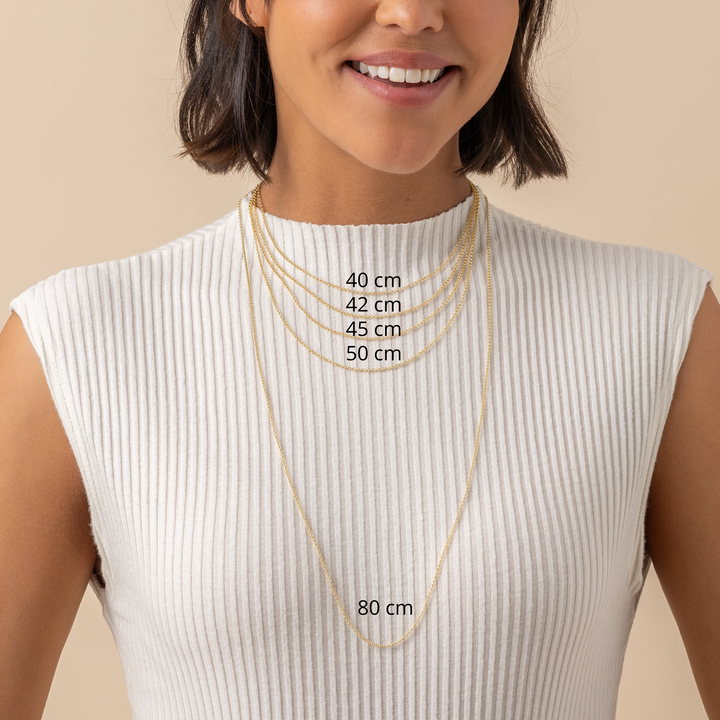
925 sterling silver, 21 mm pendant on a 45 cm sterling silver chain with a 5 cm extender. Nickel-free and hypoallergenic. Free worldwide DHL Express in 1-5 business days, with all import duties and taxes covered. 30-day “Love It or Return It” returns.
Is there a gold version, or matching studs?
Both. The same 21 mm flat chromosome pendant is available in 18K gold vermeil at the same chain length. Matching flat chromosome studs exist in sterling silver. The round chromosome necklace also exists in both silver and gold vermeil for buyers who prefer the metaphase form over the karyotype shape.

Genetics
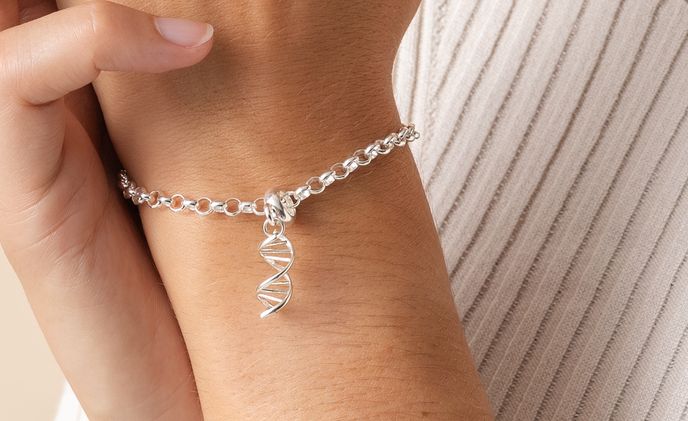
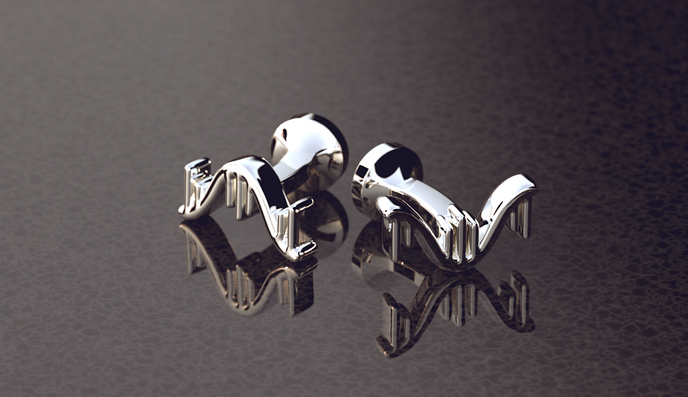
Our genetics-inspired jewelry captures the essence of life's code in striking detail. Crafted to mirror the DNA double helix, each piece is more than an aesthetic marvel—it's a tribute to the complexity of our genetic makeup. Far from ordinary, this collection combines scientific precision with artistic flair, making each item a captivating blend of form and function. It's not just an accessory; it's a meaningful representation of the miracle that is genetics.
Find your perfect fit: measure an Existing Ring
Finding out your ring size at home is a simple process and can help you shop for jewelry online with confidence.
Necklace length guide