€ 145


Still questions? Contact us
Round chromosome necklace | sterling silver
If you think of a chromosome as a physical object in three-dimensional space rather than a banded line on a karyotype, this version fits how you already picture it. The condensed metaphase chromosome, the form the cell has to physically segregate during division. Worn as a 21 mm sterling silver pendant.
The Science Behind Chromosome Architecture
Genes do not sit randomly in the nucleus. Each chromosome occupies a distinct three-dimensional territory, and the position of a gene relative to the nuclear periphery influences whether it is silenced or active. Genes near the periphery tend to be silenced. Genes in the interior tend to be transcribed. The field of 3D genomics, enabled by chromosome conformation capture (Hi-C) techniques developed by Job Dekker and colleagues in 2009, has mapped these spatial relationships genome-wide. Topologically associating domains, or TADs, are the functional units of three-dimensional gene regulation, and disruption of TAD boundaries has been linked to developmental disorders and cancer.
The Audience
- cell biologists and nuclear biology researchers
- chromatin structure and epigenetics researchers
- cancer biologists studying chromosomal organisation
- genetics graduate students and science educators
For someone whose work treats chromosomes as objects in space, not just as sequences on a page.
Explore Related Genetics Jewelry
- Round chromosome necklace | gold vermeil
- Round chromosome studs | silver
- Flat chromosome necklace | silver
- Flat chromosome studs | silver
- Mitosis necklace | silver
FAQ
Round versus flat chromosome: which one for which person?
The flat version is the karyotype shape, the chromosome as bands on a page. People who teach genetics or work with cytogenetic karyotyping tend to find the flat version more familiar. The round version is the metaphase form, the condensed three-dimensional structure the cell physically moves during mitosis. Cell biologists, chromatin researchers, and 3D-genomics people tend to find the round version more meaningful. Both are biologically accurate. They capture different stages and ways of thinking about the same molecule.
Why has 3D nuclear architecture become a research field?
Because the same gene can be transcribed or silenced depending on where in the nucleus it sits. Hi-C and related techniques showed that the genome folds into reproducible three-dimensional patterns: TADs, A and B compartments, lamina-associated domains. Gene regulation is now understood to involve not just transcription factors and enhancers but also which TAD a gene lives in and which other genes it physically contacts. The pendant is a small acknowledgment of that shift.
What size is the pendant and what is the return policy?
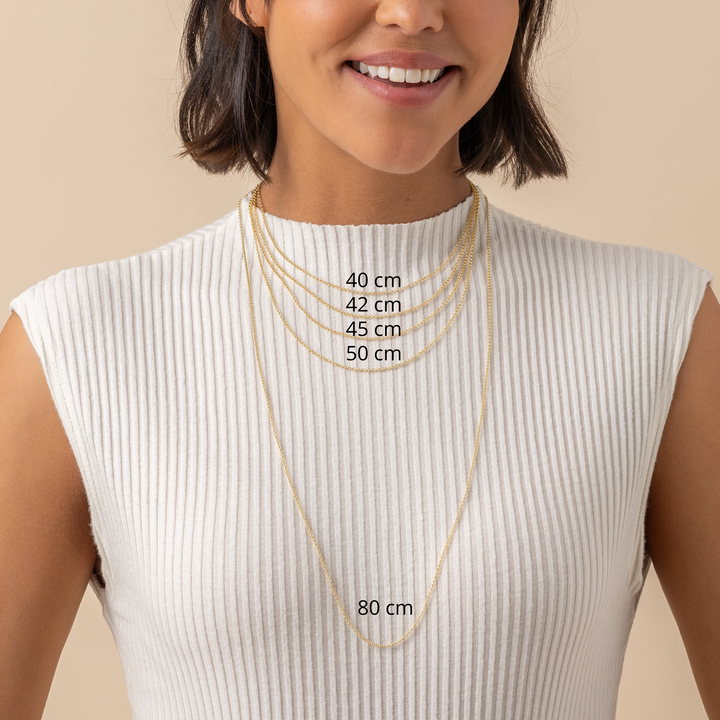
925 sterling silver, 21 mm pendant on a 45 cm sterling silver chain with a 5 cm extender. Nickel-free and hypoallergenic. Free worldwide DHL Express in 1-5 business days, with all import duties and taxes covered. 30-day “Love It or Return It” returns.
Is there a gold version or matching studs?
Both. The same 21 mm round chromosome pendant is available in 18K gold vermeil at the same chain length. Matching round chromosome studs exist in sterling silver. The flat chromosome necklace and flat studs also exist for buyers who prefer the karyotype shape, with a gold flat counterpart available too.
Genetics
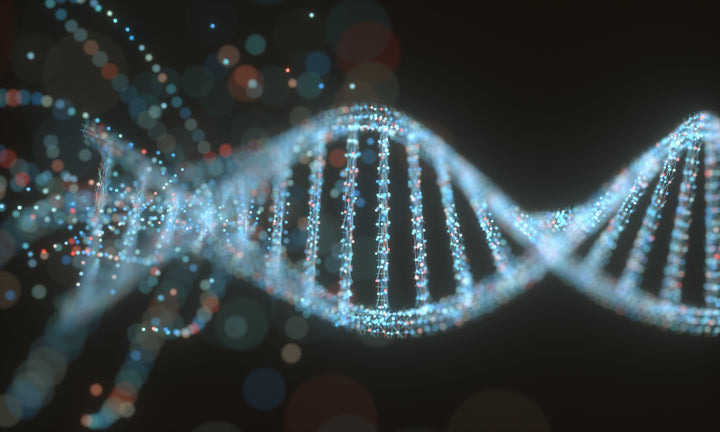
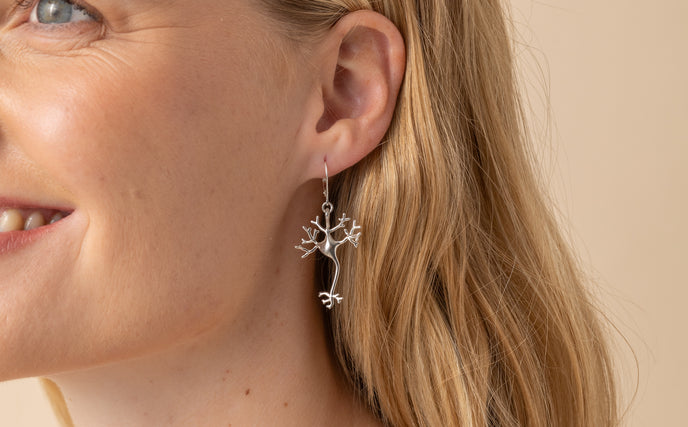
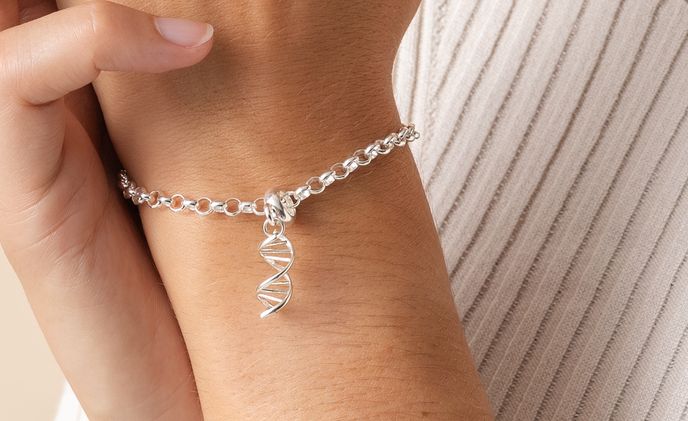
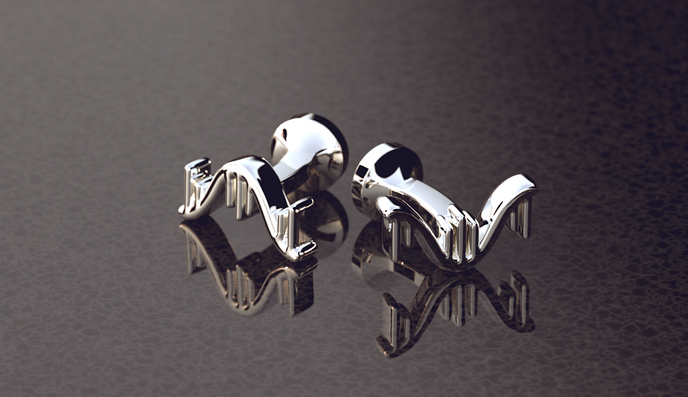
Our genetics-inspired jewelry captures the essence of life's code in striking detail. Crafted to mirror the DNA double helix, each piece is more than an aesthetic marvel—it's a tribute to the complexity of our genetic makeup. Far from ordinary, this collection combines scientific precision with artistic flair, making each item a captivating blend of form and function. It's not just an accessory; it's a meaningful representation of the miracle that is genetics.
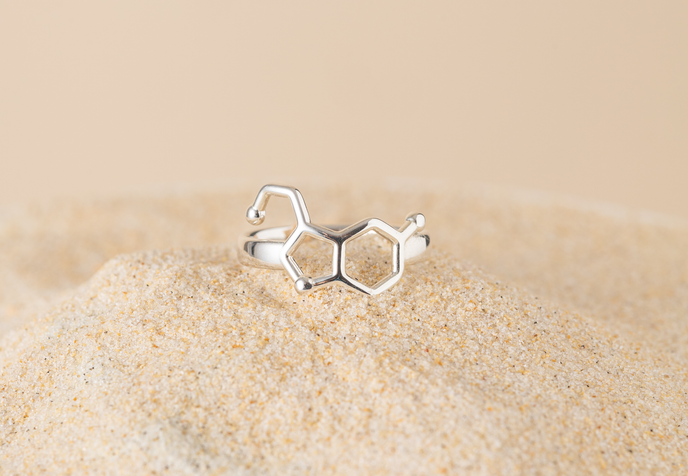
Find your perfect fit: measure an Existing Ring
Finding out your ring size at home is a simple process and can help you shop for jewelry online with confidence.
Necklace length guide